Dunning and Kruger Given 2023 Grawemeyer Award in Psychology
Social psychologists David Dunning of the University of Michigan and Justin Kruger of New York University, whose research captured the public imagination by suggesting that unskilled people often overrate their own abilities, have received the 2023 University of Louisville Grawemeyer Award in Psychology. The award, announced last month, comes with a prize of $100,000.
Grawemeyer Awards are given out annually in music, political science (presented as ‘ideas for improving world order’), psychology, education and religion. Created by University of Louisville alumnus, chemical engineer and entrepreneur H. Charles Grawemeyer, the awards are meant to recognize ideas more so than career milestones or lifetime achievement. “As Grawemeyer saw it,” explains the award website, “great ideas should be understandable to someone with general knowledge and not be the private treasure of academics.”
The award for music composition first was presented in 1985, improving world order in 1988, education in 1989, and religion, presented jointly with the Louisville Presbyterian Theological Seminary, in 1990. The last category added to date, psychology, was first awarded in 2001.
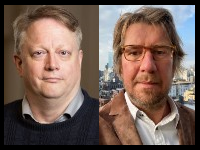
Dunning and Kruger first described what has come to be known as the Dunning-Kruger effect in a 1999 paper, “Unskilled and unaware of it: How difficulties in recognizing one’s own incompetence lead to inflated self-assessments,” in the Journal of Personality and Social Psychology. The researchers were inspired by the story of a bank robber who thought that by spreading lemon juice on his face would render him invisible to the bank’s security cameras. He was incorrect.
“Ironically, people who are the least skilled are often the most confident because they can’t judge their own skills accurately, and those who are the most skilled fail to see how much their skill surpasses others,” the pair wrote.
“The Dunning-Kruger effect has always been an important finding,” Nicholaus Noles, psychology award director, was quoted, “but the idea is likely to have even more impact in the years ahead as information and misinformation become more available to us and our society struggles with when and how to trust experts in a variety of domains.”
Dunning appears in the current episode of the Social Science Bites podcast series.
The 2023 winner of the world order prize is Steven Feldstein, a former U.S. State Department assistant secretary and current senior fellow at the Carnegie Endowment for International Peace. His award came in recognition of ideas he presented in his 2021 book, The Rise of Digital Repression: How Technology is Reshaping Power, Politics and Resistance.
As he told the Grawemeyer committee, “I found that as people come to rely more on online communication, their leaders are realizing they can use the same tools—Facebook, Twitter, YouTube and TikTok—to spread propaganda, sow division and intimidate their critics.”
Other winners were Kelly Brown Douglas, dean of Union Theological Seminary’s Episcopal Divinity School, in religion; University of Pennsylvania philosophy professor Jennifer Morton in education; and British composer Julian Anderson in music.
Prizes and the cash will be awarded in March during festivities at the University of Louisville.