Beware the Funhouse Mirror: How Social Media Misleads Us About Public Opinion
In today’s digital age, social media platforms often appear to offer a direct line to “what the public thinks.” But what if those signals are misleading?
National Academies of Sciences, Engineering, and Medicine and Issues in Science and Technology present the 2025 Henry and Bryna David lecture featuring Jay Van Bavel, director of the Center for Conflict and Cooperation and professor of psychology and neural science at New York University.
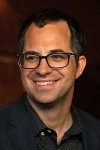
Van Bavel co-authored The Power of Us: Harnessing Our Shared Identities to Improve Performance, Increase Cooperation, and Promote Social Harmony, which won the APA William James Book Award. (APA also awarded him the SAGE Young Scholar Award in 2015. SAGE, now Sage, is the parent of Social Science Space.) He writes the Power of Us newsletter and has written for The New York Times, BBC, The Atlantic, Scientific American, The Wall Street Journal, Guardian, LA Times, TIME, and The Washington Post.
Van Bavel’s talk will address how social media distorts the public voice – and what that means for decision-making, policy, and public discourse. The lecture will explain how modern technology interacts with human psychology creating a funhouse mirror version of public opinion – distorting the beliefs that most people actually hold. His findings have profound implications for policymakers, researchers, and practitioners alike.
The annual Henry and Bryna David lecture has been endowed to bestow an annual award to a leading researcher who has drawn insights from the behavioral and social sciences to inform public policy.
Henry David was a professor at the Lyndon B. Johnson School of Public Affairs at the University of Texas, executive director of the Assembly of Behavioral and Social Sciences at the National Academy of Sciences/National Research Council, Pitt Professor of American History and Institutions at Cambridge University, president of the New School for Social Research, dean of the graduate faculty of political and social sciences at Columbia University, and executive director of the National Manpower Council. Bryna David was also active in public policy, working as an assistant to Eleanor Roosevelt during the 1948 UN General Assembly in Paris, as a scholar in residence at the Rockefeller Center in Bellagio, Italy, and as director of the National Manpower Council.
The lecture will be followed by a Q&A session and a reception, for those attending in-person.