Yale’s James Scott to Receive SSRC’s Hirschman Prize
Political scientist and anthropologist James C. Scott, co-director of the Agrarian Studies Program at Yale University and a self-described “mediocre farmer,” has received the 2020 Albert O. Hirschman Prize from the Social Science Research Council. He will present the Albert O. Hirschman Lecture at an award ceremony in New York City on December 4.
The Hirschman Prize, awarded every two years, is given to scholars who have made outstanding contributions to international, interdisciplinary social science research, theory, and public communication. The committee which chose Scott cited his as “the epitome of a broad-ranging scholar with influence across a multitude of disciplines,” noting that a “gentle, humanistic approach toward policy runs through [his] enormously influential oeuvre, making him a fitting candidate for this prize.”
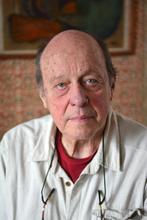
Scott is the Sterling Professor of Political Science and a professor of anthropology at Yale. His research concerns political economy, comparative agrarian societies, theories of hegemony and resistance, peasant politics, revolution, Southeast Asia, theories of class relations, and anarchism.
His most influential book, Seeing Like a State: How Certain Schemes to Improve the Human Condition Have Failed (1998), pulls examples from many parts of the globe and from history to make the case that top-down planning has done more harm than good to the populations it was supposed to help. He followed up the political implications of that book in 2012 with Two Cheers for Anarchism: Six Easy Pieces on Autonomy, Dignity, and Meaningful Work and Play.
His early books, including Domination and the Arts of Resistance (1985) and Weapons of the Weak: Everyday Forms of Peasant Resistance (1980), explore political thought, movements, and resistance in Southeast Asia and beyond. Domination and the Arts of Resistance: Hidden Transcripts, published in 1992, mined folktales, popular songs, oral interviews, and other sources from around the world to get at the “secret discourse” that subordinate groups used to critique dominant elites. More recently, he has turned to ancient history with Against the Grain: A Deep History of the First Agrarian States (2017), in which he explored the costs to humankind of the agrarian revolution.
A 2012 New York Times profile of Scott, “Professor Who Learns From Peasants,” described the life he leads with his family on farmland in Connecticut. It is this practical knowledge of land and life—what Scott refers to as metis, borrowing the ancient Greek word for “wisdom”—that he has brought to his oeuvre.
“Creative, forthright and discipline-defying research is a hallmark of James Scott’s scholarly metis,” said SSRC President Alondra Nelson. “Across a remarkable career, he has generated a body of work of extraordinary range and depth, while continuously limning the contours of power and freedom from the standpoint of the lived experience of oppressed and marginalized communities.”
Scott is an elected member of the American Academy of Arts and Sciences and the American Philosophical Society and has held fellowships from the National Science Foundation, the National Endowment for the Humanities, the Guggenheim Foundation, and the Institute for Advanced Study, Princeton. He is also a former president of the Asian Studies Association.
Albert O. Hirschman, for whom the prize is named, was a German-born economist who studied widely in Europe while at the same time fighting in the Spanish Civil War, volunteering for the French Army, and refugees fleeing the Nazis in Marseilles. Hirschman accepted a Rockefeller fellowship to the University of California at Berkley in 1940, and remained in the United States thereafter, working at the Federal Reserve and, in 1958, taking a faculty appointment to Columbia University. He later moved to Harvard, and in 1974 to Princeton, where he was appointed professor of social science at the Institute for Advanced Studies.
Naomi Lamoreaux of Yale University, who chaired the nominating committee for this year’s award, cited the eponymous economist in explaining the choice of Scott for the honor. “Seeing like a State, [Scott’s] most influential book, exemplifies the gentle, humanistic approach toward economic development that runs through his work, as well as through Hirschman’s. Indeed, the book concludes by quoting Hirschman’s call for a development policy grounded in ‘a little more” reverence for life,” a little less strait-jacketing of the future, a little more allowance for the unexpected – a little less wishful thinking.”