Reaching Parts to Which AI Has No Access
David Canter considers informal places where people socialize, suggesting they’re an arena ChatGPT and other LLMs can’no’t replicate.
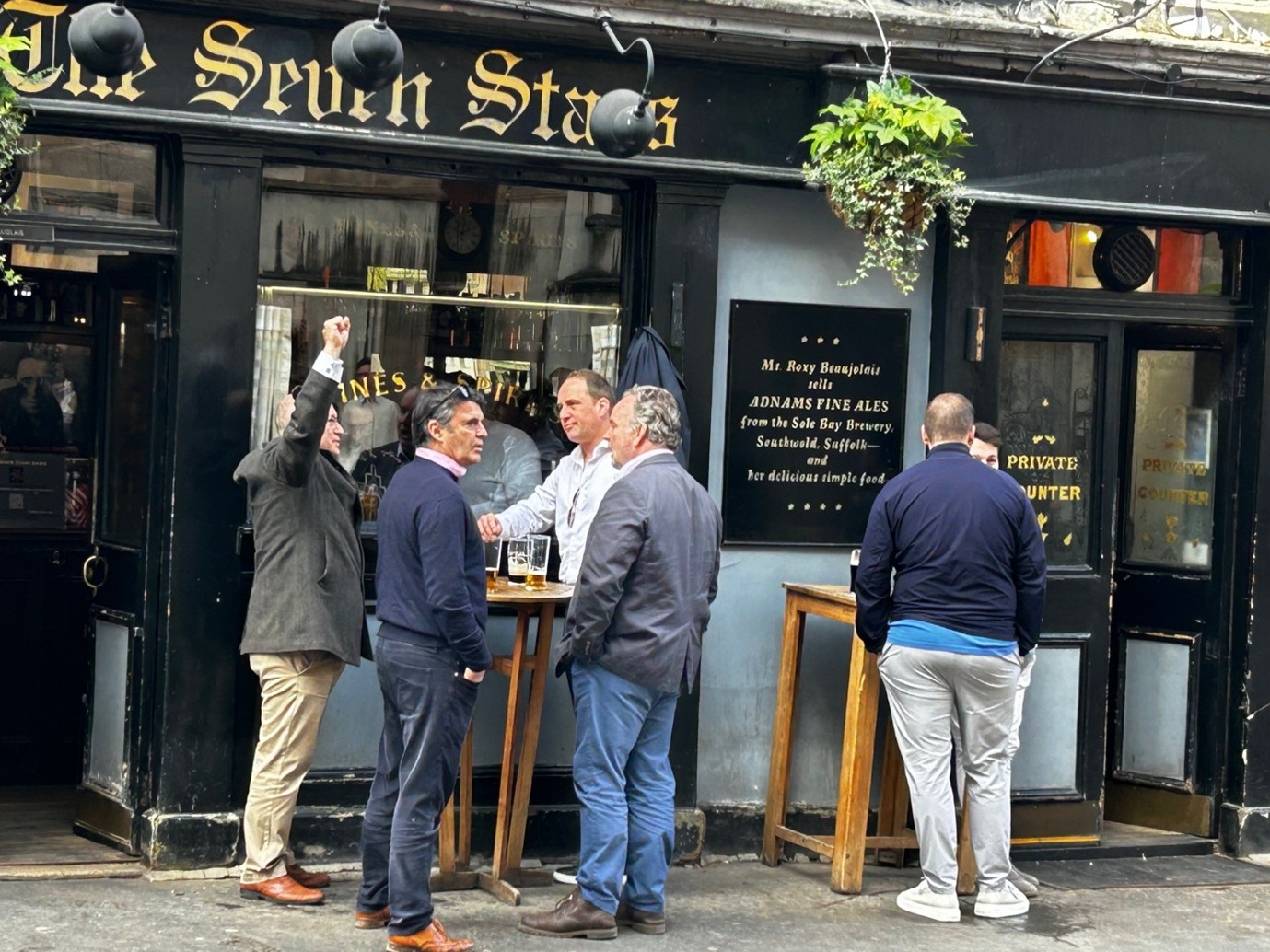
As someone who lives in a secluded farmhouse in the Welsh Hills and have never been a person who frequents local pubs to chat with his mates, I was surprised to discover the renewed interest in what American sociologist Ray Oldenburg called “third places.” His idea was that the “first place” was the home and the ‘second place’ was work. As a “third place” he identified all those locations where people gather together informally with no specific agenda. They are typically pubs, cafés, parks, community centers and even libraries.
Oldenburg’s claim was that these places were at the heart of democracies, essential for building communities and fostering engagement. More recently, with the increasing loneliness, especially that aggravated by Covid and an ageing population, these informal settings been claimed as important locations to address these problems.
Entering this discussion are the omnipresent communications of the internet. Now encompassing even more aspects of social interactions with the rapid emergence of AI. People no longer have to be in the same location to have informal chats. Working from home can now apparently include the sort of brainstorming and gossip that once occurred round an office desk or the legendary watercooler. Even further the companions created by large language models now offer acceptable friendship that have been found in some cases to be preferred to human versions.
However, rather than leading to an end of third places, there is a trend to complement them with digital access. Modern bookstores now facilitate places to meet and chat. This might be hybrid electronic and on-the-spot social interaction. Coffee shops have discovered the value of facilitating meetings, or the lone portable computer user. It is no surprise either that major companies are insisting that people spend some time in the physical office. This is not to ensure they are doing some work. The evidence is that people are just as productive working on their kitchen table. The difference is in the sort of bonhomie and innovation that comes from being present with others that you know well.
Research has shown that creative invention increases when there are opportunities for in-person interactions. My own studies revealed that organizations coped with challenges more effectively when there was plenty of informal contact between people in real time and actual places. The contact that the boss’s secretary had with a key foreman, who she happened to be married to, opens up a channel of communication that does not suffer from the stringencies of an official meeting.
Watch carefully a chat over some social medium such as WhatsApp and you will see that the conversation does not run as smoothly as when people are sitting round a café table. The non-verbal nods and pauses, gestures and grunts that maintain the fluency of in person conversations are not as prevalent or obvious when the discussion is online. A pause to sip a drink, or an aside to someone else in the gathering, which may open up a new direction to consider are just not as easy to do online as they are if you’re standing round a table outside a pub.
This all comes back to something I’ve commented on before. The world of Artificially Intelligent systems exists in the limbo of computer screens. Even robots that move in actual space do not have a presence there that has history and meaning. The large language models that are driving the world of AI are fundamentally disembodied. Unlike us hominids that get every aspect of our being from where we actually are.
Consequently, although I can mentally exist in reasonable comfort on the internet in my quiet farmhouse, if I want to find someone to fix a fence or help in the garden, the best place to find out who is available and trustworthy is to visit my local pub. When doing that recently I discovered a great mixture of supportive social contacts. It did make me feel more as part of the local community. That sensation can never be replaced by a response to an email or even a request to ChatGPT.
David Canter’s new book, Rethinking the Psychology of Place: being here, is due for publication by Routledge in May 2026.