Is One Key to Unlocking Political Amity Located in Botswana?
In late October, more than 80 percent of Botswana’s electorate went to the polls and voted out the incumbent government. The unexpected result was accepted by all parties, and the outgoing president immediately announced his plans for a smooth transition of power.
This is not unusual in the southern African country – Botswana regularly leads the mainland continent in annual “most democratic nations” lists. Since independence in 1966, Botswana has seen not only high levels of democratic stability but also exceptional economic growth and low levels of polarization and other social problems that plague other countries, both in Africa and elsewhere.
In May 2023, I undertook a two-week exploratory study in Botswana to investigate why. My findings, recently published in the peer-reviewed online journal Social Sciences, point to the crucial role played by “dikgotla” – the traditional village assemblies that are central to politics in Botswana, know as “kgotla” in their singular form.

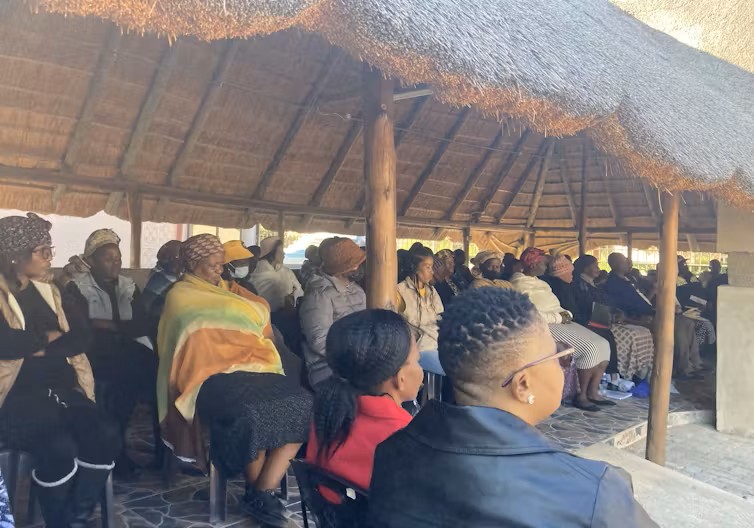
These assemblies, which have been around since time immemorial – potentially reaching back thousands of years – function as public forums in which citizens meet regularly to discuss public matters and hold officials accountable.
By participating in monthly dikgotla, Botswana citizens learn how politics work, actively participate in the political process and are better informed when it comes to national elections.
My research primarily relied on observations, including attending a kgotla session in Modipane, a village in southern Botswana, and interviewing local experts, chiefs, citizens and academics throughout the country on the impact of the dikgotla system.
Citizens meet monthly to discuss matters that affect their lives directly, such as the construction of new roads, hospitals and schools. Dikgotla are also where neighborly disputes can be addressed and settled. And under the system, public officials are called in and held accountable for the decisions they make.
Observing a kgotla session allowed me to witness how Botswana’s citizen-centered, deliberative democracy contributes to stability, social cohesion and economic success.
In short, the kgotla tradition encourages good governance. After evaluating other possible causes for good governance – both economic and social – and comparing Botswana with other countries in the region, I believe that dikgotla are likely the driving force behind Botswana’s good democratic performance.
Why it matters
At a time when countries across the world are suffering rising levels of citizen alienation, disengagement and polarization, Botswana represents a case in which direct democratic practices at a local level have effectively supplemented a representative system.
The kgotla tradition offers a compelling alternative to purely representative democracies in which citizens are represented in the political process by elected officials.
Without understanding how government works and what elected officials and state bureaucrats do, citizens tend to rely on unfounded theories about “the system” and “those in power” and they risk falling prey to political manipulation.
Botswana’s democratic system mitigates this risk through active and regular citizen participation in local governance through dikgotla.
What marks Botswana out is that this traditional system has survived and been integrated into the country’s contemporary governance structure.
My research indicates that strengthening democracy in postcolonial countries can be more successful when it makes use of long-standing democratic traditions instead of importing foreign political systems that may not not respond to local needs, only to those of the former colonizers.
What’s next
The findings from this initial exploratory study highlight the potential of kgotla as a model for sustaining participatory democracy. Moving forward, I plan to conduct a more comprehensive study encompassing diverse regions of Botswana, including areas with different ethnic compositions from the Tswana-dominated south.
This will allow a more nuanced understanding of how dikgotla operate across varied settings and whether regional differences influence their effectiveness. Exploring these factors will be crucial for determining how dikgotla can serve as a governance model.
The study of Botswana’s dikgotla is also part of a larger research project that seeks to highlight African contributions to Western civilization. To advance this research agenda, I am working on a book-length manuscript, tentatively titled “The African Origins of Democracy.”