‘The Believing Brain’
Glenn C. Altschuler reviews ‘The Believing Brain’, a new book by Michael Shermer, on the Huffington Post site. The book explores why the human brain is hard-wired to find “meaningful patterns in both meaningful and meaningless data”.
Altschuler writes: In The Believing Brain, Shermer, a born-again Christian turned skeptic, who writes a monthly column for The Scientific American and teaches at Claremont Graduate University, draws on an avalanche of research in biology and the social sciences in a lively, lucid, tough-minded, throw down the gauntlet explanation of why our beliefs tend to be “content-independent.” He also helps us understand our predilection, in politics and religion, to consider our beliefs as rationally motivated and the beliefs of others as emotionally driven. Although Shermer does not show how these tendencies might be checked so that conviction can be “recoupled” to good reasons and good evidence, The Believing Brain provides a splendid opportunity, for anyone open-minded enough to take it, to sort out the relationship between beliefs and reality, superstition and science.
Shermer challenges us to think hard about our beliefs. If God exists outside of time, space, and matter, he asks, then how can finite beings know anything about Him? If God is defined as that which need not be created, then why can’t the universe just as credibly be credited with creating itself? Insisting that the burden of proof is on the believer, and dismissing the case for “Intelligent Design” as a faith-based sideshow, Shermer maintains that it is far more likely that God, in His diverse incarnations around the globe, is a human construction, a response to a powerful and pervasive desire for an ultimate pattern, an ultimate agent, and immorality.
Superb as he is at synthesizing well-known arguments, Shermer is at his best, in my view, when he gets into the weeds to de-bunk irrational claims on a wide array of issues. Consider, for example, his explanation of “death premonition dreams.” Since, in the aggregate, Americans have billions of dreams a year, Shermer points out, it would actually be a miracle if a few of them did not accurately predict the demise of a friend or family member — and specify the time, place, and cause. Blissfully unaware of this context, however, television talk show hosts shine the spotlight on what they mistakenly identify as “a million-to-one event.”…

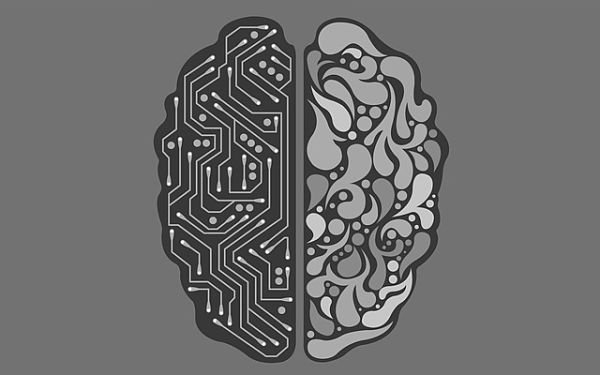


























































































This is a beautiful rendition that says it as it really is. Another name I can give it , is God in the brain. Man created god sometime during our evolutionary journey in the African savanah, out of ignorance and the fear of the unknown.
Hi Steve,
Just to emphasise that the sentence you quote is taken directly from the review by Glenn Altschuler. I think he probably meant it to provoke debate!
Catriona
Catriona – Good point. He got my feathers ruffled a bit. Maybe this is a good time for me to reflect on my biases and unconscious motives. – Steve
My commet refers to: ” The Believing Brain provides a splendid opportunity, for anyone open-minded enough to take it, to sort out the relationship between beliefs and reality, superstition and science.” This sentence feels at if it could be translated to: The book supports my notions of the world, and if you are smart like me you will see my view of the world and that “science” is independent from and superior to other forms of faith. I say other forms of faith, because I believe that science is part faith.