
Could Distributed Peer Review Better Decide Grant Funding?
The landscape of academic grant funding is notoriously competitive and plagued by lengthy, bureaucratic processes, exacerbated by difficulties in finding willing reviewers. Distributed […]
UPDATED: Many academic groups that use U.S Census data for research fear the negative effects of including a question about citizenship on the 2020 count. “Adding a new citizenship question to the 2020 Census would destroy any chance for an accurate count, discard years of careful research, and increase costs significantly,” wrote The Leadership Conference, an umbrella group.
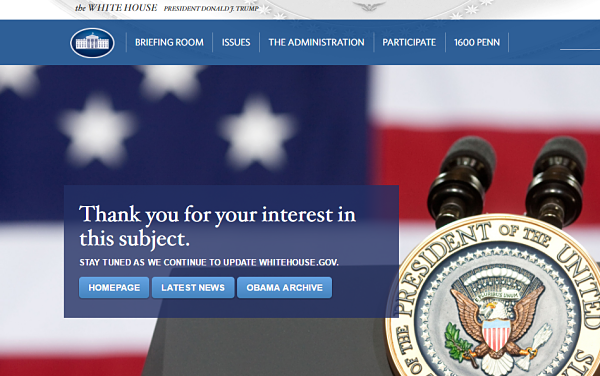
Our Howard Silver looks over some of the personnel changes and rhetoric coming from the White House to see what lies down the road for U.S. government support of social and behavioral science and data collection.

UPDATED: The National Science Board hopes it can muster support to save a question in the annual American Community Survey that tells us how many undergrads are taking science and research degrees. And a suite of questions on marriage trends is also facing the ax.

Survey researchers are increasingly unable to get people to respond to surveys. This is a real worry because nonresponse can lead to biased research and because nonresponse poses a significant threat to the federal statistical system in its entirety.

Federal surveys have been getting more expensive to administer, in part because the number of people who actually respond to surveys has been progressively declining.

Jürgen Habermas, a globally known social theorist whose explorations of democracy, validity and communication have gained new prominence in the current moment, […] People often see science as a world apart: cool, rational and untouched by persuasion or performance. In this view, scientists simply discover […] “Research impact” means different things to different people. Some refer broadly to how science changes behaviors, beliefs, or practices outside academic institutions. […] David Canter considers informal places where people socialize, suggesting they’re an arena ChatGPT and other LLMs can’no’t replicate. As someone who lives […] It’s become cliche since Clive Humbly coined it in 2006, but data is indeed the new oil. It’s a mantra repeated by […] In September 2025, The Guardian reported about a lawyer in Australia having faced sanctions due to false citations. These citations were not […]
EXPLORE
Impact

Jürgen Habermas, 1929-2026: Exponent of the Public Sphere
READ MORE

Scientists Should Keep in Mind It’s Called the ‘Marketplace of Ideas’ for a Reason
READ MORE

Survey Finds Social Scientists Feel Unsupported in Seeking Societal Impact
READ MORE
Innovation

Reaching Parts to Which AI Has No Access
READ MORE

Andrea Medina-Smith on Making Research Data More FAIR
READ MORE

A Status Check on Hallucinated Case Law Incidents
READ MORE