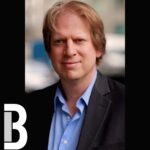
William Julius Wilson to Receive 2017 SAGE-CASBS Award

William Julius Wilson
Established in 2013, the SAGE-CASBS Award recognizes outstanding achievement in the behavioral and social sciences that advance our understanding of pressing social issues. Wilson will receive a cash prize and deliver a lecture on June 8 at CASBS.
Wilson, currently the Lewis P. and Linda L. Geyser University Professor at Harvard University, has earned broad respect by challenging liberal orthodoxy about causes of a permanent underclass in U.S. society as well as conservative views that attribute the state of poverty to a dependency on welfare or cultural deficiencies.
As a fierce advocate of inclusive, far-reaching policy interventions at all levels, Wilson has shaped public as well as academic discourse. In 1996, he was named one of Time magazine’s 25 most influential Americans. Widely read, cited, and quoted, Wilson also has appeared frequently on television, testified before Congressional committees, and served as consultant to elected officials at all levels across the country. In 2001, with former CASBS director Neil Smelser, he co-edited America Becoming: Racial Trends and Their Consequences, a two-volume study of evidence of racial disparities prepared for President Bill Clinton’s Advisory Board on Race.
Wilson has published three landmark works of scholarship on different dimensions of race, class, and the urban poor: The Declining Significance of Race (1978), The Truly Disadvantaged (1987), and When Work Disappears (1996).
“Bill Wilson has been instrumental in defining questions, refocusing debate, pointing to answers and, ultimately, enhancing society’s understanding on some of the most significant questions of our time involving race, class, poverty, and urban inequality in the United States,” said SAGE founder and executive chairman Sara Miller McCune. “Moreover, he has worked tirelessly to bridge gaps among the academic, public, and policy-making spheres. His impact is undeniable.”
Wilson spent the 1981-82 academic year as a CASBS fellow and the preface to The Truly Disadvantaged, published five years later, credits the center for providing space and time for “a good deal of the initial reading” for the book. Wilson later served on the CASBS Board of Trustees from 1989-2002 and as its chair from 1999-2002.
“The seminal work of William Julius Wilson, so important when it first appeared, is at least as timely now,” said CASBS Director Margaret Levi. “Few academics have had such a significant mark on both research and policy. We at CASBS are proud to count him as a former fellow and a current friend and ally in our efforts to analyze and combat inequality and inequity.”
Awarded a MacArthur Fellowship in 1987, Wilson has been elected to the National Academy of Sciences, the American Academy of Arts and Sciences, the American Philosophical Society, the Institute of Medicine, the National Academy of education, and the British Academy. Among the honors he has received are the National Medal of Science, the highest scientific honor bestowed in the United States; the Talcott Parsons Prize in the Social Sciences by the American Academy of Arts and Sciences; the Daniel Patrick Moynihan Prize by the American Academy of Political and Social Science; and the W.E.B. Du Bois Career of Distinguished Scholarship Award by the American Sociological Association. He has received 46 honorary degrees.
Past winners of the SAGE-CASBS Award include psychologist and Nobel laureate Daniel Kahneman, sociologist and education rights activist Pedro Noguera, and political scientist and former U.S. Census Bureau director Kenneth Prewitt.