Events Calendar

Webinar: Teaching Research Design in Politics and International Relations

March 12, 2026 1875

Are your students anxious about learning methods? How to teach research methods without resorting to a quant-qual divide? Do your students struggle to decide on a research project? Would you like your students to be sensitive to knowledge hierarchies?

Join Anouk S. Rigterink and Mareike Schomerus, authors of the newly published textbook Research Design in Politics and International Relations, as they introduce ways in which teaching research methods can empower students to think like researchers, help overcome common student anxieties and reignite students’ curiosity for political questions.

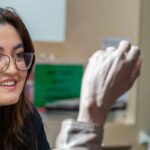
Anouk S. Rigterink, left, and Mareike Schomerus

Rigterink is an associate professor in quantitative comparative politics at the University of Durham. Schomerus is vice president of the Kenya-based research institute Bursara and a visiting lecturer at the University of Chicago.

Inspired by research methods teaching experience in the UK and US, Anouk and Mareike’s teaching philosophy puts student reality center stage. This includes challenging students to break down their research into manageable choices of epistemology, research question, research design, and approach to data collection and analysis.

The approach also champions honesty about the doubts, distractions, difficulties and demotivation that come with research. To build student enthusiasm, it encourages students to learn technical skills through tackling real problems in politics, reframes barriers as decisions, and is frank about getting stuck. It invites students to think about how their approach to creating knowledge can break down existing hierarchies.

Join the webinar to learn how to:
– Teach students to make coherent choices when doing a research project
– Reflect the methodological diversity in Politics and IR, beyond the quant-qual divide
– Introduce students to knowledge hierarchies without assigning blame

The webinar, part of Sage’s Politics Webinar series, is free.

Sage, the parent of Social Science Space, is a global academic publisher of books, journals, and library resources with a growing range of technologies to enable discovery, access, and engagement. Believing that research and education are critical in shaping society, 24-year-old Sara Miller McCune founded Sage in 1965. Today, we are controlled by a group of trustees charged with maintaining our independence and mission indefinitely. 

View all posts by Sage

Related Articles

The 3E Cycle: Establish-Examine-Evolve as a Structured Model to Foster Critical Thinking
Critical Thinking
April 23, 2026

The 3E Cycle: Establish-Examine-Evolve as a Structured Model to Foster Critical Thinking

Read Now
Beyond Fact-Checking: Making Critical Thinking an Everyday Multimodal Habit
Critical Thinking
April 21, 2026

Beyond Fact-Checking: Making Critical Thinking an Everyday Multimodal Habit

Read Now
From Hot Takes to Habitual Inquiry: A Puzzle-Based Routine for Everyday Critical Thinking in Higher Education 
Critical Thinking
April 16, 2026

From Hot Takes to Habitual Inquiry: A Puzzle-Based Routine for Everyday Critical Thinking in Higher Education 

Read Now
The Cognitive Immune System: Making Critical Thinking a Daily Mental Habit  
Teaching
April 14, 2026

The Cognitive Immune System: Making Critical Thinking a Daily Mental Habit  

Read Now
Enhancing Scientific Integrity: Progress and Opportunities in the Social and Behavioral Sciences

Enhancing Scientific Integrity: Progress and Opportunities in the Social and Behavioral Sciences

The National Academies are convening a two-day hybrid workshop bringing together researchers, journal editors, publishers, funders, and scientific association leaders to examine approaches for […]

Read Now
Don’t Ban AI—Teach Students to Build It

Don’t Ban AI—Teach Students to Build It

How designing AI tools can transform cognitive offloading into critical thinking “Welcome to pharmacology!” I announced to a packed auditorium of wide-eyed […]

Read Now
From Passive Consumption to Active Verification: Embedding Critical Thinking as a Daily Cognitive Habit in Higher Education 

From Passive Consumption to Active Verification: Embedding Critical Thinking as a Daily Cognitive Habit in Higher Education 

In an era defined by algorithm-curated feeds, persuasive misinformation, and increasingly sophisticated AI-generated content, the challenge facing higher education is no longer […]

Read Now
0 0 votes
Article Rating
Subscribe
Notify of
guest

This site uses Akismet to reduce spam. Learn how your comment data is processed.

0 Comments
Newest
Oldest Most Voted
Inline Feedbacks
View all comments