SSRC Adds Richeson, Nobles to Board
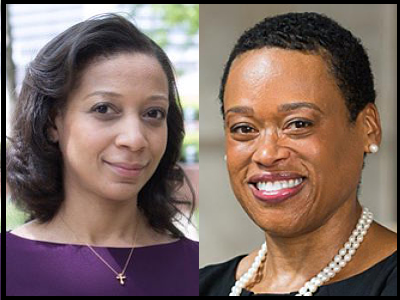
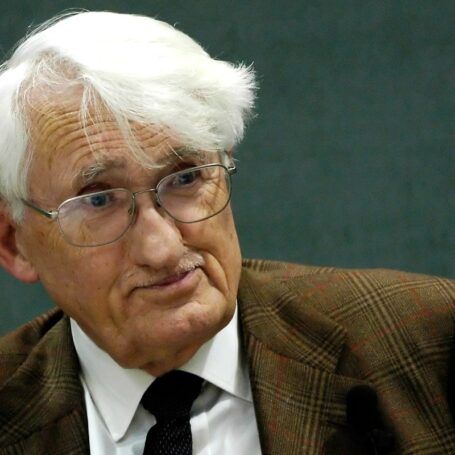
Jennifer Richeson, left, and Melissa Nobles
The Social Science Research Council has added Melissa Nobles and Jennifer Richeson to its board of directors. Nobles is the Kenan Sahin Dean of the School of Humanities, Arts, and Social Sciences and professor of political science at the Massachusetts Institute of Technology, while Richeson is the Philip R. Allen Professor of Psychology at Yale University.
The two began their three-year terms on the 20-member board on July 1. The replace Julia Adams of Yale University and Peter Lange of Duke University on the board.
Nobles’s work focuses on the comparative study of racial and ethnic politics and issues of retrospective justice. Currently, she is constructing a database of racial and ethnic killings in the American South, 1930–1954, uncovering understudied and unknown killings, collaborating as both a faculty member and advisory board member of Northwestern Law School’s Civil Rights and Restorative Justice law clinic. She has authored two books, Shades of Citizenship: Race and the Census in Modern Politics (2000) and The Politics of Official Apologies (2008), and is coeditor with Jun-Hyeok Kwak of Inherited Responsibilities and Historical Reconciliation in East Asia (2013).
Richeson’s scholarship examines multiple psychological phenomena related to cultural diversity, in particular how sociocultural group membership, such as race, gender, and socioeconomic status, affect the ways people think, feel, and behave, especially during interactions with members of different sociocultural groups. Currently, her focus is on the dynamics and consequences of the increasing racial and ethnic diversity of the nation. Her work earned her a John D. and Catherine T. MacArthur “genius” fellowship in 2006, and in 2015 she was elected to the National Academy of Sciences. Richeson’s work has been published in a number of academic journals, including Psychological Science, the Journal of Personality and Social Psychology, and Nature Neuroscience.
“Nobles and Richeson are scholars whose work is making a profound impact in society,” said Sandra Dawson, council board member and chair of its executive committee. “Moreover, their work encompasses such breadth—race, history, politics, psychology, and social norms—that they will also lend important insight as the SSRC seeks to anticipate the issues and areas of research that should guide our work in the future.”




![Share Your Most Surprising Policy Citation for Chance to Win $500 [Closed]](https://www.socialsciencespace.com/wp-content/themes/conferpress/images/default_thumbnail-new-border.jpg "Share Your Most Surprising Policy Citation for Chance to Win $500 [Closed]")