Impact in Action: Brett Heasman
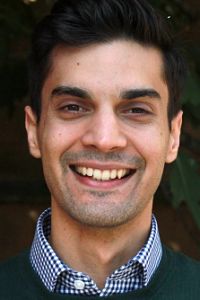
In the next few days Social Science Space will hear from five winners of Britain’s Economic and Social Science Research Council’s 2018 Impact Prize to learn how they built meaningfulness into their own research and how they measure impact more broadly. We start today with Brett Heasman, a PhD student in the Department of Psychological and Behavioural Science at the London School of Economics and Political Science and winner of the Future Promise prize.
Could you briefly describe your research? When designing your research study, what did impact look like to you?
My research was interested in understanding how autistic people are perceived by non-autistic people, because this is a big part of the social barriers autistic people face in navigating the world (e.g. finding employment). Yet while there are many experiments designed to explore autism, there are comparatively fewer methods available for understanding how autistic people are perceived, especially in everyday relationships. I wanted to help develop a method that researchers could use to understand real-world relationships involving autistic people. So myself and Dr Alex Gillespie adapted a measure used in psychiatry called the Interpersonal Perception Method and we used this to compare perspectives of family members with their autistic relatives. Our impact was therefore methodological in terms of developing tools that others could use, but it was also empirical, contributing to our understanding of autism. Our study indicated that there may be unrealised social potential for autistic people since in the context of long-standing family relationships, autistic people were very accurate in imagining how they would be perceived by their family members, while family members themselves were not as accurate as they thought they were.
What advice would you offer to researchers seeking to generate impact through their own research?
My main advice for other researchers is remain open and receptive to the opportunity for intangible impacts you may not have planned from the beginning. Research is a journey of discovery, and while you may have an initial idea of what impact you would like to achieve when you start out, this should not prevent you from pursuing new opportunities in the course of your investigation. For example, I had not planned from the outset to create a public exhibition which allowed autistic people to share their perspectives on autism, but through dialogue with participants and communities I was interacting with I soon realised that a lack of autistic voices in the public domain was a key concern for autistic people who often feel misrepresented. I realised I had the resources (e.g. institutional affiliation, research network) to help build a platform that could address this issue in some way.
Should impact be the ultimate goal of research?
Across different disciplines impact can mean very different things, so it really depends on what is defined as impact. In my field of psychology, impact is often conceptualised in terms of a user-base, i.e. in terms of how many people are citing a paper, or using a particular theory. I think this can be quite a narrow idea of impact because it depends on what type of audiences you value. In my view the most meaningful knowledge is co-produced, and that means listening and working with people across discipline boundaries to cultivate dialogue that has much longer lasting effects than a single research paper. Yet this is not always easy to measure, at least in comparison to more quantitative user-base statistics. For me, the ultimate goal of research has to be more holistic, involving the development of networks of collaboration from which researchers are ideally placed to tackle real-world problems directly, and to draw upon the resources and expertise available to achieve their aims.
Where next for your research?
I think building tools that other
researchers can use is important, because we need more diverse platforms to
study and engage with people. To this end I have written a computer programme
which is now publicly available which can be used by researchers to explore how
different labels (e.g. diagnostic labels) affect social perception and
behaviour during a task where participants have to navigate through a virtual
maze. I am also finishing the development of an app in which a virtual version
of myself presents lectures which can be augmented into different real world
spaces. This app is important for accessibility since not everyone can attend
university lectures. Having a virtual me that anyone in the world can watch and
interact with in their own homes opens up the discussions I’m having to more
people, especially those with disabilities.
Read more
Heasman, B., & Gillespie, A. (2018). Perspective-taking is two-sided: Misunderstandings between people with Asperger’s syndrome and their family members. Autism, 22(6), 740-750. https://doi.org/10.1177/1362361317708287