 Impact
 Why Social Science? Because It Can Improve the Lives of Those Who Serve Our Country
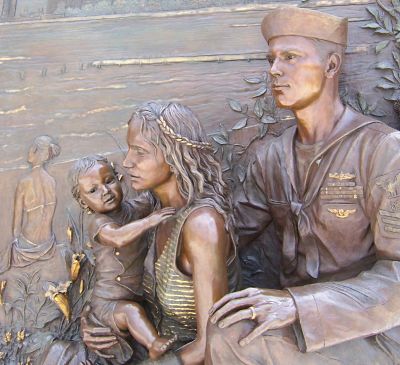
Throughout our nation’s history, members of the U.S. military have served our country with honor, courage, and dedication. Service men and women are prepared to mobilize around the globe at a moment’s notice to preserve freedom, protect the common good, and bring relief to disaster-stricken areas. Accomplishing these missions requires personal and professional sacrifices by military families.
Social science has played a key role in helping U.S. service members complete their duties more effectively and more ethically. We highlight four such contributions.
Enhancing Decision Making
“Social science has played a key role in helping U.S. service members complete their duties more effectively and more ethically.”
Without question, the physical sciences have produced many cutting-edge breakthroughs to assist service members. Advances in technology, transportation, gear, machinery, and medicine (among others) are crucial for equipping military personnel with tools for success.
But the social sciences are pivotal as well. Human factors are critical in sustaining a fit, ready, and principled force. Social scientific advances that assist military personnel have included:
- Identifying characteristics of ethical leaders,
- Establishing how to make virtuous decisions in stressful situations,
- Showing how to build coalitions with citizens from other nations,
- Illuminating how to maximize the inclusiveness and efficiency of teams,
- Indicating how to communicate complex data clearly,
- Revealing how misinformation spreads,
- Explaining how to respect international cultures,
- Specifying the economic factors that help organizations retain talented members,
- Illustrating how to manage power dynamics in work roles, and
- Demonstrating how political systems operate.
Bridging the Military/Civilian Divide
According to a 2011 Pew Research Center study, fewer U.S. citizens serve in the military today than in past eras, and more than 70 percent of both civilians and veterans believe that the public does not understand the challenges facing military personnel. Most civilians will never have the experience of putting themselves in harm’s way for the sake of serving their country, but thanks to social science, civilians can better appreciate what military life is like.
News media spotlighting sensational cases can convey the misconception that most service members and veterans are distressed. Social science debunks these myths by revealing the resilience of military personnel. For example, Dr. Nina Sayer and her colleagues developed the Military to Civilian Questionnaire to assess challenges transitioning to civilian life (e.g., keeping up friendships, getting along with family, completing school work or paid work, feeling a part of civilian society). A nationally stratified sample of 745 post-9/11 veterans showed low levels of these difficulties, on average (M = 1.36 on a 0 to 4 scale). Many more veterans screened negative (2/3) than positive (1/3) for probable post-traumatic stress disorder.
Military personnel struggling with behavioral health issues need support, and social science provides a basis for designing and evaluating programs to help (see the following section). Yet it is important to keep in mind that the vast majority of service members and veterans are accomplished, productive, and well-adjusted members of society.
Program Effectiveness
Another contribution of social science involves documenting the effectiveness of military support programs offered by nonprofit organizations. Such work employs rigorous social scientific methods to ensure high-quality programming.
For example, the Military Child Education Coalition sponsors research to help military-connected children succeed academically from preschool through college. REBOOT Recovery conducts research to help combat veterans cope with the spiritual wounds of war. The Elizabeth Dole Foundation commissions research to understand the needs of military family caregivers. Blue Star Families conducts an annual survey to document trends in military family life. The Military Family Research Institute at Purdue University relies on social scientific data to train behavioral health professionals to work effectively with military families. All of these innovative programs capitalize on social science to improve their offerings.
Sustaining Military and Veteran Family Relationships
Our own research examines how to help military families communicate effectively in the midst of the challenges they face. For example, Leanne’s research team tracked 555 military couples upon homecoming after deployment to identify recommendations for how to handle reintegration. Steve’s research team compared advice given by parents, spouses, and veterans to identify guidelines for how loved ones can encourage service members or veterans to seek behavioral health care if needed. Both lines of social science are geared toward preserving military family ties, which is important because support from loved ones offers both physical and mental health benefits.
All of these findings showcase the importance of social science in helping people who have worn the uniform. Why social science? Because it can improve the lives of those who serve us all.