CASBS Names 38 to 2020-21 Fellows Class
The Center for Advanced Study in the Behavioral Sciences (CASBS) at Stanford University has named 38 scholars, representing 20 U.S. institutions and 11 international institutions and programs, to its 2020-21 class of fellows.
The scholars, named last month, conduct research in a diversity of fields within or intersecting the social and behavioral sciences: anthropology, business, communication, computer science, economics, education, history, law, medicine, music, philosophy, political science, psychology, public affairs and public policy, sociology, publishing, and sociology.

In addition to fellows, the center – known as CASBS — has three other appointment designations: visiting scholars (academics who are spouses/partners of fellows), research affiliates (non-Stanford scholars who lead CASBS-based projects), and faculty fellows (Stanford faculty who lead CASBS-based projects). CASBS will finalize these appointments by late spring or summer.
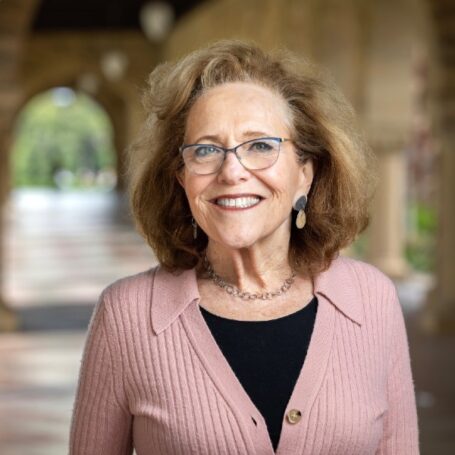
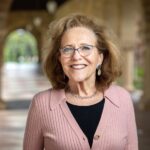
Margaret Levi, director of CASBS, acknowledged the class has been named during the global COVID-19 pandemic, adding, “Especially during a moment of uncertainty like this, it’s important that we affirm and celebrate the intellectual vitality and strength that the CASBS community embodies.”
The following are the members of the 2020-21 class of fellows; they are listed by name, their field, and their primary institution or affiliation. Several fellowships are funded by some of the center’s partner fellowship programs, and those relationships are noted in the list. This list may increase in the months to come and CASBS faculty fellows, research affiliates and visiting scholars are still to be announced.
- Sigal Alon, Sociology, Tel Aviv University
- Luz Marina Arias, Economics, CIDE, Mexico
- Michael Bernstein, Computer Science, Stanford University
- Sharon Block, History, University of California, Irvine
- Susanna Blumenthal, Law, University of Minnesota
- Jimmy Chan, Economics, Chinese University of Hong Kong (Funded by the Chinese University of Hong Kong)
- Ernesto Chavez, History, University of Texas at El Paso
- Nuraan Davids, Education, Stellenbosch University
- Gerald F. Davis, Business, University of Michigan
- Luis De la Calle, Political Science, CIDE, Mexico
- Paolo de Renzio, Public Affairs and Public Policy, International Budget Partnership
- Kevin Driscoll, Communication, University of Virginia
- Anna Grzymala-Busse, Political Science, Stanford University
- James Guszcza, Philosophy, Deloitte
- Jose Angel Gutierrez, Political Science, Emeritus, University of Texas at Arlington
- Antara Haldar, Law, University of Cambridge
- Roby Harrington, Publishing, W.W. Norton and Company
- Saumitra Jha, Economics, Stanford University
- Kiki Lombarts, Medicine, University of Amsterdam (Funded by Presence, a center at Stanford Medical School led by National Humanities Medal recipient Abraham Verghese)
- Yotam Margalit, Political Science, Tel Aviv University
- John Martin, Sociology, University of Chicago
- Eric Otchere, Music, University of Cape Coast (Funded by the debut STIAS-Iso Lomso fellowship in collaboration with he Stellenbosch Institute for Advanced Study, South Africa)
- Gwen Ottinger, Political Science, Drexel University (Funded through the Frederick Burkhardt Fellows Program supported by the American Council of Learned Societies)
- Alejandro Pérez Carballo, Philosophy, University of Massachusetts Amherst
- Thomas Pradeu, Philosophy, CNRS, France
- Trinidad Rico, Anthropology, Rutgers University (Funder through the Frederick Burkhardt Fellows Program supported by the American Council of Learned Societies)
- Elizabeth Roberts, Anthropology, University of Michigan
- Prerna Singh, Political Science, Brown University
- Tuan-Hwee Sng, Economics, National University of Singapore (Funded by the National University of Singapore)
- Robert Staiger, Economics, Dartmouth College
- Allison Stanger, Political Science, Middlebury College
- Jan Teorell, Political Science, Lund University
- Veronica Terriquez, Sociology, University of California, Santa Cruz
- Karolyn Tyson, Sociology, University of North Carolina
- Greg Walton, Psychology, Stanford University (Walton served as a consulting scholar at CASBS during the 2014-15 academic year.)
- Robb Willer, Sociology, Stanford University (CASBS fellow in 2012-13)
- Chung-li Wu, Political Science, Academia Sinica (Funded by the Stanford-Taiwan Social Science supported by the Science and Technology Policy Research and Information Center within the National Applied Research Laboratories of Taiwan)
- Vivian Zayas, Psychology, Cornell University