Jeffrey Ian Ross on Convict Criminology
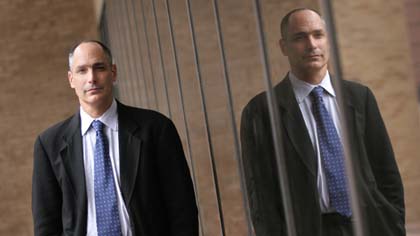
“Convict criminology,” Jeffrey Ian Ross explains in this Social Science Bites podcast, is “a network, or platform, that’s united in the perception that the convict voice has been either neglected or marginalized in scholarship or policy debates in the field of criminology in general, and corrections in particular.”
Ross, a professor in the School of Criminal Justice at the University of Baltimore, is one of the originators of the concept, he tells interviewer David Edmonds. Seeing “a big gap” in the work of criminology and corrections, in the early 1990s he and Stephen Richards focused on tapping “the lived experience of convicts” for this academic work. Both men had experience with the corrections system – Ross had worked for several years in a correctional institution and later was a social science analysts with U.S. Department of Justice, while Richards had spent three years in federal prison for marijuana distribution before becoming a professor.
About half of the people in the field of convict criminology are either ex-convicts, have impacted by the prison system or are prison activists who have or are in the process of getting a PhD in criminology, Ross says. “Many people who have a criminal conviction try to keep it quiet,” Ross says about jobseekers in academe (or anywhere), and he’s proud of the strides convict criminologists have made. “We’ve managed to forge a beachhead and produce very impressive scholarship,” he says, all the while offering authenticity and degree of inside knowledge.
Convict criminology, he details, rests on three pillars: scholarly research, mentorship, and some sort of service or activism. All three pillars arise from a “desire and goal to make a meaningful impact on prison conditions.”
So mentorship, for example, might involve having ex-cons be mentors in re-entry programs, while scholarly research benefits from both having an inside view that pays extra dividends when interviewing incarcerated or formerly incarcerated subjects and in understanding the nuances of their accounts.
Ross has written, co-written or edited a number of books on criminology, including the Routledge Handbook of Street Culture and Convict Criminology for the Future, both out this year.
He has received a number of awards over the years, including the University of Baltimore’s Distinguished Chair in Research Award in 2003; the Hans W. Mattick Award, “for an individual who has made a distinguished contribution to the field of criminology and criminal justice practice,” from the University of Illinois at Chicago in 2018 Last year he received both the John Howard Award from the Academy of Criminal Justice Sciences’ Division of Corrections and the John Keith Irwin Distinguished Professor Award from the American Society of Criminology’s Division of Convict Criminology.
To download an MP3 of this podcast, right-click HERE and save.
Join the debate and discuss this episode with fellow listeners on our Multytude conversation. Multytude is a new social media app that aims to make sense of the online conversation. With support from the SAGE Concept Grant, the Multytude team is working to create a new method of qualitative research for social scientists to better understand what people are saying about the big issues of today.
For a complete listing of past Social Science Bites podcasts, click HERE. You can follow Bites on Twitter @socialscibites and David Edmonds @DavidEdmonds100.
































































































Thank you for all the wonderful work you are doing with returning citizens. As you know, there is a systemic oppression of individuals suspected or convicted of a crime. It extends to supporters of people who are or have been incarcerated. I call this cultural prejudice “felonism”. It is this systemic oppression that motivates people, like the ones you mention, to remain silent about their connections to the criminal “justice” system. In our schools today, children do no talk about the trauma of seeing their parents in prison with school staff because they know it is not safe. In fact,… Read more »