Heaven Crawley on International Migration
In the Global North, media and political depictions of migration tend to be relentless images of little boats crossing bodies of water or crowds of people stacking up at a dotted line on a map. These depictions presume two things – that this is a generally comprehensive picture of migration and that, regardless of where you stand, the situation around migration is relatively dire.
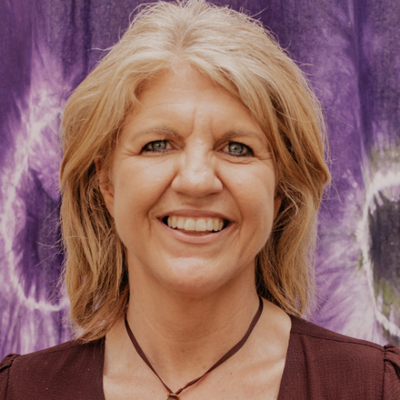
Enter Heaven Crawley, who heads equitable development and migration at United Nations University Centre for Policy Research. She also holds a chair in international migration at Coventry University’s Centre for Trust, Peace and Social Relations, and directs the South-South Migration, Inequality and Development Hub since 2019, a project supported by UK Research and Innovation’s Global Challenges Research Fund. From her perch, spanning government, academe and field research, she says confidently in this Social Science Bites podcast that international migration “is not an entirely positive story, but neither is it an entirely negative one. What we’re lacking in the media conversation and in the political discussion is any nuance.”
Connecting nearly all the regional debates about migration “is the lack of an honest conversation about what migration is and what it has been historically. It has historically been the very thing that has developed the societies in which we live, and it is something on which the clock cannot be turned back.
“And none of us, frankly, if migration was to end tomorrow, would benefit from that.”
Trying to bring a clear eye to the debate, she explains to host David Edmonds that roughly 3.6 percent of the world’s population, or 280 million people, could be considered migrants. Of that, about 32 million fit under the rubric of “refugee.” And while the sheer number of Migrants is growing, the percentage of the world’s population involved has been “more or less the same” last three decades.
And while this might surprise European listeners, almost 40 percent of migration originates from Asia– mostly India, Pakistan and Bangladesh — followed by Mexico. There is a lot of migration from African countries, Crawley notes, which gibes with European media, but most of that migration isn’t to Europe, but within the African continent.
Who are these migrants? Overall, she says, most people who move are less than 45. Nonetheless, “the gender, the age really depends on the category you’re looking at and also the region you are looking at.” Generalizations about their qualifications can be fraught: low-skills migrants ready to fill so-called “dirty, difficult and dangerous jobs” and high-skill migrants draining out their country’s brains can often depart from the same nation.
Crawley agrees that migration currently is a politically potent wedge issue, but she notes it has been in the past, too. She suggests that migration per se isn’t even the issue in many migration debates. “A whole set of other things are going on in the world that people find very anxiety-producing” – rapid changes in society drawing from security, economy, demographics, and more, all against a backdrop of “migration simultaneously increasing (in the number of people on the move, not the proportion) and the variety of people also increasing.”
This creates an easy out for policymakers, she says. “Politicians know that if they’ve got problems going on in society, it’s very easy to blame migration, to blame migrants. It really is a very good distraction from lots of other problems they really don’t want to deal with.”
This is also why, she suggests, that responses such as deterrence are more popular than more successful interventions like addressing the inequalities that drive migration in the first place.
Crawley’s career saw her sit as head of asylum and migration research at the UK Home Office, serve three separate times as a specialist adviser to the UK Parliament’s Home Affairs Committee and Joint Committee on Human Rights, and be associate director at the Institute for Public Policy Research. In 2012, in recognition of her contribution to the social sciences and to evidence-based policymaking, she was named a fellow of Britain’s Academy of Social Sciences.
To download an MP3 of this podcast, right-click HERE and save.
Join the debate and discuss this episode with fellow listeners on our Multytude conversation. Multytude is a new social media app that aims to make sense of the online conversation. With support from the SAGE Concept Grant, the Multytude team is working to create a new method of qualitative research for social scientists to better understand what people are saying about the big issues of today.
For a complete listing of past Social Science Bites podcasts, click HERE. You can follow Bites on Twitter @socialscibites and David Edmonds @DavidEdmonds100.