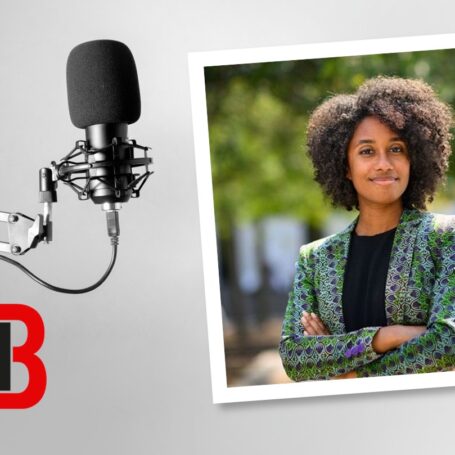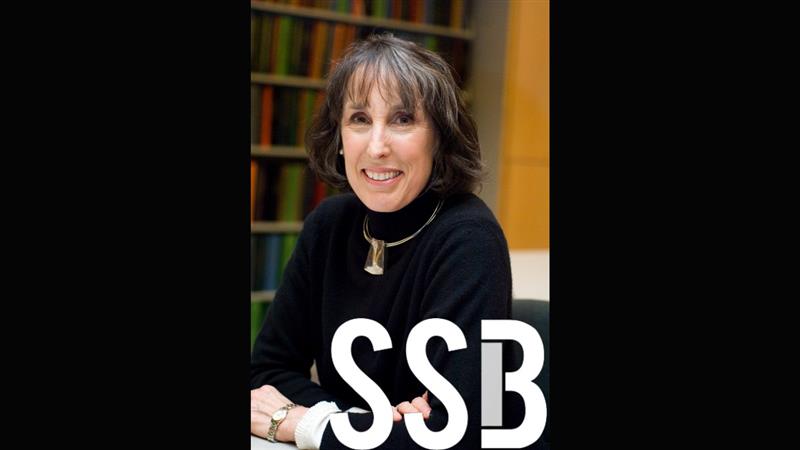
Setha Low on Public Spaces
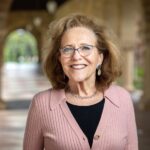
Having been raised in Los Angeles, a place with vast swathes of single-family homes connected by freeways, arriving in Costa Rica was an eye opener for the young cultural anthropologist Setha Low. “I thought it was so cool that everybody was there together,” she tells interview David Edmonds in this Social Science Bites podcast. “… Everybody was talking. Everybody knew their place. It was like a complete little world, a microcosm of Costa Rican society, and I hadn’t seen anything like that in suburban Los Angeles.”
That epiphany set Low, now a distinguished professor at the Graduate Center of the City University of New York, onto a journey filled with the exploration of public spaces and a desire to explain them to the rest of the world. This trek has resulted in more than a hundred scholarly articles and a number of books, most recently Why Public Space Matters but including 2006’s Politics of Public Space with Neil Smith; 2005’s Rethinking Urban Parks: Public Space and Cultural Diversity with S. Scheld and D. Taplin; 2004’s Behind the Gates: Life, Security and the Pursuit of Happiness in Fortress America; 2003’s The Anthropology of Space and Place: Locating Culture with D. Lawrence-Zuniga; and 2000’s On the Plaza: The Politics of Public Space and Culture.
Low is also director of the Graduate Center’s Public Space Research Group, and has received a Getty Fellowship, a fellow in the Center for Place, Culture and Politics, a fellowship from the National Endowment for the Humanities, a Fulbright Senior Fellowship, and a Guggenheim for her ethnographic research on public space in Latin America and the United States.
She was president of the American Anthropological Association (from 2007 to 2009) and has worked on public space research in projects for the Center for Advanced Study in the Behavioral Sciences at Stanford and was cochair of the Max Planck Institute for Religious and Ethnic Diversity’s Public Space and Diversity Network.
To download an MP3 of this podcast, right-click this link and save. The transcript of the conversation appears below.
David Edmonds: What is a public space? Setha Low is an anthropologist of space at the City University of New York. Here she discusses problems with defining public spaces and, more importantly, why public spaces matter.
Setha Low, welcome to Social Science Bites.
Setha Low: Thank you so much for having me. I’m really looking forward to our discussion.
David Edmonds: We’re talking today about public space. What is public space?
Setha Low: That’s always a hard question to start with, because a lot of people like to debate, what do we mean by public space? I like to think of public space in a fairly straightforward way, which means anywhere that everyone has access to. But I am particularly interested in open spaces where there’s open access. Lots of people argue that public space needs to be owned by the government, or governmental space, or it needs to be in some way institutionally, public or not. And you can get into all kinds of refinements among researchers, like myself, about what we really mean.
And in fact, I’ve gone so far as to argue with them that we’re not always talking about the same thing. In my case, I usually am studying parks and plazas and streets and sidewalks and little found spaces under bridges, and kinds of places that really everyone is expected to use, but others really mean something different.
David Edmonds: That’s interesting, because the spaces you’re talking about are all free to enter, where some people talk about public spaces like local sports facilities, where you do have to pay, but they’re still public.
Setha Low: Exactly. And as I said, I think the best way to think about it is to think about it in a layered way. I’m most interested in those that really are open and really everyone can be the ones we talk about as being democratic and that have all these incredible goods that they give to society, they offer us so much. But there are lots and lots of kinds of spaces in which there is a door or a library. In the United States, libraries are free and they’re public and you can’t be charged. Or places that then have a public stadium, but everyone can go as long as they can pay the fee. So there’s all these gradations, really, of publicness that we’re talking about. And the question is, from a researcher’s point of view, from a social scientist’s point of view, are they all the same? Can we compare them all, or should we be thinking about them as separate kinds of spaces. Even open spaces with open access, like a park, could be owned privately, and therefore not really, in some senses, be as public as it would be otherwise. And you have them where you are, as well as here in New York City.
David Edmonds: That’s very interesting. So in theory, a park that was owned by a private corporation could be public, although I guess one difference is that the private company could at any stage, close it down …
Setha Low: … or guard it, or police it, or have private guardian or have specific kinds of rules or limitations that would change it from the public realm, One of the most contested spaces in the United States, which I think is interesting, is like a mall. A mall is a private space. Now, as you say, lot of malls in the United States are actually open air. They’re not all so covered, so you don’t have to enter. However, since it’s privately owned, certain behavior, decorum, dress is required, and the right to political speech is contested. And one would argue, from one point of view, is in the winter here, there are a lot of older people and mothers with children who use them all to do their everyday walking, and it becomes kind of like a park or a plaza inside. And yet there are limitations to what they can do, and limitations of the people that they let in. In large malls in Iran, it’s the one place that women feel safe to go and walk. There are places that feel more public safe for Iranian women than other spaces, an open park. So there’s a lot of contradictions. It’s not as simple as it sounds, and one needs to tease out what one’s talking about, because the implications are that some of these spaces produce different social outcomes than others.
David Edmonds: Right. So let’s get on to that now. All these gradations about what counts as public space, how one defines public space. But I guess another route into this is to ask why public space is valuable?
Setha Low: That is another route here. And there is an incredible literature, as anyone listening to this podcast probably knows, about all the goods. I recently wrote a book, Why Public Space Matters, simply to put together all the evidence that we had in one place so that, say you wanted to bring to your regional government’s attention, that you want to save a public space. Why should it matter? And it runs through the very grand ideas that public space is the one place that you can see everyone in your society, and therefore it promotes democracy. I’ve written a little bit about those open public spaces where you can meet people who are different, have this incredible liberalizing effect on people. It can create a wider world view of the people using them, and it can lead to a public culture that allows difference to be with each other in a moment in time in which we’re politically polarized, socially segregated, so that there’s the democratic bringing-together, see others.
But there’s a lot of very concrete other things that go on. I mean public spaces where children are socialized and where they play and where they learn creativity. These are places where people work in 60 percent of the world, people work in informal economy. The informal economy — the workplace is public space. That means streets and parks and plazas and sidewalks. That means 60 percent of the Global South is making their living in public space. Public space are often the green spaces we have, so that they are one of the main places that contribute to sustainability in the city. They are places of cultural expression and cultural identity, where families, large families again, in a city like New York, or, may I say, London, where people come together in large families, they live in tiny apartments. This is where they come together, have their cultural festivals. And so it’s a re-inscription of cultural activities.
It’s a place after disasters, believe it or not, where people come together to rebuild. During Covid, parks took on a very special role. I argue many times that, from a social science point of view, it’s one of the things that city managers could put money in that would have very broad effects around many, many people with many positive benefits in different realms of life, from the economic to the social.
David Edmonds: And to return to something we were talking about earlier, none of those things of value that you’ve just mentioned, it’s not necessarily required that that public space is publicly owned, because you could have a very enlightened private owner of a so-called public space that allowed all the things that you’ve just mentioned.
Setha Low: Absolutely and there is one Brooklyn Bridge Park — with a beautiful view of Manhattan — is a totally privately owned public space. It is funded by residential fees and condominiums that were built as part of the project. It’s totally private, but they offer every kind of activity you could possibly imagine, and they do not seem to date to be excluding anyone from coming. Now they do have a lot of surveillance. In other words, there are people everywhere who kind of manage, who is there, but indeed it really functions publicly.
However, there are other privately owned public spaces. In fact, there are about 550 in New York City. At least half of them have guard dogs or [are] disused or have gates or full of for profit activities. In other words, it can go either way. It isn’t that private money can’t produce public space. It’s that it’s not necessarily to its benefit if it’s a private corporation; many of these spaces are really an amenity to sell housing or coffee or restaurant. So that changes the dynamics of why that space is there.
David Edmonds: We’ve talked a bit about what a public space is and why they’re valuable. What’s happened to public space? Well, first in America, and then maybe you can say something about what’s happened to public space globally? What’s been the trend?
Setha Low: Well, globally, the trend has been the same. It’s certainly the same in the UK as in the United States, that more and more space is getting privatized. And in fact, more and more of us are trying to look into how it is to steer what we call public-private partnerships, or business improvement districts, or certain kinds of private public new kinds of relationships that will allow them to function in the way we want them to, to provide all these societal, economic, sustainability goods. The issue is, once something becomes privatized, we actually don’t have a lot of information, a lot of research (we’re talking about social science research) on the long term consequences. Everything from what I think is Canary Wharf, is that in London that’s so famous, or Hudson Yards, which I’ve written about, which is in downtown New York, the studies I’ve done is that when you interview people, they know very well, if they aren’t very rich, that they don’t belong there, that there’s all kinds of information, from the cost of coffee to the what guards say, to whether there’s any seating, to whether there’s what we call hostile architecture, on and on and on. So that even if it’s public, in one sense, all the esthetic, surveillance, policing, architectural, visual details are there telling you you shouldn’t be there.
David Edmonds: What’s hostile architecture? Is that architecture that puts people off from hanging around basically?
Setha Low: Yeah, it’s a bench which has arms, so a person who is, say, unhoused or, you know, a rough sleeper, as they say, can’t sleep on it. But it could be even spearheads, you know, prongs on a sitting ledge of a building. And it isn’t to keep off the pigeons. It’s to keep people off from sitting there. I mean, hostile architecture is anything that is designed to keep human beings from using it in what is deemed to be an inappropriate way.
One other thing I’d love to talk about, which is one of the ways that public space is important to us, is that people, indeed themselves, can make it public. In other words, public space is also about publicity: people making the space their own. And when we have things like hostile architecture or rules that you can’t sit or rules that you can’t eat, or whatever, you suddenly have changed the ability of individuals to appropriate a space themselves.
David Edmonds: And that’s empirically a fact, is it, that these public spaces have become more rule governed? There’s more don’t walk on the grass, don’t eat your own food in this space?
Setha Low: So I wish I knew if it was much greater concern, but there is more concern once public space becomes privatized, that the people who are there are of a certain type. I call it a new moral landscape, a kind of financial moral landscape that some people are deemed to be useful and helpful and could buy coffee and the kind of person you want you look right, whatever, you’re the right color, when it comes to the United States, you’re not a youth of color, and you fit within this kind of scheme that the private corporation feels is appropriate. Now that isn’t everybody. We know that society is much broader than that, and we know that our cities are also struggling with rough sleepers. We call unhoused people homeless. We know our cities are dealing with all kinds of dislocated migrants and immigrants. We have populations that are not necessarily who a private corporation feels that they’re going to be able to make profit from, be it an apartment or a restaurant or a cafe or whatever. So the goals shift. What was a public space is really about something else.
David Edmonds: But could one argue that some of these rules, and for example, CCTV cameras, make a place safer and more congenial for the majority? So for the vast majority that might be a better public space?
Setha Low: It depends on what we mean by a majority. I mean, this is a political decision. I mean, you’re also taking away the possibility for the majority to know that, maybe, there is a minority that is really suffering and in trouble, and you begin to have a society that isn’t aware of what’s really going on inside it. The evidence is, I mean, I’ve done 35 years of research on this, that public spaces reflect what’s going on in our culture and society at that moment in time. So by keeping out a whole group of people, and the question is, how many people are you keeping out? Because if all the youth of color in New York City feel uncomfortable in highly surveilled police spaces where they can’t eat, have a bicycle or play music or any of the things that youth might do, what percentage do you think it is? Is that such a small minority? Or are you disenfranchising huge hunks of your population from being part of the cvic whole, and then what does that say to them?
And again, this is a global problem. It’s certainly a problem where you’re sitting — London faces as much. Maybe it’s a big city, but it’s Bogota, even Moscow. Moscow’s new parks are surveilled and controlled in ways that the old ones were. These are kind of global issues of who belongs, who can be there, who is really a citizen.
David Edmonds: But there are two sides to that argument. Right? I’m thinking about the parents who send their kids off to the local park, and who don’t want drug dealing in that part, and who are quite happy if there’s surveillance, because their kids are likely to be safer.
Setha Low: I know. That is true, and in some of our low-income neighborhoods, where there is a lot of drug dealing, it is possible that some parents do want some surveillance. On the other hand, if you have stop and frisk, as we have, when the kids can’t even show up, then they don’t want it. And on the other hand, I will remind you that is often long-term drug dealers, be it in Costa Rica, where I’ve worked, or in Denver, Colorado, or Washington Square, that is the gentleman who — often men — who sit there during the day and maybe do deal some drugs, are the same people who call the ambulance for the elderly woman who is having a heart attack. So publicness is created, and a kind of culture is made. So a certain amount of drug dealing — I’m not saying where it’s all drug dealers — I’m saying a certain amount of illegal activity within the larger whole sometimes provides more benefits than one would realize. Because the gentlemen often, and women who sit and often have drink during the day say, in Denver, where I work on a plaza, they’re the ones who know what’s going on, and in many ways, they keep it safer, not more dangerous. So it’s very, very complicated, that old fashioned Jane Jacobs eyes on the street, which I question sometimes, but eyes in public space are very useful.
So I can’t give you one formula. It may be that the parents would prefer there’d be no drugs in the park, but if the people who are there are part of the whole park and keeping it safe and surveilled in general, in a way that is not bringing in the police and having their children jailed, I don’t know
David Edmonds: You’ve described the trend that there’s growing privatization, and obviously, if public space is valuable, that’s a bad thing. What are the policy implications of what’s happening and how to reverse it?
Setha Low: Well, actually, Matthew Carmona, who is in the UK, has been trying to work on a bill of rights of what does the public have a right to in a privatized public space. Let’s go back to the government issue. The reason we have more and more privatized space is that there isn’t enough funding in the public sector to keep the spaces that we have well maintained and surveilled. In a place like New York City, there used to be like 32,000 workers in park, and there were people in the park all the time to help give out balls, to promote activities and to help keep everybody safe. It’s down to what is there 2,000 park workers or something? Is there 2,300 in all of New York City now? The funding to have any kind of maintenance crew or whatever has totally disappeared. And in fact, it’s less than 1 percent of our budget in New York City. So with that, and going back to the crisis 50 years ago, in the great 1974, 76 crisis in New York City, when we went bankrupt, private people and private firms came in and took over spaces so that those spaces would survive.
The problem is, is that the economics of the public sector are such that it is inviting in privatization. If you want a new private space, you’re going to ask the developer to develop it as part of his new housing area, and he’s going to maintain it in a certain way that will encourage people to buy his very expensive houses. The incentive is not there.
David Edmonds: But the public could insist on certain rules of engagement, as it were, in that public space.
Setha Low: They could, but it’s been very hard. That’s why we have a big experiment from what we call POPS, privately owned public spaces. You have POPS as well. And as I said, the research on POPS, first in 2000 by Gerald Caiden, and now in 2023 by The New York Times, shows that at least half of them are not allowing the public in. I mean, I would argue that we need better funding of the public sector. The whole reason I wrote Why Public Space Matters, and have done all the research that I’ve done over all these years, is to demonstrate that public space is important and it has societal benefits, and that there is a reason that we think of these as democratic spaces, and that one talks about development of public culture and tolerance of one another and tolerance of diversity, and that we’re moving very much to the right where they’re really emphasizing intolerance. I’d rather see us do the more social thing, which is to remember that the only way to really feel safe in a city is to know other people, and the more we separate ourselves, the less we know each other, and the more afraid we are.
David Edmonds: It sounds like much of your research involves going to public spaces and interviewing people, talking to people. I just wondered how long you have to be in a public space before you can tell whether or not it’s working as a public space?
Setha Low: Depends! For me now, after all these years, not very long. I’ve developed a toolkit called the TESS, a Toolkit for the Ethnographic Study of Space. It’s on the Public Space Research Group website. It’s also in the book. It’s free. Any community member could take my little toolkit, go out and spend a few days taking a look around, and I think pretty quickly, they’ll find out whether their public space is working or not.
But there’s also the issue of what criteria should they be using? I mean, that’s the other part of it. I am arguing for a kind of social justice-based framework. Not everyone would agree. I mean, there are other people who would want to evaluate public spaces as is making money.
David Edmonds: But when you go to these public spaces, what is your antennae picking up?
Setha Low: Well, a lot of what you pick up is when people tell you something very different from what you see. It’s those disruptions. That’s what an ethnographer really is looking for. You see one thing happen, you know, no interaction between two groups of people in one section, and a kind of barren contact zone in between. And then you go and interview everyone, and they say, “Oh no, we have really strong friendships, and we really get together all the time.” That’s the moment in which I need to dig a little deeper about rules and regulations and unspoken cultural norms that are going on. I think every human being who goes out in any kind of space at all has a good idea about norms, how to feel, what you should be doing or not, and that tells you very, very quickly what’s going on in the space.
Of course, if you’re a social scientist, you really want to go out and do a much longer kind of analysis, and there are two ways to do that. One, like you say, spend a lot of time, or two, use a group of different methods. I mean, I’ve also, from a social scientist point of view, a sort of multi-method triangulation way of working in public space, I have found very effective, because what happens is each of the methods, let’s say you map where everyone is and what their behaviors are. And maybe you go online and look at all the sentiment analysis of what they’re saying about the place on Google. Maybe I do some interviewing. On another hand, maybe I do participant observation in which I’m spending days, you know, and you look at the history and what the newspapers are saying, what the media is saying. You start putting those pieces together, each one gives you a different view, and when you put them together, you can see the cracks and you can get, usually, a very good idea of what might be going wrong.
Davis Edmonds: What’s your favorite public space?
Setha Low: I don’t know. I mean, I guess in New York Prospect Park, because I live near it in Brooklyn. Personally, I happen to love all public spaces. I really like tiny little plazas, you know that you find in Spain and Italy, in the center of a little town where everybody goes at night, going to Latin America after living in suburban LA is what started this whole thing. I thought it was so cool that everybody was there together, and there were people dealing drugs, and there were people selling flowers, and there were moms and children playing, and there were fathers in the morning reading their newspapers, and I don’t know. Everybody was talking. Everybody knew their place. It was like a complete little world, a microcosm of Costa Rican society, and I hadn’t seen anything like that in suburban Los Angeles, where I grew up, there aren’t spaces like that. Now, most recently, I’ve been interested in the beach. I would say right now, my favorite public space is the beach, and we’re losing beaches even faster than we’re losing other kinds of public spaces because of climate change, as well as the incredible value of beachfront property in which has allowed wealthy individuals to reduce or deny access to the public. And the rate that’s happening is much, much greater than anything I’ve studied before. But I’ve just started that I have a book out this year called Beach Politics, which is a group of social science studies from all over the world of how different cities and areas are losing beaches to different kinds of factors.
David Edmonds: I look forward to reading that. But in the meantime, Setha Low, thank you very much indeed.
Setha Low: Thank you so much. It was really fun to have this talk.