 Impact
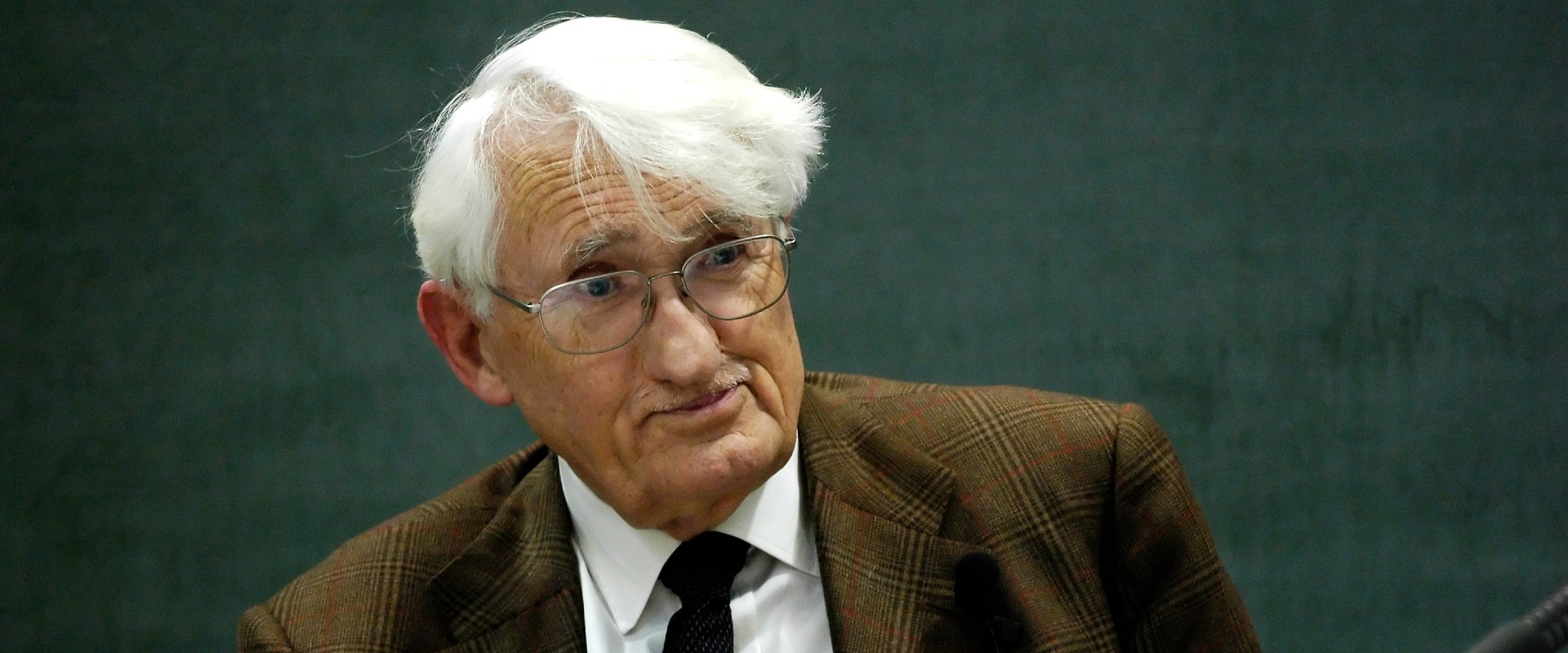
 Jürgen Habermas, 1929-2026: Exponent of the Public Sphere
Jürgen Habermas, a globally known social theorist whose explorations of democracy, validity and communication have gained new prominence in the current moment, has died at age 96. According to his publisher, Suhrkamp Verlag, Habermas died Saturday in Starnberg, Bavaria, where he had lived since 1994.
An emeritus professor of philosophy at the Johann Wolfgang Goethe University of Frankfurt, he remained part of the scholarly conversation until the end. Habermas’s monumental Also a History of Philosophy came out in 2023 and his latest book, the autobiographical Things Needed to Get Better: Conversations with Stefan Müller-Doohm and Roman Yos, came out in German in 2024. The newspaper De Standaard reported he was “actively thinking and writing until that advanced age.”
Habermas served a bridge to an older European tradition of theoretical social science and critical theory, studying under thinkers like Theodor Adorno and Max Horkheimer and influenced by others like Karl Löwith and Martin Heidigger. While Habermas’s own scholarship evolved well beyond these roots, his ‘membership’ in the so-called Frankfurt School of social and critical theory, aimed at deploying Marxist thought for human good, remained in the DNA of his subsequent work — even as he publicly broke with the school of thought in 1971 and any overtly Marxist sheen wore away.
“Critical Theory was initially developed in Horkheimer’s circle to think through political disappointments at the absence of revolution in the West, the development of Stalinism in Soviet Russia, and the victory of fascism in Germany,” Habermas wrote in The Entwinement of Myth and Enlightenment. “It was supposed to explain mistaken Marxist prognoses, but without breaking Marxist intentions.” As a result, he would write separately, such institutional critical there was left with nothing “in reserve to which it might appeal, and when the forces of production enter into a baneful symbiosis with the relations of production that they were supposed to blow wide open, there is no longer any dynamism upon which critique could base its hop.”
Much of Habermas’s work involved how ideas are communicated (a throughline some have linked to his being born with a cleft palate). As The New York Times summarized in its obituary, “If the death and destruction of World War II had soured most thinkers on reason and its power to lead to the common good, Dr. Habermas saw rational communication as a chance to redeem democratic society.” His book, The Theory of Communicative Action, notes that while an “ideal communication community” is at best a utopian fiction, “the interrelation between normative consensus, worldview, and institutional system, however, is that the connection is established through channels of linguistic communication. … Communicative action is a switching station for the energies of social solidarity.”
This concept of turning to the demos for the benefit of the demos marked his debt to the Enlightenment, which he described as “unfinished” but still relevant for the public good in modern times. Even his final book was pitched as a counter-argument to the “defeatists” of our time.
Friedrich Ernst Jürgen Habermas was born on June 18, 1929 in Düsseldorf and grew up in the small city of Gummersbach, located further east in North Rhine-Westphalia. As noted, he was born with a cleft palate and required two corrective surgeries by the time he was 5. “I do not believe that this surgery enduringly shattered my trust in the world around me,” he reflected in 2009. “However, that intervention may well have strengthened my sense of dependence and vulnerability, not to mention my awareness of the relevance of our interaction with others. At any rate, the very social nature of human beings became the starting point for my philosophical reflections.”
In addition, he suffered difficulties in being understood. This manifested itself in two specific arenas: Firstly, it highlighted the importance of language (and the bullying one may see for not hitting a community standard). “Only in a failing performance,” continued, “does the medium of linguistic communication emerge as a shared stratum without which we could not exist as individuals, either. We always find ourselves existing in the element of language.”
Secondly, he preferred writing to speaking. “My speech impediment may incidentally also explain why I have always been convinced of the superiority of the written word over the spoken. The written form disguises the stigma of the spoken.”
While having been born in 1929 Germany he had, he noted, the “good fortune to be born late” for military service, although he did serve in the Hitler Youth and late in the war was posted to an anti-aircraft detachment.
“It was the caesura of 1945 that first led to an eye-opening experience for my generation, one without which I would hardly have ended up in philosophy and social theory,” he noted in his 2009 reflection. “Overnight, as it were, the society in which we had led what had seemed to be a halfway normal everyday life, and the regime governing it, were exposed as pathological and criminal. In this way, the confrontation with the heritage of the Nazi past became a fundamental theme of my adult political life.”
After the war, Habermas attended university in Göttingen and Zurich before earning a doctorate in philosophy from the Rheinische Friedrich-Wilhelms-Universität Bonn in February 1954. He worked as newspaper journalist for several years and married in 1955 before becoming Adorno’s research assistant at the University of Frankfurt am Main’s Institute for Social Research (ISR), the home of the Frankfurt School. While there, his written work drew the ire of Horkheimer, and Habermas as a result decamped to the University of Marburg to finish his studies in political science.
He taught at Marburg before the University of Heidelberg offered him professorship in philosophy, which he held for two years. During that time he published The Structural Transformation of the Public Sphere: An Inquiry into a Category of Bourgeois Society, which was an early stab at both delineating a public sphere and then critiquing it in its modern form.
In 1964, he came back to Frankfurt (but did not join ISR), saw his good relations with Horkheimer restored, and took the chair in philosophy and sociology which had been held by over Horkheimer. In 1968 he published Knowledge and Human Interests, which created a space between natural science and the humanities to house critical social history.
Habermas stayed at Frankfurt until 1971, when he joined the Max Planck Institute for the Study of the Conditions of Life in the Scientific-Technical World in Starnberg as director, serving there until the center shuttered and then returning to Frankfurt. He also lectured at the University of California, Berkeley that year.
During his career, Habermas engaged in many public debates with leading social scientists and philosophers, including Michel Foucalt, John Rawls, Karl-Otto Apel, and Jacques Derrida, as well as a less-amicable Historikerstreit with several prominent German historians over what he as their revisionist take on the Nazi period.
Such visible disputes demonstrate Habermas’s increasing public intellectualism, often turning a lens on Europe itself. “Germany and Europe,” eulogized German Chancellor Friedrich Merz, “have lost one of the most significant thinkers of our time.” His prominence meant his statements, such as his “Principles of Solidarity” response to the Gaza war, could ignite heated debates.
“Intellectuals,” he argued in 2009, “should make public use of the professional knowledge that they possess – for example, as a writer or a physicist, a social scientist or a philosopher – and should do so of their own initiative, in other words without being commissioned to do so by anyone else. They need not be neutral and eschew partisanship, but they should make a statement only in full awareness of their own fallibility they should limit themselves to relevant issues, contributing information and good arguments in other words, they should endeavor to improve the deplorable discursive level of public debates.”
During his lifetime, Habermas received an array of prizes from around the world, including the German Order Pour le Mérite in 2022; the Dutch Erasmus Prize in 2013; the Austrian Viktor-Frankl-Preis in 2011; the Norwegian Holberg Prize in 2005; the Japanese Kyoto Prize in 2004; and the Spanish Prince of Asturias Award for Social Sciences in 2003.