Social Psychologist Hazel Rose Markus Wins 2026 Sage-CASBS Award
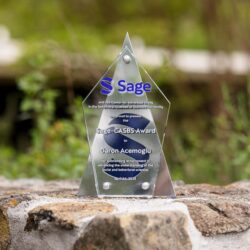
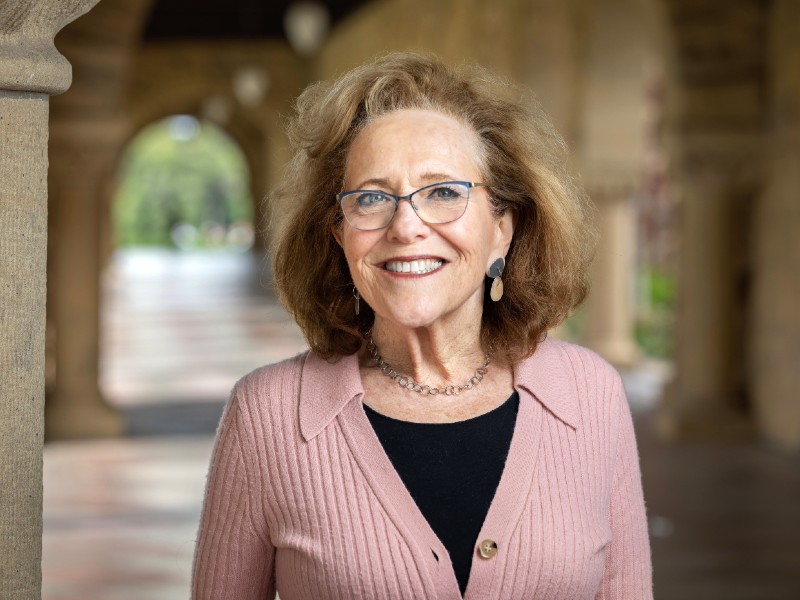
Hazel Rose Markus, a pioneer in social and cultural psychology and a co-founder of Stanford SPARQ, will receive the 2026 Sage-CASBS Award from the academic publisher Sage and the Center for Advanced Study in the Behavioral Sciences at Stanford, the sponsors announced today. She will deliver a free public award lecture on May 7, 2026, at the Center for Advanced Study in the Behavioral Sciences, or CASBS.
Markus is the 10th recipient of the award, established in 2013, which recognizes outstanding achievement in the behavioral and social sciences that advance our understanding of pressing social issues.
The Davis-Brack Professor in the Behavioral Sciences in the Department of Psychology at Stanford, Markus pioneered theory and research on self, identity, and agency, and how they provide meaning and structure to people’s daily lives. She has illuminated ways in which cultural contexts and psychological processes constitute each other. Her basic and applied work cut across different problem areas related to education, health, climate, and policing, and have significantly broadened our understanding of human behavior beyond Western, affluent, industrialized contexts.
Markus has served on the faculty of Stanford University since 1994 and is a co-founder and current faculty co-director of Stanford SPARQ, which builds research-driven partnerships with industry leaders and change makers to address society challenges in education, health, criminal justice, and economic development.
She previously served as director of Stanford’s Research Center for Comparative Studies in Race and Ethnicity. Externally, she is a trustee of the Russell Sage Foundation and an advisor to the Canadian Institute for Advanced Research’s (CIFAR) Boundaries, Membership, and Belonging Program. Before joining Stanford, Markus held faculty appointments in psychology at the University of Michigan as well as research scientist appointments at the Research Center for Group Dynamics within that university’s Institute for Social Research (1975-94). She also served as president of the Personality and Social Psychology Society (2003-04).
Her basic and applied work cut across different problem areas related to education, health, climate, and policing, and have significantly broadened our understanding of human behavior beyond Western, affluent, industrialized contexts.
“In her pathbreaking explorations of how people are shaped by, and in turn can shape, their various cultures, Hazel Markus gets to the heart of things that can both unite and divide us – religion, ethnicity, gender, class, race, nation of origin, and other demographic characteristics,” said Blaise Simqu, CEO of Sage. “In so doing, she has expanded our knowledge about the feelings, behaviors, and interactions that constitute our social world and deploys that knowledge in real-world settings.”
Her early-career research and theorizing showed the importance of self-schemas – cognitive generalizations about the self, derived from past experiences – in organizing knowledge about the self and in guiding processing of self-relevant information. Based on that work, Markus later demonstrated in coauthored works on “possible selves” – people’s ideas of what they might become or would like to become – that people’s concepts of self have interpretive force, providing meaning to past, current and future experiences, as well as motivational force, guiding them to approach some people and environments and avoid others.
In perhaps her most celebrated set of contributions, initially with collaborator Shinobu Kitayama (a CASBS fellow with Markus in 1995-96 and 2008-09), she showed how self-concepts vary across cultures, defined as the ideas, institutions, and interactions that guide individuals’ thoughts, feelings, and actions. They distinguished two ways of conceptualizing the relationship between self and the social world: an “independent” way of being (where agency is organized and made meaningful by a person’s internal feelings, thoughts, and actions) and an “interdependent” way of being (where agency is more relational or conjoint and is contingent on and organized by the feelings, thoughts, and actions of others in relationships).
In an article cited more than 37,000 times, Markus and Kitayama demonstrated theoretically and empirically how these models of self change the role of people’s relationships with others in U.S. and Japanese contexts. Moreover, these differences are reflected in affective, cognitive, and motivational processes previously assumed to be universal. Their paper provided a needed framework for translating differences at the national level into differences at the psychological level. Their work provided testable hypotheses that inspired three decades of research in cultural psychology, which effectively compelled psychology to broaden its focus beyond Western contexts.
Markus continued with groundbreaking work showing how other sociocultural contexts – e.g., socioeconomic status, gender, age – also give rise to different models of the self, with consequences for relationships, education, health, economic development, and health. Markus framed decades of cultural psychology’s principal insights for a public audience in the book Clash! with coauthor Alana Conner. The book describes how frictions between mostly independent cultures and mostly interdependent cultures can ignite or lead to intergroup tensions among regions, races, genders, classes, religions, and organizations; how cultures may be conceptualized as multi-layered cycles of individuals, interactions, ideas, and institutions; how people are “culturally-shaped shapers;” and how to foster intentional culture change.
In addition, with her colleagues and students, Markus has published a series of papers aimed at applying findings in cultural and social psychology to public health, economic development, sustainability, inequality and social class, and education.
Stanford SPARQ offers another example of Markus’s focus on applied social impact. As one example, she worked with co-director Jennifer Eberhardt, Benoit Monin, and members of the Oakland Police Department, through questionnaire design interventions, to reduce common triggers of bias and the number of stops Oakland police officers made of people who were not committing any serious crimes. Markus and Stanford SPARQ also work with community partners to develop toolkits and “solutions catalogs” that translate research into user-friendly formats that practitioners and educators can use to catalyze psychological, behavioral, and societal change. The toolkits help students and co-workers talk about race, help development practitioners decide what psychological and economic measures to use in their projects, and help police officers improve police community relations.
Markus has been a fellow at CASBS three times. In addition to undertaking individual research, during each fellowship she was a member of special group projects approved by the Center: The Social Psychology of Stigma (1980-81), which resulted in the book Social Stigma: The Psychology of Marked Relationships (1984); Culture, Mind, and Biology (1995-96); and, as project leader, of How Race and Culture Constitute Psychological Experience (2008-09), which resulted in the book Doing Race: 21 Essays for the 21st Century. The latter two projects played important roles in advancing the interdisciplinary field of cultural psychology.
“Hazel Markus has fundamentally changed how we understand the relationship between people and their social worlds,” said Lara Tiedens, CASBS’s Sara Miller McCune Interim Director. “Through her groundbreaking research on possible selves and cultural models of selfhood, she has demonstrated how deeply culture shapes psychological experience – and shown that much of what the field assumed was universal is in fact culturally particular. In doing so, she gave psychology a rigorous, structured framework for studying what the field had long acknowledged but struggled to examine systematically. Few scholars have reshaped a field from the inside out the way Hazel Markus has.”
Markus is coauthor of the books Social Stigma (1984) with Edward E. Jones, Amerigo Farina, Albert H. Hastorf, Dale Miller, and Robert A. Scott; Social Psychology (1989 [2024]), with Steve Fein and Saul Kassin, now in its 12th edition; Emotion and Culture: Empirical Studies of Mutual Influence (1994) with Shinobu Kitayama; and Clash! How to Thrive in a Multicultural World (2014) with Alana Conner. She is co-editor of four cross-disciplinary books – Engaging Cultural Differences: The Multicultural Challenge in Liberal Democracies (2002, with Richard Shweder and Martha Minow), Just Schools: Pursuing Equality in Societies of Difference (2008, with Richard Shweder and Martha Minow), Facing Social Class: How Societal Rank Influences Interaction (2012, with Susan Fiske), and Doing Race: 21 Essays for the 21st Century (2022, with co-author and editor Paula Moya).
She is an elected member of the American Academy of Arts and Sciences (1994), the National Academy of Sciences (2017), and the American Philosophical Society (2025), as well as an elected corresponding fellow of the British Academy (2019).
A sampling of other honors Marcus has received includes the Donald Campbell Award (2003), the Outstanding Contribution Award to Cultural Psychology (2017), and the Daniel M. Wegner Theoretical Innovation Prize (2021) from the Society for Personality and Social Psychology; the Distinguished Scientific Contribution Award from the American Psychological Association (2008); and the William James Award for Lifetime Achievement from the Association for Psychological Science (2017).
Sage, the parent of Social Science Space, funds the award, and Marcus will receive a cash prize. She is the 10th recipient of the Sage-CASBS Award; past winners of the award include Daniel Kahneman, Pedro Noguera, Kenneth Prewitt, William Julius Wilson, Carol Dweck, Jennifer Richeson, Elizabeth Anderson, Alondra Nelson, and Daron Acemoglu.