


Could Distributed Peer Review Better Decide Grant Funding?
The landscape of academic grant funding is notoriously competitive and plagued by lengthy, bureaucratic processes, exacerbated by difficulties in finding willing reviewers. Distributed […]

Commenting on the trend for the politically motivated forensic scrutiny of the research records of academics, Till Bruckner argues that singling out individuals in this way has a chilling effect on academic freedom and distracts from efforts to address more important systemic issues in research integrity.

In the following Q&A, Roger J. Kreuz, a psychology professor who is working on a manuscript about the history and psychology of plagiarism, explains the nature and prevalence of plagiarism and the challenges associated with detecting it in the age of AI.
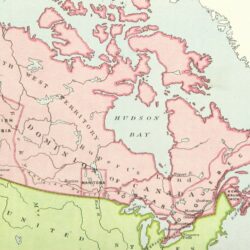
Community-based work and building and maintaining relationships with nations whose land we live upon is at the heart of what Indigenizing is. It is not simply hiring more faculty, or putting the titles “decolonizing” and “Indigenizing” on anything that might connect to Indigenous peoples.

David Canter is horrified by the power of readily available large language technology.

The social sciences have been a consistent target for political operatives around the United States in recent years., and recent actions at the state level have opened a new front in the long-running conflict.

A new project from the National Science Foundation and partners including the Social Science Research Council will examine the economic impact of NSF’s new technology directorate.
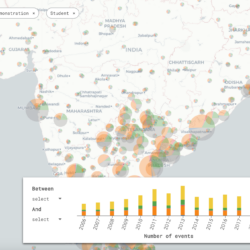
The European Research Center is funding the Global Contentious Politics Dataset, or GLOCON, a state-of-the-art automated database curating information on political events — including confrontations, political turbulence, strikes, rallies, and protests

As he stands down from a two-year stint as the president of the Federation of Associations in Behavioral & Brain Sciences, or FABBS, Social Science Space took the opportunity to download a fraction of the experiences of cognitive psychologist Philip Rubin, especially his experiences connecting science and policy.


Jürgen Habermas, a globally known social theorist whose explorations of democracy, validity and communication have gained new prominence in the current moment, […] People often see science as a world apart: cool, rational and untouched by persuasion or performance. In this view, scientists simply discover […] “Research impact” means different things to different people. Some refer broadly to how science changes behaviors, beliefs, or practices outside academic institutions. […] David Canter considers informal places where people socialize, suggesting they’re an arena ChatGPT and other LLMs can’no’t replicate. As someone who lives […] It’s become cliche since Clive Humbly coined it in 2006, but data is indeed the new oil. It’s a mantra repeated by […] In September 2025, The Guardian reported about a lawyer in Australia having faced sanctions due to false citations. These citations were not […]
EXPLORE
Impact

Jürgen Habermas, 1929-2026: Exponent of the Public Sphere
READ MORE

Scientists Should Keep in Mind It’s Called the ‘Marketplace of Ideas’ for a Reason
READ MORE

Survey Finds Social Scientists Feel Unsupported in Seeking Societal Impact
READ MORE
Innovation

Reaching Parts to Which AI Has No Access
READ MORE

Andrea Medina-Smith on Making Research Data More FAIR
READ MORE

A Status Check on Hallucinated Case Law Incidents
READ MORE