Academic Funding
 Cuts to Behavioral and Social Science Funding Threatened

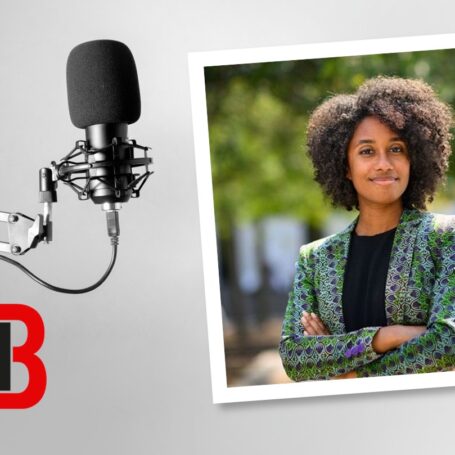
Texas Republican Lamar Smith is the chair of the U.S. House Committee on Science, Space and Technology.
The behavioral and social sciences, a favorite target of Congress for years, may once again be in the sights. The House Science Committee, under the leadership of Chairman Lamar Smith (R-TX), will introduce a bill in the coming weeks to reauthorize programs at the National Science Foundation. The Frontiers in Research, Science, and Technology (FIRST) bill may include reductions in authorized funding levels for National Science Foundation’s Directorate for Social, Behavioral & Economic Sciences.
In late 2013, the House majority released a “discussion draft” of the bill which proposed new accountability measures for NSF awards; put into legislation a number of other research grant conditions; and included an odd section focused on the behavioral and social sciences. The scientific community responded to the committee majority’s invitation to comment on the draft bill, and recommended that many of the sections in the draft bill be eliminated (e.g., the section on social and behavioral science) or modified (see letter).

This post is republished from the Federation of Associations of Behavioral & Brain Sciences, a Social Science Space partner.
Democrats on the House Science Committee, with guidance from ranking member Eddie Bernice Johnson (D-TX), rolled out their version of a strong reauthorization bill late in 2013 which stands in stark contrast to the majority’s bill.
Meanwhile, the Senate Commerce, Science, and Transportation Committee is also preparing its bill to reauthorize NSF. The bill is expected to create a vision for science in the next several years that is similar to earlier America COMPETES bills. The U.S. has been slipping in its investments in science in recent years, especially relative to China, and Senator Jay Rockefeller (D-WV), committee chairman, wants to position the U.S. scientific enterprise for sustainable growth. Rockefeller will retire this year as his current term ends.
Appropriators ultimately provide funding for government programs, but an authorization law setting funding levels for NSF and its Directorates would effectively create a ceiling for appropriators. If the threats to the behavioral and social sciences materialize when the House bill is introduced in the coming weeks, scientists must be prepared to act.
The House majority continues to focus on shrinking the federal budget and “prioritizing” government programs. However, singling out areas of science for targeted cuts would be misguided for several reasons: (1) Identifying priorities in science goes beyond the expertise of most members of Congress and inserts politics into the process; (2) Significant cuts have already been achieved under the ten-year caps set in the Budget Control Act; and (3) Cutting funds from the social and behavioral sciences at NSF will do little to reduce the deficit. Yet, NSF is the main source of federal funding for basic research in the behavioral and social sciences, building the knowledge base which informs so many of the public policy challenges that face the nation.