The Sociologist of Mobility: John Urry, 1946-2016

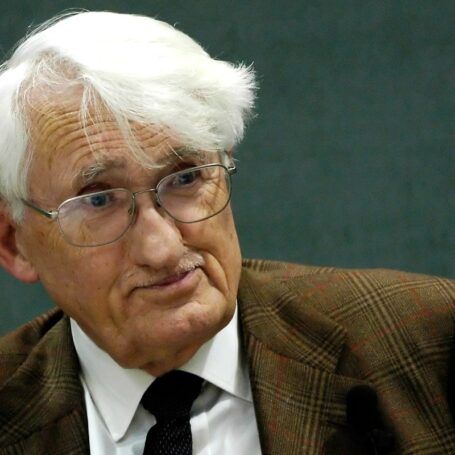
John Urry in 2014
At least since the publication of his Sociology Beyond Cities: Mobilities for the Twenty-First Century in 2000 Urry had advocated for and developed a “mobilities paradigm” for the social sciences. The paradigm, as Urry’s colleague Javier Caletrío has summarized, “argues that travel and communication technologies have enabled the proliferation of connections at a distance and that such distant and intermittent connections are crucial in holding social life together.” Urry published widely on mobilities, helping found (with Kevin Hannam and Mimi Sheller) the journal Mobilities in 2006, publishing the book Mobilities in 2007, and co-editing a number of books expounding on aspects of the subject such as Automobilities (2004) and Aeromobilities (2009), 2006’s Mobile Technologies of the City and Mobilities, Networks, Geographies; and Mobile Methods and Mobile Lives in 2010. He directed the Centre for Mobilities Research at Lancaster from 2003 until last year.
Just below mobilities Urry was widely known for his work on tourism and its implications, ideas he fleshed out in 1990’s The Tourist Gaze, 1997’s Touring Cultures and 2004’s Tourism Mobilities. His scholarship led to larger examinations of related issues such as travel and the environment, epitomized by his 2011 book Climate Change and Society. His most recent book, 2014’s Offshoring, combined many of these strands.
“There was a tremendous clarity to John’s writing,” wrote Derek Gregory at the Geographical Imaginations blog, “but also a humbling modesty; he was never strident, but it was impossible to put down one of his books – or reluctantly end a conversation with him – without thinking you had never seen it like that before and that you now had a lot more thinking of your own to do.”
“John Urry set a very high standard, both as a scholar and as a colleague,” said Stephen Barr, president of SAGE International. “His interests were wide-ranging. He was always engaged and interested in phenomena, whether at the level of the micro (understanding the economic and social changes reshaping the local environment of Lancaster) or at the level of the macro (the enormous shifts in global social and economic structures during our lifetimes). His work contributed to a profound reshaping of our understanding of the world we live in. At the same time, John’s modesty and generosity of spirit made him a wonderful person to know and to work with for all those who knew him.”
That generosity of spirit was mirrored by a generosity of time and effort: Among Urry’s contributions were being a founding academician (now known as fellow) of Britain’s Academy of Learned Societies for the Social Sciences (now the Academy of Social Sciences) in 1999 and was as a member of its council from 2006-2012, serving as a founding co-director of the Institute for Social Futures at Lancaster, and collaborating with the UK Department for Business, Innovation and Skills’ Foresight Programme on the Future of Cities. He was also editor of the oldest sociology series, the International Library of Sociology.
Urry was characteristically generous in describing his own trajectory. In a 2010 interview with Peter Adey and David Bissell for the journal Environment and Planning D: Society and Space, he included in a discussion of his own mobility a compliment for those he had worked with:
It’s certainly true that I moved around in the things that interested me a lot. But I’ve sort of stayed in one institution and then moved around in my interests. But of course I’ve moved around not just in terms of internal changes in my own thought but in relationship to three things. One is, obviously, the changing conditions of the world. Secondly, my perception of, and feeling that I wanted to respond to, contemporary intellectual debates. And then, thirdly, in relationship to people in particular who have moved into Lancaster or came through here. Obviously I’ve had a fantastic array of good collaborators. So maybe it’s more like moving networks
“John Urry’s willingness and enthusiasm to bring together fields of work that have hitherto not been regarded as natural bedfellows,” eulogized the Academy of Social Sciences, “led to him being a collaborator on several projects originating from natural and physical science and even engineering. His energetic enthusiasm to push knowledge and understanding forward in new directions made his contribution to society greater than many.”
Urry was born in London in 1946 and attended public school in Hertfordshire. He completed a double first in Economics at Christ’s College, Cambridge in 1967 and a PhD in sociology there in 1972. His first academic posting was at Lancaster in 1970, and he stayed there until his death
A selection of his writings
“At SAGE,” said Stephen Barr, “we benefited from his willingness to work with us when our publishing programme in the UK was in its infancy. I greatly admired him, and am grateful for having had the chance to work with him.” In honor of this, SAGE -the parent of Social Science Space – has opened up some of the papers Urry had written for the journal Theory, Culture & Society during that fruitful relationship.
“The Complexity Turn” | October 2005
“Duality of Structure: Some Critical Issues” | September 1982
“The Complexities of the Global“ | October 2005
“The Problem of Energy” | September 2014
“Consuming the Planet to Excess” | March/May 2010
“The Global Complexities of September 11th“ | August 2002
“The ‘System’ of Automobility” | October 2004
“The Tourist Gaze and the `Environment’” | August 1992
“Cultural Change and Contemporary Holiday-Making” | February 1988
*
Watch John Urry and Chris Rojek discuss “British Sociology since 1945” in 2011