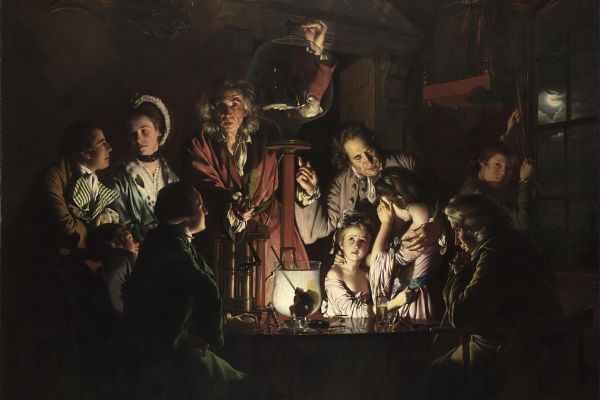
“The awkward guest at the dinner party”
The ninth annual Festival of Social Science took place last week in the UK, organised by the Economic and Social Research Council as a way of celebrating the social sciences and publicising the impact of social science research. At an event in London on 3 November, the UK’s Minister for Universities and Science, David Willetts MP, spoke to a gathering of academics and policy-makers about future challenges for social science in the UK.
The minister addressed upfront anxieties about the future allocation of teaching and research funding. Denying that there is a “deliberate vendetta” against social sciences, arts and humanities, he stated that the teaching grant is being shifted to fees and loans across all disciplines, and that for social science subjects, the changes are “at minimum neutral”. He also emphasised that the allocation of research funding was “scrupulously neutral”, and that this provides a “robust basis for exciting and valuable social science research in this country”.
David Willetts set out four key challenges for the future:
- Improving communication between social scientists and policy-makers and finding ways of sharing and using social science research;
- Making better use of administrative data that is already being collected, and finding new ways of drawing on this;
- Identifying other measures of research excellence beyond articles in peer-reviewed journals, and making it easier to access research that may currently only be available online behind pay-walls;
- Ensuring that evidence is always a crucial part of decision-making in politics. The minister commented that one of the realities of a coalition government is that discussions tend to be “less tribal and more empirical”.
The BBC’s Home Editor, Mark Easton, also spoke at the event about how social science can make itself more central to public debate. Arguing that good social science is needed more now than it has ever been, he noted that even the most rigorous social science research tends to be treated by governments and the media in exactly the same way as partisan material from politically motivated thinktanks, and that “ideological instinct replaces evidence”.
Mark Easton summarised the problem for social science: politicians want evidence that matches their policies. The public wants a quick fix to social problems. But in reality, “social science is the awkward guest at the dinner party who interrupts the entertaining discussion” with information that may be complex and hard to reduce to simple headlines.