Pluralism’s Ringmaster: Robert Dahl, 1915-2014
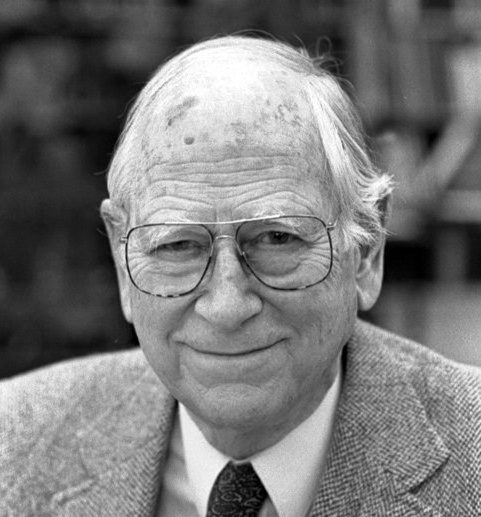 Although he wrote that “politics is a sideshow in the great circus of life,” Robert Dahl was one of the ringmasters in the academic Big Top. Dahl, who died on Feb. 5 at age 98, had been dubbed the “dean of American political scientists” and “the premier democratic theorist of our time.” He’s perhaps best known—and likely will be long remembered–through his seminal book, Who Governs? Democracy and Power in an American City.
In that book, he outlined the idea that America government, while not genuinely democratic, was at least pluralistic in its collection of interest groups with at least some share of the political pie.
The books remains an influential introduction to U.S. politics, even if—as Dahl himself acknowledged—it’s imperfect, not universally loved and a little yellow around the edges. Harvard’s Jennifer Hochschild, in an appreciation of Dahl published last week in the Washington Post, wrote:
I teach Who Governs? as the first book in my favorite course, on “Power in American Society.” The smart and assertive students love to tear into it, showing how it is naïve, incomplete, outdated, complacent. But the careful readers among them come to see that Dahl anticipated most of their objections and answered them, and they discover how difficult it is to refute his core arguments that a reasonably well functioning political system can give everyone the opportunity to have at least a little political impact.
Robert Alan Dahl was born in Iowa, although—Yale and its home of New Haven. Connecticut aside–he’s best connected with Skagway, Alaska, where he grew up and later wrote a memoir about. (Skagways’s other claim to political fame — Sarah Palin’s early childhood there.) An undergrad at the University of Washington, he earned a doctorate at Yale in 1940. While he could have sat out World War II as a bureaucrat, he instead joined the Army and saw combat as a first lieutenant in the infantry, earning a Bronze Star in the process.
After the war he returned to teach at Yale, and never left. A rising academic star in the infant field of political science during the 1950s, he broke wide in 1961 with the publication of Who Governs?, which dealt with the wide expanse of American politics by going deep into the experiences of New Haven. “… [I]t probably is not too much to say that this volume will become a landmark of American political science even though it deals ostensibly with one city during a relatively brief period of time,” reviewer Duane Lockard predicted in a 1962 review in The ANNALS of the American Academy of Political and Social Science.
His writing continued to exert considerable influence on political science throughout his career and into retirement, through an enormous body of articles and books such as 1989’s Democracy and Its Critics and 2002’s How Democratic is the American Constitution? His appreciation of the democratic impulse—always a bane for his leftist interpreters—rarely blinded the one-time union organizer from recognizing the many bugs in the American algorithm:
I, for one, am inclined to think that compared with the political systems of the other advanced democratic countries, ours is among the most opaque, complex, confusing, and difficult to understand.
Dahl received honors sufficient for several bookcases, including the debut John Skytte Prize for Political Science and two fellowships each with the Guggenheim Memorial Foundation and the Center for Advanced Study in Behavioral Sciences. He served as president of the American Political Science Association in 1967 and was a member of the National Academy of Sciences, the American Philosophical Society and the American Academy of Arts and Sciences, among many others.