World Bank Unveils Its Own ‘Nudge Unit’
[Ed. – This story will be updated.]
***
“As you find out how wrong you are,” said Dan Ariely, a behavioral economist at Duke University, “you develop an appetite for experiment.”
Ariely was speaking specifically about his own team’s efforts at the honestly named Center for Advanced Hindsight at Duke, but he was addressing a select audience at the World Bank as it debuted its own “nudge unit” this morning in Washington, D.C. The World Bank, it seems, has developed a taste for behavioral and social science evidence.
The Global Insights Initiative, with its intriguing acronym of GINI, will bring experimentation and evidence-based research to the World Bank’s poverty-fighting efforts, incorporating behavioral and social science into its project design and evaluation. GINI follows up from the World Development Report 2015: Mind, Society, and Behavior that came out last December and points the way for the World Bank to practice what it was now preaching. As Kaushik Basu, the bank’s chief economist, said at the time the report was released, “Standard economic policies are effective only after the right cognitive propensities and social norms are in place.”
GINI will be located in the bank’s Development Economics Group, which is described as “providing intellectual leadership and analytical services to the World Bank and the wider development community” through research and data collection. The new unit will be led by Varun Gauri, senior economist with the Development Economics Group.
Several World Bank officials, including its president, Jim Yong Kim, and its vice president of operations policy, Kyle Peters, explained how World Bank (and presumably other international) efforts have been less effective because behavioral insights weren’t built into the intervention. “We weren’t picking up the insights provided by anthropology for development policy,” Kim said, especially in instances like a program in Jamaica to prevent stunting of children where the only interventions that worked were behavioral ones.
Saying that the bank “has got to” focus on what evidence tells us, Kim said it “struck me how badly we got it in the case of Ebola. … The end of Ebola was really all about behavior change and not about treatment, and certainly not about vaccines because we didn’t have any.”
Part of the problem, said Peters, could be traced to bank employees’ built-in biases which at times can make the bank’s efforts less effective. He added that the many project’s evaluations “are not necessarily a pretty story” as a result, and welcomed GINI’s remit to include the bank’s own internal reforms as well as its external interventions.
Ana L. Revenga, the World Banks’ senior global practice director for its Poverty Global Practice, pointedly asked why the bank hasn’t been doing this all along and then adding that as a result “we’ve been getting things very wrong.” Noting that behavioral insights cut to the core of the bank’s poverty reduction agenda, she said that effective interventions were essentially impossible without understanding the bureaucrats’ biases and the realities of the poverty-stricken. “We need to embed these in operations in a very fundamental way,” Revenga insisted, which will build up some demonstration effects and thus give traction to an even wider use of behavioral science.
“We believe GINI will have major impact as the work moves forward,” said Saugato Datta, the managing director of ideas42 and a speaker at Thursday’s unveiling. A nonprofit behavioral science consultant, ideas42 saw co-founder Sendhil Mullainathan and Datta work with the bank to craft the World Development Report and carry out surveys related to making its findings applicable in the real world.
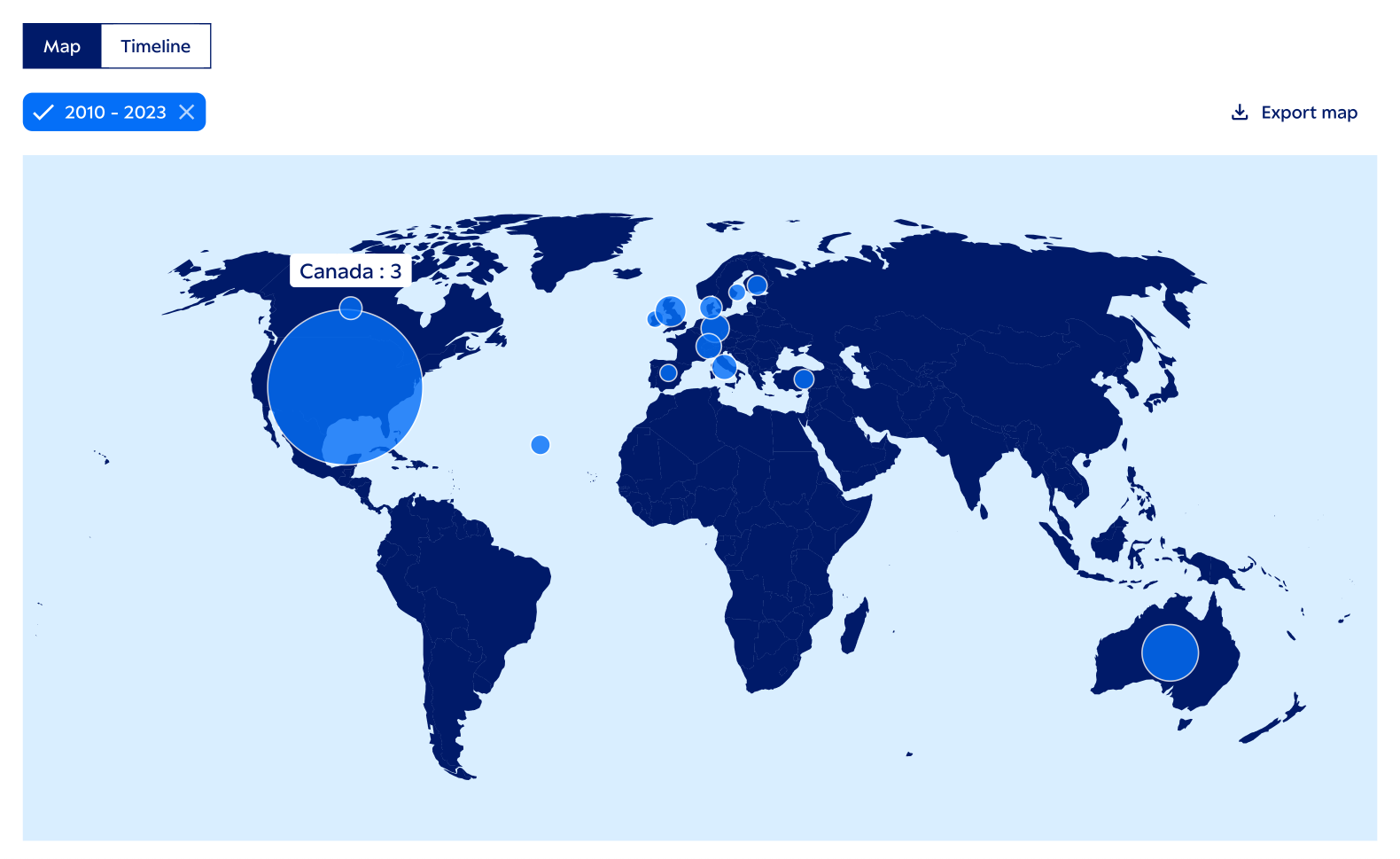
Other speakers included Maya Shankar and Elizabeth Hardy, the heads of “nudge units” in the U.S. and Canada respectively.