Michèle Lamont on Stigma
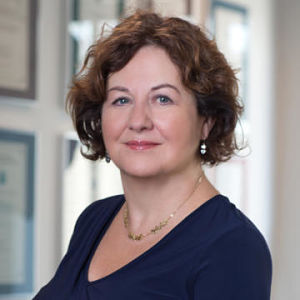
The study of stigma, says Michèle Lamont, is a “booming field.” That assessment can be both sad and hopeful, and in this Social Science Bites podcast the Harvard sociologist explains stigma’s manifestations and ways to combat it, as well as what it takes for a researcher to actually study stigma.
Lamont defines stigma “as the negative characterization of any social attribute,” and offers examples such as mental illness, social status, or obesity as conditions routinely stigmatized. And while stigma can attach itself to an individual or to a group, stigma requires intersubjective agreement for it to function.
As that intersubjectivity would suggest, the specifics of stigma varies by culture, a point brought home by Lamont’s own research among stigmatized groups in the United States, Brazil, Israel (and which saw her 2016 co-authored book Getting Respect: Responding to Stigma and Discrimination in the United States, Brazil, and Israel). The work involved more than 400 interviews, conducted by members of the stigmatized groups, in the three countries, and Lamont offers insights into how stigma plays out.
The project paid people $20 in the U.S. to be interviewed, but the Brazilian team said Brazilians would be insulted if they were offered money to participate. In Israel, Palestinians being surveyed didn’t trust Tel Aviv University, so that created obstacles even though the team members were themselves Palestinian
Lamont cites the work of Erving Goffman, who studied this experience of having a negative mark. (See this earlier Social Science Bites podcast for a look at Goffman’s legacy.) One key concept is that of “front stage” and “back stage,” where someone manages their life in a public way (the domain of stigma) but also in a private way.
Lamont, professor of sociology and of African and African American studies and the Robert I. Goldman Professor of European Studies at Harvard, directs the Weatherhead Center for International Affairs. She was president of the American Sociological Association in 2016-17 and chaired the Council for European Studies from 2006-09.
She received a John Simon Guggenheim Fellowship in 1996, a Gutenberg research award in 2014, the 2017 Erasmus Prize, and an Andrew Carnegie Fellowship for 2019-21.
To download an MP3 of this podcast, right-click HERE and save.
For a complete listing of past Social Science Bites podcasts, click HERE. You can follow Bites on Twitter @socialscibites and David Edmonds @DavidEdmonds100.