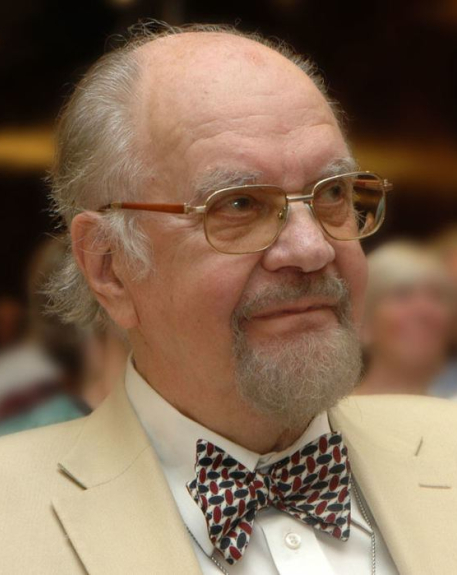
Endel Tulving, 1927-2023: ‘The Memorist’ of Cognitive Psychology
Endel Tulving, a cognitive neuroscientist and experimental psychologist who conducted groundbreaking work on memory after his escape from war-torn Europe, died on September 11 at age 96. He died from complications in Mississauga, Ontario in his adopted home of Canada, which had awarded him the Order of Canada in 2006.
Prior to the 1960s, cognitive psychology focused on the ways in which individuals learned things, opposed to how they retain and recall these same bits of information. To the average psychologist, memory inside the brain was visualized as a hub of cerebral information, lacking any idea as to how this information was accessed and retrieved. Until Tulving’s discoveries, this understanding of the mind was theoretical, philosophical, and offered practically no option for testing or further research.
Tulving didn’t subscribe to this understanding of memory. His early work of experiments and papers delved into the way in which the brain organizes memory and any context clues employed to retrieve these memories. He also offered a different understanding of forgetting, saying that it wasn’t about information loss but about lacking the appropriate cues to retrieve to this information.
Following these landmark discoveries, Tulving fortified his scientific legacy in the 1972 book Organization of Memory. In this book, he wrote a chapter about the arrangement of memory structures in the brain, edited by both Tulving and Wayne Donaldson. His first distinction was procedural and declarative memory. Procedural memory was identified as unconscious, like riding a bike or learning to walk. But declarative memory was discrete and conscious. Neither of these distinctions were controversial, but the next distinction that rocked the community of cognitive psychology.
Tulving noted semantic and episodic as two more types of declarative memory. Semantic memory focuses on various facts and pieces of information about the world, like where London is and who Abraham Lincoln was. Episodic memory, on the other hand, focuses on individual memories of the past, like what town you grew up in or where you went to elementary school.
Among his findings, Tulving was largely interested in the inner workings of episodic memory, seeing it as central human consciousness and making sense of the world and our place inside it. To him, this area of memory is about more than the past, but also our ability to perceive the future. When we think about the past, Tulving believed that we participate in “mental time travel” and relive these former happenings.
Born on May 26, 1927, Endel Tulving was born in the Estonian city Petseri (now known as Pechory) that the Soviet Union later annexed. His father, Juhan, worked as a judge, and his mother Linda (Soome) owned a furniture store.
Growing up in the height of World War II, Tulving lived under German occupation while he was in school. In 1944, as the German forces retreated from the Soviet advance, Tulving was separated from his two parents as a result of the chaos and found himself in an American-run camp for displaced persons. There, he worked as a translator and waited for his reunion with his parents, which took over 20 years.
While working in the camp, Tulving continued his education and temporarily spent time at the University of Heidelberg in Germany studying medicine. He also worked as a tutor for Ruth Mikkeslaar, a fellow Estonian refugee who became his wife. After moving to Canada in 1949, Endel and Ruth tied the knot in 1950.
Tulving earned his bachelor’s and master’s degrees in psychology from the University of Toronto in 1953 and 1954, respectively. In 1957, he graduated from Harvard with a doctorate degree in psychology.
He briefly taught at Yale University during the 1970s but spent much of his professional career working in Toronto – teaching at the University of Toronto and the Rotman Research Institute. While teaching at Rotman, Tulving was interested in working with a positron emission tomography scanner. This scanner launched him into a new realm of research, one where he began examining brain waves during various experiments.
While participants performed different acts during experiments, Tulving watched different areas of the brain illuminate. It was this discovery by Tulving and his colleagues that led to the distinguishment of the episodic and semantic areas for memory.
Almost 20 years later, Tulving’s theories of memory and the inner workings of psychology were finally proven, albeit due to groundbreaking advancements in technology.
Tulving was preceded in death by his wife, Ruth, who died in 2012. Survivors include two daughters, Linda Tulving and Elo Tulving-Blais, and five grandchildren.





![Share Your Most Surprising Policy Citation for Chance to Win $500 [Closed]](https://www.socialsciencespace.com/wp-content/themes/conferpress/images/default_thumbnail-new-border.jpg "Share Your Most Surprising Policy Citation for Chance to Win $500 [Closed]")