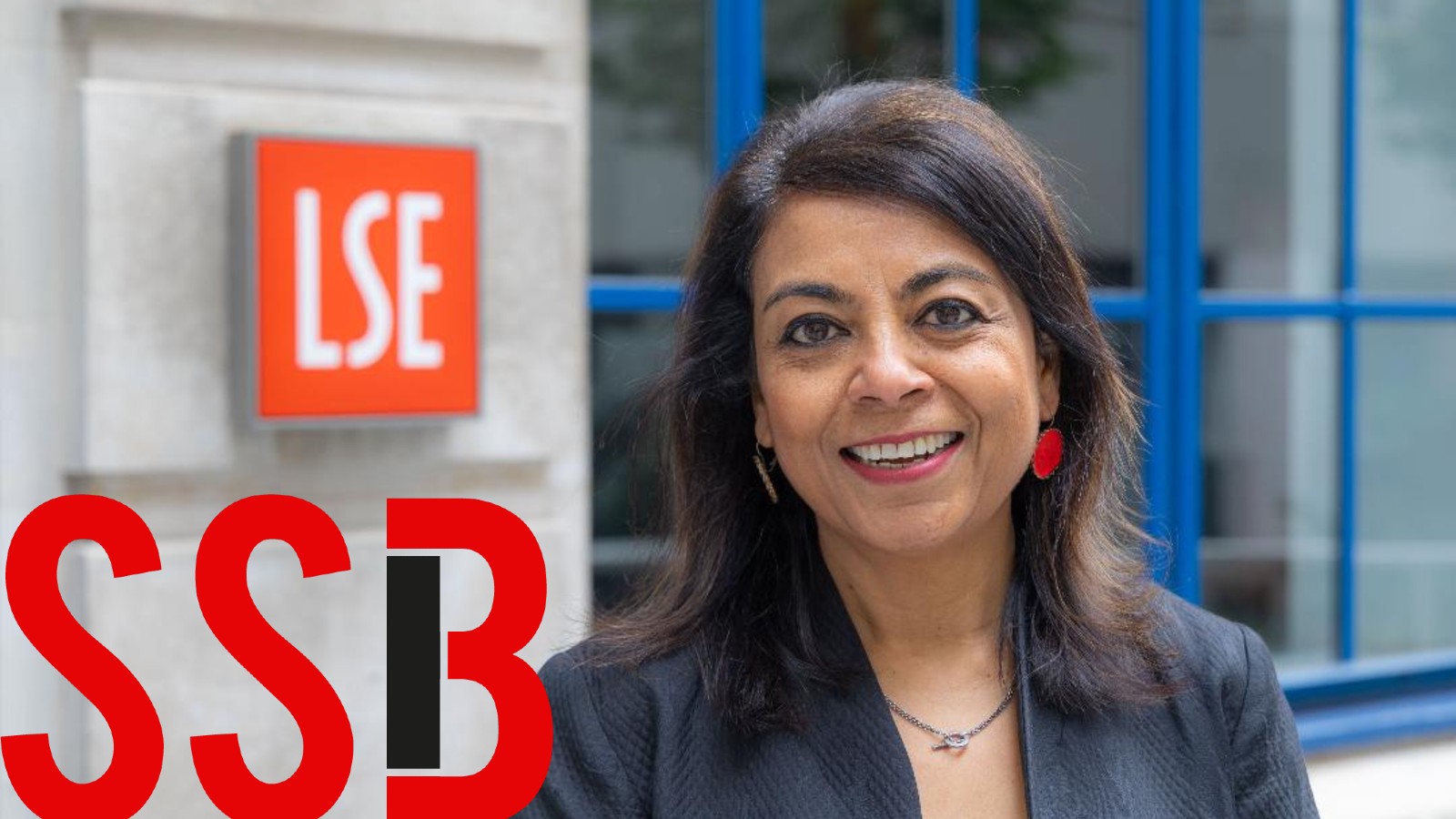
Mukulika Banerjee on Indian Democracy
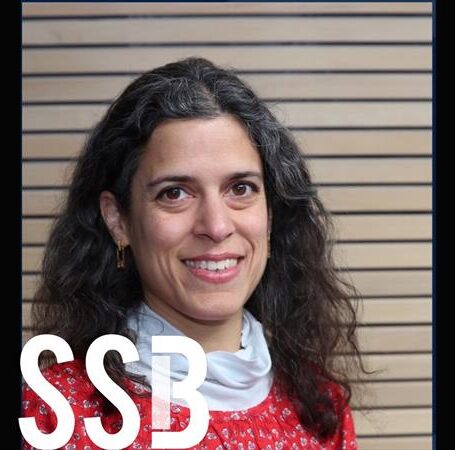
A key insight social anthropologist Mukulika Banerjee had while observing electoral behavior in a Bengali village was that — at least in the India of that moment — elections were sacred. This was not a religious epiphany but a cultural one; at the center was not a figure, religious or political, but an ideal – democracy.
Banerjee has explored her insights in the years since in a variety or formats, but academic and popular, ranging from her written work like 2021’s Cultivating Democracy: Politics and citizenship in agrarian India or 2014’s Why India Votes? to a 2009 radio documentary for the BBC specifically titled “Sacred Elections.” In this Social Science Bites podcast, the professor at the London School of Economics reviews much of the underlying scholarship behind those works, then explores with host David Edmonds the de-sanctification of democracy in both India and the Global North in the years since.
“I think what has happened … in the US and in the UK,” she explains, “is a complacency that regardless of whether you do your little bit, whether it is literally just turning up to vote or learning to organize and be informed politically, is going to happen regardless of whether you do it or not. And because of this complacency, is precisely why these degenerations of democracy have happened.”
Banerjee is the founding series editor of Routledge’s Exploring the Political in South Asia and is also working on a grant from the Indo-European Networking Programme in the Social Sciences on Explanations of Electoral Change in Urban and Rural India. This year, courtesy of a British Academy-Leverhulme Senior Fellowship, she is on a research sabbatical studying the nexus of democracy and taxation.
To download an MP3 of this podcast, right-click this link and save. The transcript of the conversation appears below.
David Edmonds: India is easily the world’s biggest democracy, and Indians take voting seriously. Almost a billion people are eligible to vote in Indian elections, more than in all the European democracies and the United States combined. Mukulika Banerjee is professor of social anthropology at the London School of Economics, and is the author among other books of Why India Votes. Mukulika Banerjee, welcome to Social Science Bites.
Mukulika Banerjee: Thank you very much for inviting me.
David Edmonds: Today we’re looking at Indian elections. You’ve researched why people vote in India. Now, on the face of it, that doesn’t look very puzzling. After all, India is a democracy. So why is this a puzzle? What’s the issue?
Mukulika Banerjee: So when I first started, it really was a puzzle, because we found a particular trend that was puzzling. When we looked at turnout figures one election to the next, we could see that turnouts were going up from one election to the next. When we disaggregated that data, political scientists did a survey and they found, who are the people who are voting in such high numbers? What reasons for these rising turnouts? It turned out that the most socially disadvantaged Indian citizens — people belonging to low castes, living in rural areas, women — were more likely to vote than their urban counterparts. And this was the puzzle that I attempted to explain, because it was inexplicable on the face of it, because these were precisely the people whose everyday lives were not necessarily getting better with democracy from our one election to the next. So why was it that they were so enthusiastic?
David Edmonds: Now, you would have thought that this was a question for psychologists or political scientists. You’re an anthropologist. What does an anthropologist bring to the table?
Mukulika Banerjee: So a psychologist or an election analyst of any sort, whether it’s a political scientist or a journalist, tend to study elections. At elections, when they happen, they look at who’s turning out. They disaggregate. Look at which caste communities voting for which political party, vote shares, state shares, and so on. It’s a lot of quantitative data.
As a social anthropologist, it seemed to me blindingly obvious that how people behave at elections surely is determined by what has happened prior to that election, what has happened since that last election. In that inter-electoral temporality, what is going on. And a voter who turns up to vote at a polling station is also a mother. She’s a farmer. She may be pious, she may be fond of cultivation. She is a person with a variety of different impulses, and all of these we know as anthropologists that you have to understand them in the round. A holistic understanding about society is what we bring to the table.
Similarly with voting, it was really to understand a society that was socially disadvantaged, that was marginal, but had very high voter turnouts that we needed to understand to explain this.
David Edmonds: And your methodology? You mentioned surveys in your first answer. Is that how you are extracting information mainly?
Mukulika Banerjee: Yes. So the surveys, I think, often throw up very interesting ethnographic questions. So a survey told us this data point right, that poor people in India were voting in high numbers. And they can’t go beyond that in a survey, because in a survey, you can never ask a why question, why are people doing something? And that’s where the anthropologist comes in. And I chose a village, a couple of adjacent villages, in fact, where you got 98 percent voter turnout. There was a nice mix of social groupings. It was largely Muslim and other marginalized community in India. So they were perfect representation of the puzzle that I was trying to understand.
And then I did a deep dive in this society. I just lived there, and in fact, landed up going back to the same field site for over 20 years.
David Edmonds: That was one particular site. India is a vast country, different climate, different languages, geographically, huge, different religions. How confident are you that you can extrapolate from a couple of small areas to this vast nation as a whole?
Mukulika Banerjee: That’s a very fair question, and the question that every anthropologist always has to answer. You know, our long-term immersion in one place leads to insight, which we then share. And then the question always is, the one that you’ve just asked me: Is it really representative? So in this case, when I came up with these explanations, you know, I call the paper “Sacred Elections.” I said elections have become sacrosanct rights that people feel a duty to perform. People said, “Oh, yes, maybe. And then ask your question.” So what we did was we set up a research project funded by the Economic and Social Research Council in the UK, where we set up field sites across India and anthropologists in every site tested the validity of the sacred election thesis working in the local language, which, of course, is key to anthropological research. We always work in the local language. And we found, when we regrouped again to share our findings, we found that this was indeed the case across India. So we could justifiably claim that what was observable in couple of Bengal villages was, in fact, true for large parts of India.
David Edmonds: I’ve been to India quite a few times. I spent quite a lot of time there. It seems, from my perspective, to be a vibrant political culture. Did you find that people are very open to talking about politics?
Mukulika Banerjee: They usually are. You can have a political discussion with pretty much anyone you bump into in India. Everybody has an opinion. They have their take on things. They have opinions about politicians and so on. In my particular field site, as it happened at the time the communist government was in power, they’d been in power for 20 years before I even arrived, and continued for another 14 years after. They had a hegemonic hold, and they had this capillary network of comrades across West Bengal who watched everyone very carefully, and there were repercussions if you spoke to strangers about politics.
So actually, when I arrived in my field site, even though I knew it was very vibrant politically, nobody would actually talk to me about politics. They were welcoming otherwise. So it was a real test of the ethnographic method, where you don’t go around asking questions with a clipboard and write down answers. You are just there. You’re observing. You’re participating in what’s going on, and the insight that elections are sacrosanct actually came from one of these non-verbal, non-discursive signs, which was because I’d been hanging around the village and attending weddings and been there for various Islamic festivals, I knew that women in the village saved one sari as their best sari, which they wore for weddings or to the festival, and that was their prize sari. And when I landed up at election time, they were wearing their best sari. So it was that kind of signal that gave me this insight.
David Edmonds: Was that your main finding, that voting had a kind of sacred quality to it?
Mukulika Banerjee: Yes, it did in those days. You know, it was studied nationally in 2009 and then it was published by the 2014 elections. That was it. But then I subsequently went on to write a wider set of arguments about democracy in India, which is to say two or three things. And I call the book Cultivating Democracy, because this was a play on the word cultivation. These were farmers who toiled in the fields, but also taught me something about what democracy is as a project – which I think is universally valid, that democracy is not something that happens every five years or four years at an election. It is an everyday activity that has to be performed by everyone with hard work, patience, vigilance and hope, just in the way a farmer does every day, toiling on growing their crops.
The second thing was that ideas about politics or participation or joining in in elections, or caring about the quality of your democracy, these are values of behaving democratically right, especially now in 2026 where there’s widespread discussion of the assault on democracy all over the world. What we find to be democratic values, say, learning to work with people you disagree, or forming solidarity with people you don’t know, or learning to strategize and seize opportunities when they arise to oust an incumbent. These are values that are not just created out of political life, but are also created in religious life and economic life and through kinship and friendship and marriage and so on. So if by studying a society holistically, you find that every aspect of society has important events or rituals that exemplify the kind of people we want to be. Those values then feed into creating a certain kind of political subjectivity.
David Edmonds: And that sense that the democratic process of which elections are just a part, that sense of the sacred which I don’t think people in Britain or the US feel so strongly. Do you think that’s because India is a newer democracy?
Mukulika Banerjee: Yes, that’s exactly right. It was a fight for independence. India’s fight for independence and fight to create a democracy were simultaneous. And that’s why, right from the beginning, it had universal suffrage. It had a recognition that all Indian citizens were equal in the eyes of the constitution. So it is relatively early days. And so therefore the opposite, therefore, of enthusiasm or cultivation, in the way that I was describing it, is complacency. I think what has happened in the context that you just mentioned, in the US and in the UK, is a complacency that regardless of whether you do your little bit, whether it is literally just turning up to vote or learning to organize and be informed politically, is going to happen regardless of whether you do it or not. And because of this complacency, is precisely why these degenerations of democracy have happened.
David Edmonds: One of the defining characteristics of modern politics in the US and UK is a kind of pervasive cynicism about politicians as well. When you were carrying out this research, did you find that in India too, or did they have a greater regard? Do they hold their politicians in higher esteem than we do over here?
Mukulika Banerjee: Identical. People think politicians are venal. Politics is dirty. It’s a game you should not get into. The reason why they thought it was sacred was not because they wanted to vote somebody x in power. That was, of course, also what they were doing. They were expressing their political loyalty to this party over the other, this candidate over another. But the reason why they thought it was sacred was because the polling station in India is unlike any other space in India — and you will know this from your visits — where nowhere else, absolutely nowhere else, without exception, do you get the kind of social mixing. In an urban neighborhood, say, a middle-class person, professional is queuing in the same queue with the man who drives his car every day, right, who is bound to be of a lower caste, a lower class, because they live in the same neighborhood. Number one, so you experience social mixing in an unprecedented way.
And the second thing is that, because the election commission up until 2014 at least, used to run elections in a way that made every single person feel valued, it was their only glimpse of what genuine political equality really looked like, right? So that’s why it was celebrated, because it felt like you lived in a democracy on that day. And so at a polling station, even though, frankly, members of the lower caste and lower classes are dehumanized in India, there are such deep social cleavages, and there’s such a ranking of status all the time, the polling station was the only place where an employee would never be told by their employer to go back to the bottom of the queue and give up his space. And people valued that.
David Edmonds: That sounds heartwarming. Was it matched by a level of political literacy? Do people understand the issues at stake? How fine-grained was their knowledge of politics, both at the state and the national level?
Mukulika Banerjee: Pretty good. I think there is quite a lot of research. I mean, Indian politics has been written about by political scientists, in particular, a lot, and it shows that people do vote according to ideas and ideologies. The Communists who I saw in Bengal kept winning every single election, even though they were running a pretty hegemonic party society, as it’s called, where the party had embedded itself into every aspect of people’s lives, simply because at the end of the day, they had recognized dignity of labor. They had raised the daily wage, they had attempted land reforms. And because very few political parties had done anything for the poor, if you did something for them, they were recorded.
So I think there is a recognition — people understand what they’re voting for. It can be ideological, not always economic factors. I think what is happening in India currently cannot be explained only by economic factors. It’s a cultural project that is being voted for and, of course, other things with elections. But people are politically literate on average, in a way that I find quite rare, for instance, in Britain.
David Edmonds: Right. Well, you mentioned India today. Much of your research was carried out over a decade ago. Is the political situation in India today much as it was when you were doing this research?
Mukulika Banerjee: No, is the short answer. And I have been, since 2014, still returning to the village every year, for instance, but also follow developments in India extremely closely all the time, and write about them. In 2014 with the BJP taking over the central government, since then, there have been incremental but radical changes to the electoral system in India. So firstly, the Election Commission of India, which was a constitutional body which was valued for its integrity and probity, is no longer seen in that light. The appointment of the three election commissioners, which was done in a nonpartisan way, was changed to a partisan election, with the Chief Justice of the Supreme Court being removed from the panel of three people. So it’s now the president, the prime minister and the leader of the opposition. And you know, so it’s already partisan towards the executive.
Electoral bonds were introduced, again without parliamentary discussion or debate, which allowed corporations to donate money to political parties completely incognito, except for the government knowing who is paying for which.
And there has been a weaponization of enforcement agencies, the enforcement directorate and other investigative agencies that every day we are getting this from a lot of brave investigative journalists still working in India, who show that corporate houses that haven’t paid money to the BJP, for instance, are victimized.
We could say up until 2014 that Indian elections were not perfect. But given the scale, I mean, we are talking of a sixth of the humanity in India, given its scale, it was improving year on year. But now there is a backsliding, not generally, only of democracy, but in particular, of the electoral procedures itself. And currently, as we speak, there is a new process that has been introduced called the special intensive revision of electoral rolls, and this revision is being done in the most slap dash and also designed manner to disenfranchise large parts of the population. And data is now showing that women in particular have been disenfranchised in very, very large numbers. The requirements for proving your existence involves so much paperwork that people who are illiterate and at the bottom of the heap cannot provide them, and so by design, it seems to be disenfranchising precisely, ironically, the people who possibly considered elections most sacred.
David Edmonds: The BJP [Bharatiya Janata Party] is the government now in power. Not all listeners will know who the BJP are. They are the Hindu nationalist party. You talked about an erosion of democratic norms. Has there also been a polarization of politics in India as there has been in many Western democracies?
Mukulika Banerjee: Yes, quite severely. And frankly, the process started in India long before it did in Europe, for instance, or indeed in the US. Because the BJP’s parent organization is the RSS, which is 100-year-old organization, which has always believed that India is a Hindu nation. It’s a cultural project. So it is about treating minorities as second-class citizens. Now in India, the irony is that the Muslim population is just over 14 percent but that means 200 million people whose existence has been made fragile and unstable in today’s India. So it is a process of polarization between people who believe that India is a Hindu nation and support Narendra Modi and his BJP government in that project, and others who believe in a constitutional vision of India, which is about unity in diversity, which was about an unprecedented experiment in democracy. Unlike Europe, India tried to create something new in the democratic process by accommodating difference, by not making the society monochrome, by not imposing one language, by not saying there is a state religion, by accommodating diversity. That is what is being attacked at the moment.
David Edmonds: There’s this battle going on, as you describe, between those who are trying to erode democracy, and the constitutionalists. You’re sounding quite pessimistic. I don’t know if anthropologists have a crystal ball, but if you could gaze into your crystal ball, who’s going to win that battle?
Mukulika Banerjee: I would like to believe that my side will win, because I believe in that constitutional vision of India as an Indian [and] as one who has benefited from that diversity. I think India’s democracy can be nothing but diverse. There is no other way to accommodate difference, because by hammering down a single-nation, single-religion, single-language model on a country as diverse as India, you really will not be able to retain the entity of India. So if one believes in wanting India to survive, that’s the only way forward.
Whether it will be possible when there has been such widespread corruption of institutions, of the judiciary, of the press — India’s ranking on the press freedom indexes is at the bottom. So there is a consensus that is being created through the media, through court judgments, through its various executive branches, that is creating a sort of fear that any dissent is not going to be tolerated and so on. So it’s very difficult to fight back this huge machinery.
But as an anthropologist thinking and studying democracy, I hold out hope, because India had 70-odd years of democracy before the BJP came in. So there is also a sort of social memory of what democratic politics looks like. There is a certain competence of how to behave democratically, what democracy looks and smells like. One hopes that that social memory will, in fact, want to reclaim the best aspects of India’s constitution.
David Edmonds: And if there’s one lesson that the world’s largest democracy has for the rest of the democratic world, what would it be?
Mukulika Banerjee: The essence of democratic politics is accommodation of difference. How one achieves it at the party political level or at an everyday neighborhood level, living in a democracy is about self restraint in order to create collective goods, collective action. And if a country as diverse as India can use the democratic project to celebrate and work with this diversity, then any other nation should be able to.
David Edmonds: Mukulika Banerjee, thank you very much indeed.
Mukulika Banerjee: Thank you very much, Dave, for your questions.