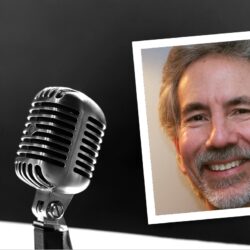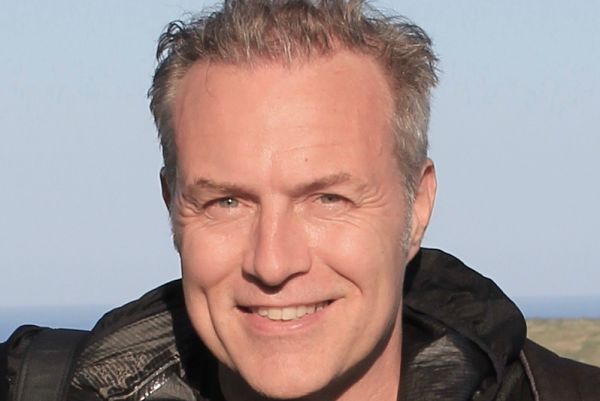
Harvey Whitehouse on Rituals
One of the most salient aspects of what generally makes a ritual a ritual is that you can’t tell from the actions themselves why they have to be done that way – and that fascinates anthropologist Harvey Whitehouse. By his own admission, what intrigues the statutory chair in social anthropology and professorial fellow of Magdalen College, University of Oxford is that ritual is “behavior that is ‘causally opaque’ – by which I mean it has no transparent rational causal structure.
“[Rituals] are that way,” he tells interviewer David Edmonds in this Social Science Space podcast, “simply because by cultural convention and general stipulation that is the done and proper way to carry out the behavior.”
Rituals can range from collective events like funerals, initiations, political installations and liturgies to private acts like bedtime prayers or self-crossing before a crucial meeting. One thing that unites all of these is that they are faithfully copied and passed down through the generations.
While the psychological causes of the ritual impulse are inherently interesting, Whitehouse’s work also examines the consequences of ritual, and how rites can produce different intensities of social glue depending on their frequency and emotionality.
For example, painful or frightening initiations tend to produce very strong “social glue,” “fusing” individuals into a larger whole. This insight, partially derived from a visit to Libya in 2011 to study the groups engaged in the effort to overthrow Moammar Ghadafi, has implications, for example, in addressing extremism.
By contrast some groups use “high frequency but relatively dull and boring rituals in order to establish a set of identity markers that can be maintained without radical mutation”. Here the focus is more on ensuring conformity across a large population.
Whitehouse’s own journey into studying religiosity (“I’m not religious myself but deeply fascinated by what makes people religious”) and ritual also are covered in the podcast. As a young academic, Whitehouse started by doing fieldwork in Papua New Guinea focused on economic anthropology. “The people I ended up living with for two years, deep in the rain forest, were very interested in telling me about their religious ideas and ritual practices. They were the ones who got me into the topic.”
It was less, he added, that they wanted to proselytize and more that “they got bored with my questions about production and consumption and exchange and all these boring economic things. I think people were starting to want to avoid me when they saw me coming with my notebooks.”
Whitehouse has created a number of academic research groups and is co-founder of the Centre for the Resolution of Intractable Conflicts at Harris Manchester College in 2014 and is the founding director of the Centre for the Study of Social Cohesion established last year.
To download an MP3 of this podcast, right-click HERE and save.
For a complete listing of past Social Science Bites podcasts, click HERE. You can follow Bites on Twitter @socialscibites and David Edmonds @DavidEdmonds100.