 News
News JG Ballard and the Epstein Files
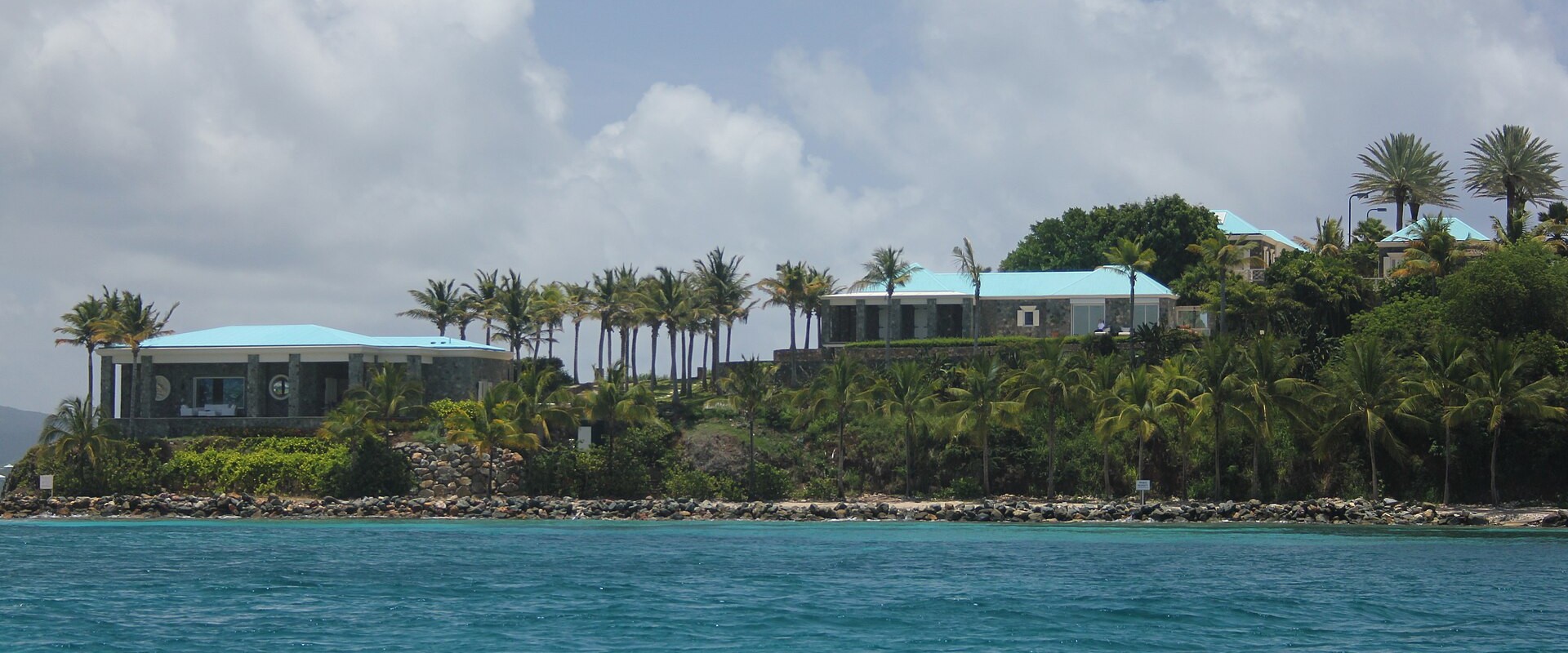
The grudging disclosure of the Jeffrey Epstein files by the US government has rightly attracted a great deal of commentary. The responses have laid bare the devastation of the lives of those forced to supply sexual and other services to the rich and powerful on the financier’s island. So has the impunity of that class in the USA, although less so on this side of the Atlantic. There has, however, been much less discussion of the motivations of the men involved. At most, there are simple assumptions about wealth and patriarchy: they behaved like this because they could – and many, if not all, men would do the same, if placed in the same position.
Is this really adequate? The files expose a peculiar social world that is hard for outsiders to access. Academic research funding and reward networks tend to focus on digging around in the lives of the poor and laying them out for inspection. As one student radical put it, when addressing the American Sociological Association meetings in 1968: “The professional eyes of the sociologist are on the down people and the professional palm of the sociologist is stretched towards the up people.” We academics also have to make a living, even if that makes some of our claims to be voices for social justice ring a little hollower than we would like. However, this does mean that we have to look elsewhere for analyses of Epstein’s social world.

I have been re-reading JG Ballard’s Super-Cannes (2000), hailed by one reviewer as “the first essential novel of the 21st century”. Ballard began as a writer of science fiction, becoming a leading figure of the New Wave of the 1960s and 1970s. He broke out of the genre label with his novel, Empire of the Sun (1984). This drew on his World War II experience as a young teenager in a Japanese internment camp for European civilians in Shanghai. That book won several literary awards. Stephen Spielberg turned it into a widely praised film. Ballard’s subsequent work has often involved critical analysis of key spaces of the modern, or post-modern, world: expat communities in Spain, the suburban sprawl around the fringes of South London, and the international business parks of the Provencal littoral.
Super-Cannes investigates the last of these, inspired by the development of Sophia-Antipolis, set in the pine-shrouded hills above the old Riviera resorts as Europe’s answer to Silicon Valley. Ballard’s Eden-Olympia is a gated community where the senior executives of global corporations both live and work. It is Eden, in the sense of a Utopian landscape of woods, lakes and luxury villas, where disorder is banished, and Olympia, the playground of the modern gods. This space is as insulated from the rest of the world as Epstein’s island.
Eden-Olympia is examined through the marginal eyes of Paul Sinclair, an aviation journalist, who is initially recovering from injuries sustained in crashing his vintage plane. Sinclair comes to Eden-Olympia because his wife, Jane, a junior doctor, has been recruited to join the community’s medical staff. The residents are constantly monitored for the least departure from ever-more refined metrics of health and well-being. Jane is replacing another young English doctor, David Greenwood, who is said to have run amok, in the literal sense of that word. He had shot several senior members of the community’s management and medical staff before being shot himself by the security staff.
The novel follows Sinclair’s attempts to uncover the truth of Greenwood’s rampage and death. In the course of this, he exposes the darkness at the heart of Eden-Olympia, particularly through his conversations with Wilder Penrose, the staff psychiatrist. Penrose had been recruited to deal with a strange pathology affecting the residents. Despite the medical surveillance and sanitized environment, their immune systems had collapsed. There was an epidemic of chronic fatigue syndrome and a loss of mental energy among a group for whom this was their entire purpose in life. Penrose’s initial prescriptions were to take up extreme sports, with an edge of danger that would bring a challenge otherwise lacking in their lives. But this had failed. The prescription moved on to more transgressive acts. Groups of CEOs were organized to go into the resorts and beat up North African migrants and Russian pimps on the street. Young girls were procured for sexual assaults, from a children’s home where Dr Greenwood had volunteered. Sinclair witnesses a violent raid on a fashion shoot. According to Penrose, these homeopathic doses of psychopathology had worked wonders for the health and well-being of his patients. Greenwood, however, had been an idealistic doctor with a background in international charity work and was morally offended by what he saw.
It may seem naïve to suggest that the visitors to Epstein’s island committed a range of criminal or near-criminal acts simply because they were bored. But Ballard does pose some fundamental questions about the nature of lives where work is everything, from waking to sleeping every day of the year. How do such people find personal fulfilment or cultivate a sense of morality? When you can pay someone else to manage almost every aspect of your life, what is there left for yourself? What is life for?
Historically, the elite institutions of the Global North – universities, churches, and the high temples of literature and arts – encouraged their members to seek answers to these questions. In the modern world their influence has waned as elites have become more open and disruption valued as an end in itself. Contemporary universities transmit skills rather than morals. Civic republicanism has yielded to MAGA, among the rich as much as among their foot soldiers. Epstein’s island may be less a pathology than a dystopian vision of a future that may be hard to resist.