Some Thoughts on Academic Internationalization in China
Chinese society and politics are a frequent topic international news media these days, following China’s role in the outbreak of the COVID-19 pandemic and increasing geopolitical conflicts between the country and a range of Western nations. Media and public debates have comparatively little to say about developments at China’s universities, academia, as ever, remaining a niche subject. By ‘developments’, I mean, first of all recent efforts at the internationalization of Chinese universities. This has involved significant efforts to attract foreign scholars, international students, and overseas Chinese academics to China’s universities, often funded with scholarships or generously endowed talent schemes. These schemes are intended to contribute to China’s socio-economic development, enhance the country’s standing in international scientific competition, and facilitate the rise of its universities in global rankings (see here and here).
By ‘development,’ I also mean, however, the increasing ideological regimentation of academic life in China. Academic freedom has never been available in China since the Communist Part of China took power in 1949. Both older and newly founded universities were incorporated into the bureaucratic regime of the party-state, to contribute to the social engineering of Communist society. Within Communist academia, scholarship is managed top-down to a significant degree, for the benefit of part, state and society, and independent research operates in the nooks and crannies that remain. In this institutional environment, independent public speech carries a considerable risk, as does, to an extent, independent thought.
This is not new. What is new is the depth and reach of ‘thought management’ at Chinese universities in the last few years. This includes measures such as:
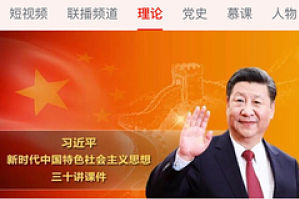
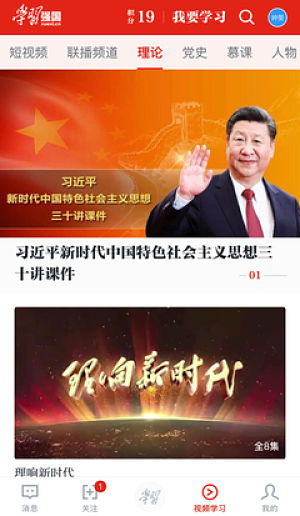
- Increasingly stringent indoctrination for both academic staff and students: A significant proportion – perhaps around a third – of the curriculum at Chinese universities consists of classes meant to develop loyalty to the Communist Party and nationalist sentiment in students. Academic staff, and in particular those academics who have studied abroad, are required to attend indoctrination events and take part in ‘self-study’ activities with considerable frequently. So, for example, academics who are also party members may be required to take daily lessons on Xi Jin Ping Thought on a smartphone app, which may monitor their engagement via facial recognition and eye tracking.
- Enhanced censorship: Attendant measures apparently vary by university, but they may include ideological audits of conference papers to be presented abroad, tight checks on participation in international conferences, prohibitions on academic events involving international speakers in China, and the monitoring and recording of online meetings between scholars in China and overseas colleagues. University classrooms and lecture halls are monitored by cameras, and student cadres may report on any ideological improprieties in lectures and seminar discussions.
To all this, add the socio-cultural consequences of the Great Firewall, the stringent censorship of foreign books to be imported into China, and an apparently long-term border closure that has kept many foreign academics and most international students outside China since the beginnings of the pandemic in early 2020. The result is a clear trend towards an ideological and intellectual ‘China bubble,’ with little room for different ways of thinking about the world we live in. The construction of this China bubble can be usefully read as part of a broader effort on the part of the party-state to create a society that is ethnically, culturally, intellectually, and ideologically homogeneous.
As China transits from authoritarianism into neo-totalitarianism, the purification of society is becoming a more and more prominent political goal. Internationalism in the proper sense of the word fits ill with this goal. It may be suggested that academic internationalization in China has always to a large extent concerned scholars in economically beneficial fields in the life sciences and students from countries with which China has sought to build soft power. However, even this superficial form of internationalization now seems to be on the wane.
Why should this matter to readers outside China?
To begin with, while the Communist Party may be intent on isolating its universities in an intellectual bubble, its efforts at international scientific competitiveness are unlikely to cease, as are efforts to mold international public narratives about China. Therefore, the neo-totalitarian turn at Chinese universities is likely to have significant spill-over effects, from self-censorship among China scholars based outside China to active conflicts over the limits of academic freedom. At the same time, hostility to intellectual diversity and internationalism may hamper the Chinese party-state’s ability to understand the standpoints of its foreign interlocutors and arrive at constructive solutions to mounting international tensions. Therefore, the ideological closure and de-internationalization of Chinese academia should be viewed as a serious problem.