Exploring the Impact of Character on Crisis Leadership
Gerard Seijts, a professor of organizational behavior at the Ivey Business School, discusses “Character and Trust in Crisis Leadership: Probing the Relationships Among Character, Identification-Based Trust, and Perceptions of Effectiveness in Political Leadership During the COVID-19 Pandemic,” which he and co-authors Cristine de Clercy and Ryan Miller saw published in The Journal of Applied Behavioral Science.
The importance of character has been highlighted by philosophers, poets, preachers, and storytellers since the dawn of Western civilization. Character has been called “the best tombstone” because it enables wisdom, or judgment, and the goodwill that judgment produces outlasts any headstone. Simply put, character has played a starring role in ancient myths and modern movies alike because it is the foundation of legendary leadership.
Unfortunately, legendary leadership in the real world frequently fails the test of time because character has not played a starring role when we develop and hire people to manage organizations.
Lack of leadership character in the financial sector contributed significantly to the devastating 2008 global financial meltdown. Using that crisis as a laboratory, leadership researchers at the Ivey Business School deconstructed the personality traits, values, and virtues that helped distinguish good leaders from bad leaders. This led to a leader character framework that supports organizational resilience, sustainability, and long-term success via leader character assessment and the development of 11 key dimensions of character—courage, accountability, justice, temperance, integrity, humility, humanity, collaboration, drive, transcendence, and judgment.

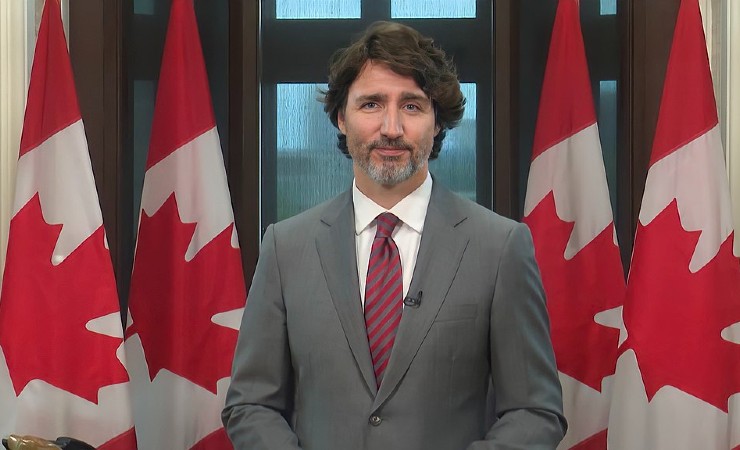
Building on this research, we examined the relationships between character and effectiveness in political crisis management during the COVID-19 pandemic. Focusing on Canadian Prime Minister Justin Trudeau, we explored public views on the importance of character in political leadership along with public perceptions of the key dimensions of character previously identified by Ivey researchers. We further explored whether Canadians associated the prime minister with behaviors linked to these dimensions. This allowed us to study the relationships between character and identification-based trust.
Trust is a necessary feature of a well-functioning democracy, but identification-based trust—which supports followership since it is based on a mutual understanding and affinity between parties—is particularly important to the effectiveness of political leadership during dynamic situations with high stakes for citizens such as a deadly global health crisis.
The results of our one-year investigation reveal that adult Canadians believe that character—along with each of the dimensions of character included in our survey—is essential for effectively fulfilling the role of prime minister. In fact, the perceived importance of character to effective political leadership increased during the initial stages of the pandemic. However, our investigation suggests that there was a varying gap between the perceived importance of leader character and the belief that Trudeau’s behaviors reflected leader character dimensions. This gap widened from April 2020 to October 2020 but then remained stable after October, and the data for identification-based trust and perceptions of leadership effectiveness mirrored this pattern.
Although public assessments of Trudeau declined somewhat as the pandemic lingered, his political party retained the lead in the popular vote—a proxy for popularity and job performance—by a wide margin throughout the year. Our results suggest that identification-based trust helps explain the relationship between perceptions of character and leadership effectiveness. As a result, we conclude that character—which is formed by individuals, not bestowed on them—may be both an antecedent of trust and leadership effectiveness, making it an important attribute for leaders across all sectors to proactively develop.