Democracy and the Authoritarian Turn in British Higher Education
It might seem that the current crisis of higher education is best illustrated by its most spectacular manifestations – perhaps Donald Trump’s highly successful bullying of US elite universities or perhaps Javier Milei’s brutal de-funding of public universities in Argentina (1, 2). Both countries’ commitment to democratic governance had long seemed settled, in both countries, universities have played a large role in sustaining democracy, and both countries have recently elected authoritarian strongmen with a deep disdain for public education (1). Both in Argentina and in the US, academic freedom and university’s capacity to contribute in a meaningful way to the democratic process are clearly at stake.

Both the American and the Argentinian case have been much discussed; each is rather spectacular, and in each, in the intent is obvious to unmake universities as we have long known them. Here, I suggest that another way of unwinding the ties between higher education and democracy deserves just as much attention. Since my return to the UK from China in 2022, I have been particularly interested in – and horrified by – the way in which a steely, silent, and opaque management bureaucracy has managed to turn British universities into organizations that are less and less ‘universities’ in a meaningful sense. It’s not that British higher education management entirely lacks spectacular flair, though, and some of its crassest excesses illustrate the problem I am concerned with particularly well:
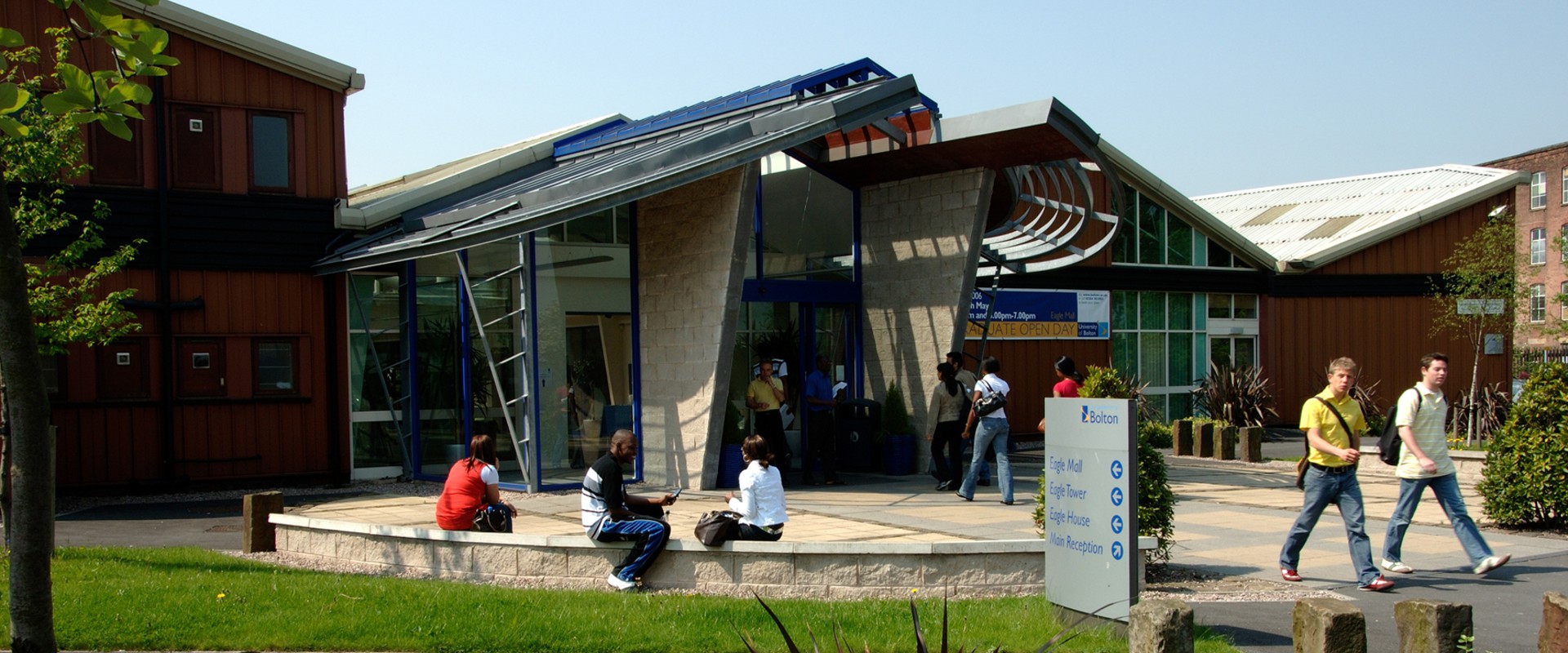
The travails of the University of Greater Manchester serve as a case in point. Formerly the University of Bolton, the university recently re-named itself, apparently to dupe international students into believing they were about to join the University of Manchester (1, 2, 3). While this alone speaks volumes as to the university’s ethos, a series grimly compelling events has recently led to the suspension of its vice chancellor, George Holmes, debate in the House of Commons, police raids, and an investigation for serious fraud. Much of the scandal has centered on the conduct of Joseph Wheeler, an automobile marketing executive whom the university inexplicably placed in charge of its “marketing,” “brand management,” and international student recruitment. To give you a flavor of what that must have been like:
According to the reader who sent us that clip, the man speaking is a very senior figure at the University of Greater Manchester, which until recently was known as the University of Bolton. ‘At the end of the day, somebody from Nigeria looks exactly the same as somebody from Ghana,’ the man adds, apparently speaking to a more junior colleague. A student sharing the clip described the comments as ‘racist and disrespectful’ to national groups the university is outwardly trying to attract.
Joseph Wheeler, a marketing man with no background in higher education who seems to have acquired extraordinary power at the rebranded university in recent years, has had two weeks to deny that he is the voice recorded on the clip, but he hasn’t done so, or answered any of our questions. The university’s long-serving vice chancellor George Holmes described the clip as ‘astounding’ when we called him recently, but he wasn’t willing to say more.
The clip isn’t an isolated story. According to nearly a dozen serving and former staff members at the university, Holmes has handed the keys of the university to Wheeler, paying his company £8,209,000 over the past six financial years to promote it around the world. Under his tenure, the university has consciously rebranded to be more appealing to international students, describing inclusiveness and friendliness as its major selling points.
But behind the scenes, staff say the man driving these changes is Wheeler: a bully who makes racist jokes, shouts at colleagues and openly threatens people with the sack if they don’t bend to his will, creating what one senior member of staff calls a ‘fear culture’. In response, a spokesperson told us: ‘The university takes any suggestions of bullying or bigotry very seriously indeed and has robust internal procedures to deal with any such allegations.’“ (Source: Manchester Mill)
Apparently, the University of Greater Manchester strenuously resisted calls for transparency and accountability as to these issues, and it took dedicated investigative reporting on the part of the Manchester Mill to bring the scandal to light.
If you are unfamiliar with British academia, much of the foregoing might seem surprising or even shocking. If you are an academic or have otherwise been closely involved with the country’s universities, you are more likely to feel a sense of weary familiarity when reading about the university’s resistance to transparency, lack of managerial accountability, unfettered managerial power, and shabby treatment of academic and administrative staff who do not hold such power. Writing this, I do not mean to paint a one-sidedly negative picture of academic life in the UK. There is, of course, still great intellectual achievement to be had, and collegiality and solidarity continue to characterise relationships between many academics, towards the bottom of the academic hierarchy. The problem is, rather, that UK academia has become deeply hierarchical to begin with and that collegiality has vanished as a principle of academic governance, to be replaced with top-down, confidently authoritarian modes of ‘management.’
This scandal is of interest here in so far as it exhibits, really quite luridly, the failings of British university today. I do not mean to claim, of course, that corrupt and fraudulent conduct of the sort that has been alleged at the University of Greater Manchester is endemic in British academia. Rather, my point is that the scandal highlights to what extent British universities have abandoned the ethos and, once upon a time, central institutional objectives of higher education. Reading reports on events at the University of Greater Manchester, it is obvious that its leaders and the organization as a whole could not be less concerned with the pursuit of knowledge as an end in itself.
Likewise, it is obvious that the people who run the university have no interest or even understanding of the role which British universities have long played in civic education or the formation of citizens able to participate in the democratic process, in Britain or abroad, in an informed manner. According to what has been published, including excerpts from internal conversations and documents, leaders at the University of Greater Manchester simply view international students as cash cows, there to bolster the organization’s revenues. It seems unlikely that they will apply an entirely different set of considerations and standards to local students. The problem is that this cash-grabbing, deeply anti-intellectual mindset is not an exception at British universities: as a wealth of research (e.g. 1, 2) has shown, it is endemic, alongside the mentioned tendency towards authoritarian leadership and an aversion to accountability and transparency. In other words, British universities have long since abandoned what made them ‘universities’. Their leaders enthusiastically embracing an ethos and a mode of governance which the label ‘edu-factory’ describes much more fittingly.
By this, I do not mean to argue, of course, that every single manager and every single academic at every single university thinks and acts in the way I have sketched. There is no empirical basis for such a generalisation, and this claim would be obviously absurd. What I have attempted, rather, is to characterise an academic system that has quite conclusively lost its commitment to things academic and intellectual. When I was a PhD candidate, in the mid-2000s, commentators in The Sun would, to my and my fellow students’ puzzlement, fulminate about universities wasting taxpayers’ money on the pursuit useless knowledge. Since then, British higher education has committed wholesale to this idea: Listen to your managers and even your fellow academics explain to you how universities must do more to adapt to the ‘real world’, see how seemingly every single news publication about universities focuses on the economic value of scholarship, and note how universities current funding crisis in effect amounts to a continuation of the long-running ‘hammer the humanities’ campaign, with mass sackings tending to fall on the humanities and social sciences.
All this matters greatly. If universities have become mere edu-factories, then a central institutional pillar of democracy in Britain has faded away, at a time when the anti-democratic, authoritarian far right is projected to win resoundingly in the next general elections. If studying for a degree is a mere commercial transaction – cash for degree certificate and better job prospects – then how can universities still address the incipient but worrying authoritarian, anti-democratic shift in beliefs and attitudes among young people? And if higher education leaders are either oblivious or indifferent to this, as available evidence strongly suggests, then how can higher education recover the sort of purpose that is not expressed in pound signs?
At the time of writing, the scandal at the University of Greater Manchester has faded from the news, while a criminal investigation plays out in the background. A giant wave of layoffs of academics and administrative staff is still underway. Its significance can hardly be overstated, as university managers are using the pretext of (very real) financial crisis and underfunding to dismantle undesirable disciplines, dismiss unwanted academics, turn bureaucratic work into something still leaner and meaner, and conclude the transformation of British universities into the ‘edu-factories’ I have described above. This also does features in the news and public debate, a few brief mentions here and there notwithstanding. This silence shows how little higher education and scholarship are understood and valued in the UK, I think.
What has featured in the news quite recently, is renewed scapegoating of international students on the part of the UK government. This involves a large-scale effort to contact hundreds of thousands of international students and threaten them with deportation, should they overstay their visas (1). This measure seems intended to to pander to far-right voters who have been protesting outside hotels housing asylum seekers for much of the summer. There is continuity here between Britain’s famous ‘go home vans’ (1) and the menace now levelled for questionable political gain at students with foreign passports. What is striking is that, even in Britain’s most prominent progressive newspaper (1), the issue is discussed in exclusively economic terms, as a further threat to the financial viability of the countries´ universities. The message to international students appears obvious: pay up and go away.
On a larger scale, what is clear is that higher education in the UK has comprehensively abandoned its moral compass and civic purpose. Sure – many individual academics retain this, and it very much forms part of their everyday scholarship. However, for this to be the case increasingly means swimming against the stream, in an ‘industry’ that is singlemindedly devoted to the pursuit of £££ and often led by people who understand little else. In the first instance, if you would like to still make a difference in UK higher education, you will either need to survive the current wave of sackings or already find yourself in a very privileged position that insulates you from that. And even then, the pressure for you to let yourself be co-opted into the dominant way of doing things (£££) will be tremendous. For this reason, it does not seem wrong to conclude that the link between democracy and higher education in the UK has been severed.