

Could Distributed Peer Review Better Decide Grant Funding?
The landscape of academic grant funding is notoriously competitive and plagued by lengthy, bureaucratic processes, exacerbated by difficulties in finding willing reviewers. Distributed […]

UPDATED WITH HOUSE PASSAGE: A bill that was the latest version of the beloved America COMPETES — but which no longer authorizes funding for key federal science research agencies — looks likely to land on the president’s desk. The new version has lost a particularly toxic aspect of earlier versions.

T.S. Eliot said “April is the cruelest month.” This November has been pretty harsh, too, says blogger Howard J. Silver, who wonders what the new U.S. president will mean for a number of issues, including research funding.
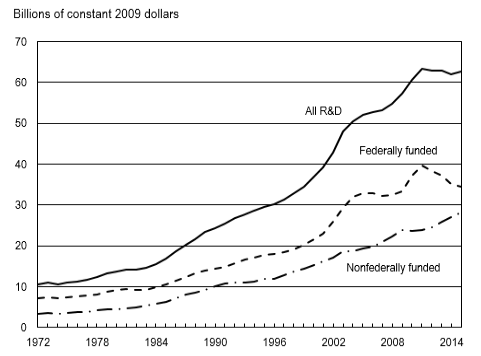
For the fourth straight year, federal funding for research and development at institutions of higher education decreased in absolute terms, according to a new brief on the 2015 fiscal year the National Science Foundation released last week. Despite that overall fall, research and development funding for psychology and for fields identified as social science increased from 2014 to 2015.

Two research executives from the University of Minnesota see there isn’t enough government funding to pay for all the innovative research that needs to be taking place. Might business take up the slack?

The election of Donald Trump illustrates the hazards encountered when scientists and scientific institutions alienate themselves from historic global changes.
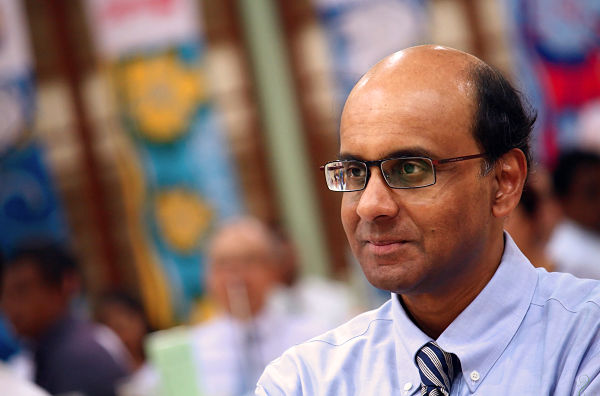
After launching the Singapore Social Science Research Council in January, the country’s Ministry of Education is backing that up with a serious infusion of cash.
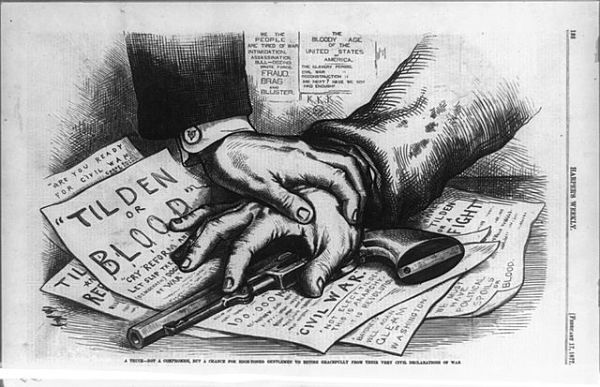
Noting that one candidate has been claiming the upcoming U.S. presidential vote is ‘rigged,’ our Washington-based blogger takes a look at the ways that past presidential elections have been less than clear-cut, and that ways in which the system bent to accommodate a peaceful transfer of power.

As part of our series on academic freedom, Dylan Kerrigan discusses the wider implications of the financialisation of academic knowledge production by considering academic book publishing. He asks if the success of academic books is best measured by economic or non-economic criteria, by its impact on the business sector or its veracity, by ideological myth-making or evidence.

Jürgen Habermas, a globally known social theorist whose explorations of democracy, validity and communication have gained new prominence in the current moment, […] People often see science as a world apart: cool, rational and untouched by persuasion or performance. In this view, scientists simply discover […] “Research impact” means different things to different people. Some refer broadly to how science changes behaviors, beliefs, or practices outside academic institutions. […] David Canter considers informal places where people socialize, suggesting they’re an arena ChatGPT and other LLMs can’no’t replicate. As someone who lives […] It’s become cliche since Clive Humbly coined it in 2006, but data is indeed the new oil. It’s a mantra repeated by […] In September 2025, The Guardian reported about a lawyer in Australia having faced sanctions due to false citations. These citations were not […]
EXPLORE
Impact

Jürgen Habermas, 1929-2026: Exponent of the Public Sphere
READ MORE

Scientists Should Keep in Mind It’s Called the ‘Marketplace of Ideas’ for a Reason
READ MORE

Survey Finds Social Scientists Feel Unsupported in Seeking Societal Impact
READ MORE
Innovation

Reaching Parts to Which AI Has No Access
READ MORE

Andrea Medina-Smith on Making Research Data More FAIR
READ MORE

A Status Check on Hallucinated Case Law Incidents
READ MORE