
Could Distributed Peer Review Better Decide Grant Funding?
The landscape of academic grant funding is notoriously competitive and plagued by lengthy, bureaucratic processes, exacerbated by difficulties in finding willing reviewers. Distributed […]

Are university students unhappy? We won’t generalize, but many are, and this was something Bruce Hood noted. Being an experimental psychologist who […]
Harvard psychology professor Joshua Greene studies the back-and-forth between emotion and reason in how human beings make moral decisions. In this Social […]

How much of our understanding of the world comes built-in? More than you’d expect. That’s the conclusion that Iris Berent, a professor of psychology at Northeastern University and head of the Language and Mind Lab there, has come to after years of research

Caring makes us human. This is one of the strongest ideas one could infer from the work that developmental psychologist Alison Gopnik is discovering in her work on child development, cognitive economics and caregiving.
In this Social Science Bites podcast, Deborah Small, the Adrian C. Israel Professor of Marketing at Yale University, details some of the thought processes and outcomes that research provides about charitable giving.
On his institutional web homepage at the University of California-Los Angeles’s Anderson School of Management, psychologist Hal Hershfield posts one statement in big italic type: “My research asks, ‘How can we help move people from who they are now to who they’ll be in the future in a way that maximizes well-being?”
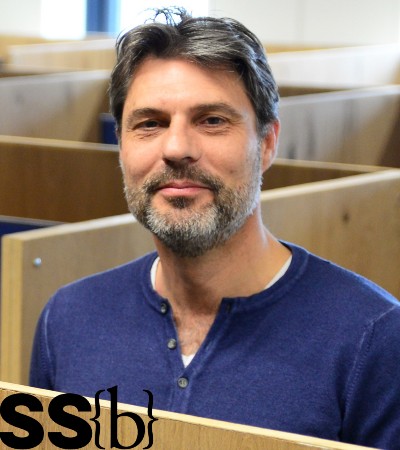
Trained as a social psychologist, Leiden University social psychologist Carsten de Dreu uses behavioral science, history, economics, archaeology, primatology and biology, among other disciplines to study the basis of conflict and cooperation among humans.
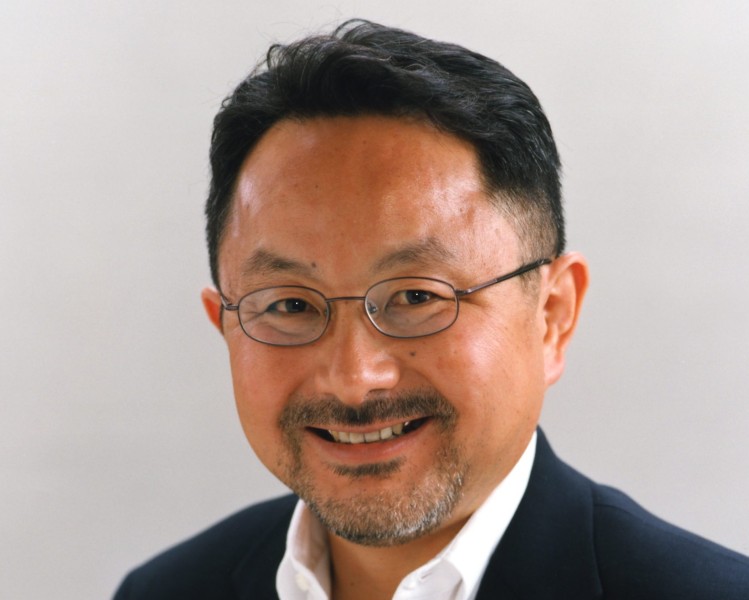
Psychologist Shinobu Kitayama explores the cultural differences between Asia and America, the possible origins of those differences, and how the brain and body may reflect those differences.
Jürgen Habermas, a globally known social theorist whose explorations of democracy, validity and communication have gained new prominence in the current moment, […] People often see science as a world apart: cool, rational and untouched by persuasion or performance. In this view, scientists simply discover […] “Research impact” means different things to different people. Some refer broadly to how science changes behaviors, beliefs, or practices outside academic institutions. […] David Canter considers informal places where people socialize, suggesting they’re an arena ChatGPT and other LLMs can’no’t replicate. As someone who lives […] It’s become cliche since Clive Humbly coined it in 2006, but data is indeed the new oil. It’s a mantra repeated by […] In September 2025, The Guardian reported about a lawyer in Australia having faced sanctions due to false citations. These citations were not […]
EXPLORE
Impact

Jürgen Habermas, 1929-2026: Exponent of the Public Sphere
READ MORE

Scientists Should Keep in Mind It’s Called the ‘Marketplace of Ideas’ for a Reason
READ MORE

Survey Finds Social Scientists Feel Unsupported in Seeking Societal Impact
READ MORE
Innovation

Reaching Parts to Which AI Has No Access
READ MORE

Andrea Medina-Smith on Making Research Data More FAIR
READ MORE

A Status Check on Hallucinated Case Law Incidents
READ MORE