Confusing Correlation with Causation

Do ice cream sales cause shark attacks? They increase together during the year. The statistical association between them is very clear. Yet the suggestion that sharks have some special animosity to ice cream and therefore seek to eradicate those partaking of it does not seem to be very plausible. The alternative causal mechanism of shark attacks influencing ice cream sales seems equally unlikely, unless some sort of traumatic experience made people seek comfort in eating ice creams. But even this latter explanation posits a mediating feature, the traumatic event. It is not the sharks directly influencing the sales but the experience of an attack. Of course, a more plausible explanation is that ice cream sales relate to the weather. This in turn encourages people to get out onto the beach and go swimming in shark-infested waters.
That is the problem with correlations, a problem that all introductory classes in statistics emphasize. Associations between any two phenomena do not indicate any way in which one may cause the other. It may not even indicate that they have any relationship at all. The relationship may just be an odd coincident or recording anomaly. However, although this is an elementary aspect of understanding statistics, it is remarkable how little it is appreciated by politicians and pundits who are willing to make outlandish statements about how the world works.
The most recent, highly dangerous, confusion was the claim by Donald Trump, in support of his Secretary of Health and Human Services, Robert F. Kennedy. On the back of a very small study that hinted there may be some correlation between taking Tylenol (paracetamol) and giving birth to a child with autism, Trump declared this medication for relieving fever and pain should be avoided at all costs during pregnancy. Many other, much larger and more sophisticated studies have not found any relationship at all, but this has not stopped Robert F Kennedy from promulgating this odd claim, which could be very distressing for anyone who believes him.
There are many reasons why any pregnant women will take some pain relief medication. Whether any of these reasons has some complex relationship to giving birth to an autistic child, which might have emerged in the small study is open to question. More likely are all sorts of problems with that study. The most obvious is that autism is not a unitary phenomenon. It covers many different types of neurodiverse conditions. Many would even claim it is not an aspect of a person that there should be attempt to avoid or ‘cure.’ Therefore, claiming a relationship with a spectrum of ways of dealing with the world begs many questions.
Donald Trump milks this apparently ignorant confusion of correlation and causation all the time. That some wars may have stopped (although many never got started) while he was in office has led to the most crass claim that he ‘ended’ those wars. Curiously the extremely well-established correlation between the growth in the emittance of greenhouse gases and climate change, has been dismissed by Trump and his followers as not indicating any causal mechanisms. That is even though the very term ‘greenhouse gas’ indicates exactly what the actual process is that is creating global warming. The conclusion has to be drawn that it is the correlation between increases in global warming the hot air generated by some uninformed, ignorant world leaders that is the profound problem of our age.
🧠 Why It Happens
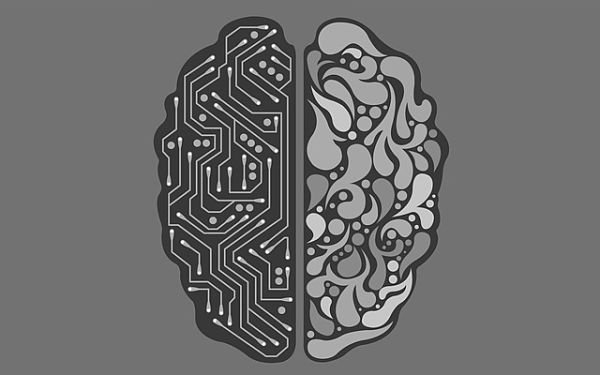
Humans are wired to seek patterns and meaning. As Daniel Kahneman and Nassim Taleb have explored, even experts can fall prey to this bias because our brains favor coherent stories over statistical nuance.
Kahneman was awarded the Nobel Prize in Economic Sciences in 2002, but not directly for his work on cognitive biases per se. He received the prize for having integrated insights from psychological research into economic science,
Cognitive Biases at Play
- Illusory Correlation: This occurs when people perceive a relationship between two variables that are not actually related. It’s especially common when the events are distinctive or emotionally charged. For example, assuming that a minority group is more prone to negative behavior because such instances are more memorable.
- Illusion of Causation: This bias leads people to infer a cause-and-effect relationship from mere co-occurrence. It’s closely tied to the fallacy post hoc ergo propter hoc (“after this, therefore because of this”)—mistaking sequence for causality. For instance, believing that wearing a lucky shirt caused a successful job interview.
- Confirmation Bias: Often intertwined with these errors, it reinforces the illusion by selectively attending to evidence that supports the perceived causal link while ignoring contradictory data.