


Could Distributed Peer Review Better Decide Grant Funding?
The landscape of academic grant funding is notoriously competitive and plagued by lengthy, bureaucratic processes, exacerbated by difficulties in finding willing reviewers. Distributed […]
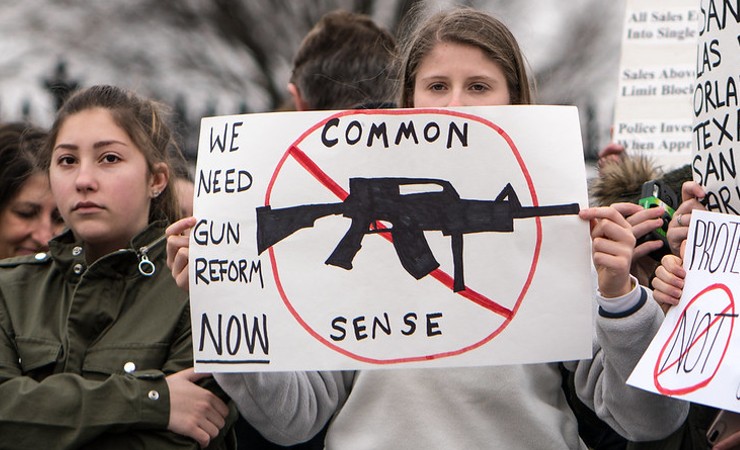
Every day across the United States, more than 120 people die from firearm injuries. This is a crisis that requires urgent attention from the scientific community, and social scientists have a critical role to play.

Yi-Fu Tuan, University of Wisconsin–Madison professor emeritus of geography, died August 10 at the age of 91.

The Canadian Federation of Humanities and Social Sciences has launched the Big Thinking Podcast, a show series that features leading researchers in the humanities and social sciences in conversation about the most important and interesting issues of our time.

In this series Aled Singleton explore the ebb and flow of geographical ideas, particularly how they move around the world. As with all innovations, concepts sometimes lose traction over time, seem to get buried in dusty libraries and then fins themselves revived for unexpected reasons. The topic for this series is the concept psychogeography. We will travel from Paris in the 1960s to the UK in the 1990s and then to the wider World in the 2020s.
Joel Baum at the University of Toronto discusses the origin story of the journal Strategic Organization in his paper, “Constructing Strategic Organization – A field whose time has come,” published in … Strategic Organization.

The 2022 NIH Behavioral and Social Sciences Research Festival will take place on Dec. 8-9, 2022, from 1:00 to 4:30 p.m. EST each day. Held by the Office of Behavioral and Social Sciences Research (OBSSR) and the NIH Behavioral and Social Sciences Research Coordinating Committee (BSSR-CC), the Festival seeks to inform the community about the latest BSSR funded by the NIH and its impact.
In a recently released episode of The We Society podcast, Ann Phoenix, a psychologist at University College London’s Institute of Education, spoke […]

The National Science Foundation (NSF) has announced the Analytics for Equity Initiative for social, economic and behavioral sciences research which examines equity-related topics for public benefit via federal data and scientific advances.
People often see science as a world apart: cool, rational and untouched by persuasion or performance. In this view, scientists simply discover […] “Research impact” means different things to different people. Some refer broadly to how science changes behaviors, beliefs, or practices outside academic institutions. […] One researcher studies how war affects children, another took a literal worm’s eye view to examine rural development, while two others scrutinized […] David Canter considers informal places where people socialize, suggesting they’re an arena ChatGPT and other LLMs can’no’t replicate. As someone who lives […] It’s become cliche since Clive Humbly coined it in 2006, but data is indeed the new oil. It’s a mantra repeated by […] In September 2025, The Guardian reported about a lawyer in Australia having faced sanctions due to false citations. These citations were not […]
EXPLORE
Impact

Scientists Should Keep in Mind It’s Called the ‘Marketplace of Ideas’ for a Reason
READ MORE

Survey Finds Social Scientists Feel Unsupported in Seeking Societal Impact
READ MORE
Canada’s SSHRC Names 2025 Impact Winners
READ MORE
Innovation

Reaching Parts to Which AI Has No Access
READ MORE

Andrea Medina-Smith on Making Research Data More FAIR
READ MORE

A Status Check on Hallucinated Case Law Incidents
READ MORE