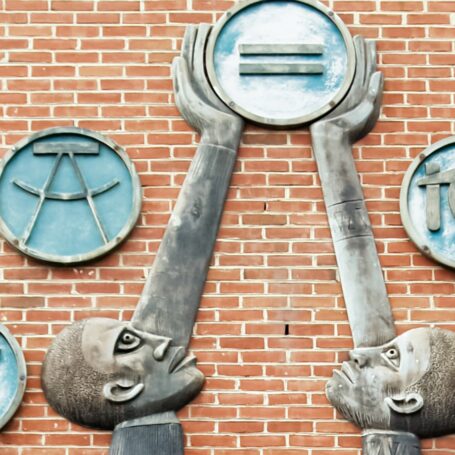
Adding People to the Climate Change Equation
 By Gail Osherenko
Changing how business and government operate can be a slow and difficult process. But altering the way science is done is even stickier and more ponderous.
Nonetheless, scientists from a wide range of disciplinary backgrounds at this week’s Planet Under Pressure Conference moved a step closer to creating a new, integrated entity to coordinate and advance research on global environmental change. A key aspect of the integration is including behavioral science to a much greater extent in a field that has been seen as a biophysical sciences playground.
As David Willetts, Britain’s Minister of State for Universities and Science, said in his closing-day address, “At this conference, the social sciences and humanities are taking center stage.”
The conference, held in London, is itself a buildup to the 2012 U.N. Conference on Sustainable Development, dubbed Rio+20 as it marks two decades since the groundbreaking United Nations’ Rio summit that produced two landmark treaties, the Convention on Biological Diversity and the Framework Convention on Climate Change.
Planet Under Pressure’s conferees developed a four-page State of the Planet Declaration summarized here:
• Humans have driven the planet into the Anthropocene, a new era marked by human domination of Earth’s systems.
• We are on a course for profound changes that are likely to be highly destructive to human wellbeing.
• We need to change course in this decade. For the science community, this requires a new contract between science and society, which includes business, NGOs, civil society, international agencies and governments.
• In response to the need for science that is solution-oriented, integrated and international, five large global environmental research programs (represented among the organizers of the conference) support a major research initiative, Future Earth: research for global sustainability.
A transition team will launch Future Earth formally at RIO+20 in June and expects to have a new governing council in place by January 2013.
Creation of Future Earth may not look like a momentous accomplishment after 18 months of planning by the science community, but it is far more than moving the deck chairs on the Titanic. As a researcher myself, I can attest that social science has had difficulty joining and finding research partners within the big global change programs, where funding for biophysical and natural sciences far exceeds support for researchers working on governance, risk assessment, human behavioral change or other social phenomena.
Johan Rockstrom, co-chair of the Future Earth transition team and executive director of Stockholm Resilience Center, introduced Future Earth as “a new contract between science and society.” Its “core principles are international, integrative and solution-oriented research.” He called for “fierce urgency and a great transformation” as we head into a 3-degree warmer planet. Future Earth recognizes that things are interconnected and “takes advantage of 30 years of earth system science generated from the global environmental change community.” He welcomed existing programs to be part of Future Earth.
Now, the research community is welcoming and funders (especially the Belmont Forum, whose members include science funding agencies from 10 countries and the European community) demand integration of natural and social science as well as research users — policymakers, regulators, NGOs, communities and industry — as they search for solutions to address water shortages, food security, and human health. They recognize, for example, that the social sciences and humanities will be necessary to understand how to modify the diet of the developed world so that grain to feed livestock can be used to feed humans and to reduce pollution from overuse of nitrogen-rich fertilizers. …
Read the rest of the article at Miller-McCune