Emancipatory Islam: How Yemeni-American Women Balance their American Dreams

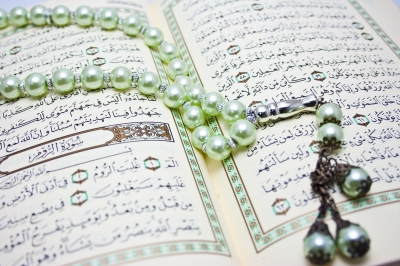
Photo by Getideaka
I remember very well in 1996 the upheaval our family went through in Yemen when I won a competitive scholarship to pursue my graduate studies in the U.S. and decided to leave. Mohammad, my husband, who had two full-time jobs at the time and enjoyed the warm, vivid extended family relationships available in Yemen, fiercely opposed the idea of us, with two little sons, being “uprooted from our country and close social networks.” Yet, I was deeply convinced that this was MY challenging path and that I must take the risk of climbing it until reaching MY goals. Not to be mistaken—I was not in any way willing to sacrifice my small family for the sake of my educational and career ambitions. Thus, I initiated a long negotiation process to gain both: a distinguished individual achievement and an intact cohesive family. It took months for me, my in laws and my parents to persuade my stubborn husband to agree to the proposal and to accompany me with my two sons in the unknown journey.
I was inspired by the self-enforced adventure to seek simultaneously the glitter and glory of individual achievements and the intimacy of family life, and fascinated by the Sociological theories describing immigrants’ styles of becoming part of the “American dream.” Therefore, I decided to study the lives of a group of second-generation Yemeni-American women in Detroit, Michigan, in order to explore their dual identities in the diaspora.
The resulting qualitative study highlights the narratives of 20 Yemeni-American second-generation women who described through in-depth, open-ended interviews their unique ways of belonging to two cultures. Dr. Amanda Konradi and I had worked relentlessly to analyze the interviews’ data and to situate them in the immigration literature. Our study found that women’s lives and identities were shaped by a strong sense of communal commitments and affiliation stemming from the group-oriented original Yemeni culture on the one hand, and a solid determination to adopt women’s empowerment bestowed by the individualism-oriented American mainstream culture on the other. Interestingly, and in contradiction to western public pre-assumptions, Islam was viewed by the women as the mediating area between the two cultural poles. Struggling to achieve a role of active women-empowering agency within the collective while facing dual pressure from the American mainstream’s exclusion as well as from local communities’ sexism, women emphasized the emancipatory and transformative potential for Islam. We found that these young women are secure in their Muslim identities and able to push boundaries, because they feel part of strong kin networks of giving and receiving mutual support.
READ RELATED ARTICLES
Islamic Cultures, Religious Affiliation, and Sex Outside of Marriage.