 Communication
 A Perceptive Outsider Always Looking In: Stuart Hall, 1932-2014
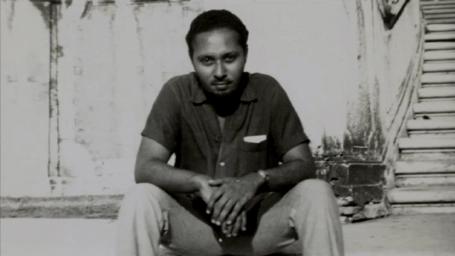
Toasted as the “godfather of multiculturalism,” sociologist Stuart McPhail Hall died today of kidney failure, a week after his 82nd birthday.
‘Pessimism of the intellect/optimism of the will’ is a quote from Gramsci that, from his middle years, Hall adopted, as a fond-felt refrain in his work,” reflected Chris Rojek, a professor of sociology at City University, London, citing Hall’s intellectual and political fore bearer, Antonio Gramsci. “At the sorrow-sad gloaming of Hall’s death, one thinks of ‘illumination of the intellect/inspiration of the will’ as the only fitting adaptation to meet the occasion. There is only one Gramsci. There is only one Stuart Hall. With thinkers of this calibre, death cowers. Their thought and influence transcend the scythe.”
Hall’s impact on British scholarship, cultural identity and understanding of race, gender and political power stretches to 1951, when the Jamaican-born Rhodes scholar arrived at Oxford’s Merton College to study English. He was part of the “Windrush generation,” the wave of so-called West Indian immigrants who settling in, and then helped unsettle, London after World War II. But Hall’s status as a permanent outsider –and perceptive observer–was cemented even before arrival.
In The Stuart Hall Project, a 2013 John Akomfrah documentary, Hall recalled his mother talking to him before he left for the UK: “’I hope they don’t think of you as one of those immigrants,’ and I thought to myself that is exactly what I am. She said: ‘England, beautiful England, full of those black people. The best thing they can do is push them off the short end of a long pier.’ I thought to myself, she is talking about me.”
And so his pioneering oeuvre on cultural hegemony always included a ring of personal authenticity. As he told The Guardian in a 2012 interview, “Three months at Oxford persuaded me that it was not my home. I’m not English and I never will be. The life I have lived is one of partial displacement. I came to England as a means of escape, and it was a failure.”
And yet he would become one of the leading English sociologists of his day, seen as a mentor to Britain’s non-white underclass and an increasingly strident spokesman for leftish political thought. As David Morley and Bill Schwarz wrote in The Guardian today:
As his time in Britain lengthened, so his identifications with blackness deepened. Ambivalent about his relation both to his place of departure and to his place of arrival, he sought to survive the medieval gloom of Oxford by making common cause with the city’s displaced migrant minority. Out of these new attachments, and out of the political cataclysm of 1956 – marked by the Anglo-French-Israeli invasion of Egypt and by the Soviet suppression of the Hungarian revolution – emerged the new left, in which Hall was an influential figure: it provided him with a political home.
Hall was a leading light of the Universities and Left Review and then the founding editor when that journal retooled itself as New Left Review. As Britain’s politics took on a Thatcherite hue in the 1980s, Hall’s impact and work on the field of British cultural study was strongly felt at the magazine Marxism Today. In 1995 he was a founding editor of Soundings: A Journal of Politics and Culture; the latest issue features an article he co-authored with Alan O’Shea.
It was through the lever of cultural studies that Hall reached his academic eminence; “he became very nearly synonymous with this multidisciplinary field,” The Guardian’s Stuart Jeffries writes in an excellent retrospective of Hall’s legacy (that whole “godfather’ motif was a Homeric that Hall wore with some unease, for example). Exactly 50 years ago the young academic, fresh off co-authoring the book The Popular Arts, was invited to join the nascent Centre for Contemporary Cultural Studies at the University of Birmingham, the first official center for cultural studies at a British university. Hall was brought on board by the center’s debut director, Richard Hoggart, who reportedly fronted up Hall’s initial expenses out his own pocket.) Four years later, in 1968, Hall became the center’s director himself. In 1979, on a quest to reach those outsiders who couldn’t reach the traditional university’s gates, he moved to the Open University as a sociology professor, a role he retained until 1998 when he was named an emeritus professor. Upon his “retirement,” if such was the word, he worked to establish a “global art space,” Rivington Place, in East London, and in 2005 he was named a fellow of the Royal Academy.
His academic work—on encoding/decoding communication, identity politics, the decline of empire—was often tackled collaboratively and at times took a back seat to his public outreach. His was a familiar face on BBC2, and Hall’s public oratory was widely celebrated. That his efforts stretched beyond ivy-covered halls reflected his own understanding that power, benign and malign, could emanate from the media—and that the audience could emanate power back.