What Leads to Radicalisation?
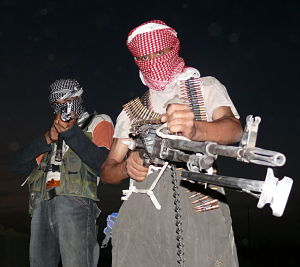
 An increasing number of young men, born and bred in the UK, seem to be popping up in videos extolling vicious violence. There is also growing evidence of them joining ISIS and other Islamic fundamentalist insurgents. This is leading to the search for explanations of how capable British students can find their way into something so alien to the culture in which they have grown up.
In general these explanations are couched in ideological terms. Somehow or other, it is argued, they are convinced of the need to overthrow existing Western ways of living and force by violent means the re-introduction of a medieval caliphate across the world. They accept that those who do not hold their beliefs are infidels who only deserve to die, so that Sharia law in all its primitive vagaries can become dominant.
This ideological viewpoint has recently rather eclipsed the earlier geo-political claims that the West had perpetrated crimes against Muslims which needed to be revenged. Eliminating the Western hegemony would open the way to the wider spread of Islam. But the complexities of this view soon reveal its inconsistencies and the current war between Shia and Sunni indicates that the geo-political and ideological rhetoric does not really reveal the power struggles that are the core of all conflicts.
But these power struggles only provide broad brush slogans that harness many different individual decisions. What has been lacking in the consideration of what seduces young men into the arms of the demagogic leaders are explorations of the psychological processes involved. This is not surprising because any direct conversation with those involved is likely to generate the public rhetoric. Examination of propaganda videos will also only reveal the ideologies that the videos are created to promulgate. What is needed is a more subtle interaction, out of the glare of publicity, with individuals who have been active in extremist violence.
To carry out such a study is difficult and consequently very few exist, but those that do reveal a very different picture from the posturing of the public face of violent jihad. One major study that I managed interviewed convicted jihadists in Indian prisons. We used a subtle, intensive psychological procedure that asked about their life story, the significant people in their lives. Certainly there were a small handful of these men who were religious fanatics and saw themselves on a mission for their God. But the great majority had many other ways of seeing the world.
Of particular surprise was that virtually of all those interviewed claimed that although their family was religious there was no support for their violent activities. In addition they all listed family relations, mothers, fathers, brothers, wives as important people in their lives. Here then is a fundamental dissonance in their close personal relationships within the family, yet their actions that go against the wishes of those so close to them.
This requires a further exploration of what it is about how they see the world that drives these jihadists on. What emerges is disturbingly banal. For some it is the social group they are part of. It may be an older brother or close school friend that forms the basis of a peer group that overrides family and other commitments. For others it is the desire to do something significant. These are the capable students who want more out of life than currently on offer. They distinguish themselves from others by being committed to an overarching objective. While their family do not support their violent intentions nonetheless the religiosity of their upbringing provides the seedbed in which others can sow unrest. There are also those for whom it is just the excitement of being swept up in the storm of committed endeavor that draws them in. Although the research was never done, as far as I know, I suspect that volunteers for the Spanish Civil War and even those who joined up early for World War I.
These varieties of psychological process help to explain why it is that 90 percent of the volunteers who return from the wars in Syria or Iraq do not take any more active role in violent jihad. They have worked through the excitement of being warriors and return to their families and experiencing other forms of being significant. Or they realise the social support that took them to war is not what they thought it would be and find ways back into other social groups.
The very few who do continue with their violent mission are those whose identity has been changed by their experience. They now think of themselves first and foremost as jihadis. They’ve built a personal narrative that has them as the starring role. The way to change this is to give them other opportunities for acting out that role that is not violent. But that means identifying them and being able to work with them. The public accounts of ideologies and the acceptance at face value of propaganda videos does not contribute to changing these personal narratives. It enhances them. It is only be addressing the psychological issues, rather than the ideological rhetoric, that the threat posed by these individuals can be minimized.