A Pioneer of Cognitive Science: Whitman Richards, 1932-2016
This obituary draws from material, quotes and descriptions produced by MIT News and MIT’s Department of Brain and Cognitive Sciences.
***

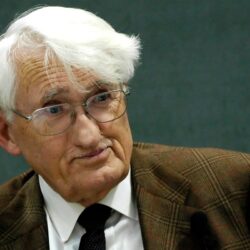
Whitman Richards
Richards, professor emeritus of cognitive sciences and of media arts and sciences and principal investigator at MIT’s Computer Science and Artificial Intelligence Laboratory, died after battling myelofibrosis for several years.
His entire career was wrapped up with the Massachusetts Institute of Technology. A native of Boston, he attended MIT as an undergrad and served in the Central Intelligence Agency following his graduation in 1950. After fulfilling his military requirement at the CIA, he joined his father’s engineering company before entering the nascent psychology department (later renamed. the Department of Brain and Cognitive Sciences).
Richards’ decision to re-enter academe followed from a meeting with the psych department’s founder, Hans-Lukas Teuber.
“In the 1960’s, with the advent of accessible computer technology, the development of information theory, and the single electrode, there was renewed excitement about prospects for modeling and understanding mind and brain,” Richards said in a 2004 interview. “Teuber’s charisma and broad vision for a new psychology was a powerful draw [to the department]. …There was a unique opportunity for a non-traditional grounding in a discipline otherwise mired in tradition.”
Richards’ early research pursued traditional psychophysical experimental methods to study the mechanisms of color perception and stereovision. But in the 1970s, his research direction and methodology shifted dramatically after meeting noted physiologist David Marr, who he eventually recruited to MIT. In Instead of relying on the traditional experimental methods that had characterized his early career, Richards, Marr, and colleagues began to look for the deep, underlying mathematical principles that allowed a human or artificial visual system to look at the world and make accurate inferences about what the system saw or perceived. That work, along with subsequent findings by his students, appeared in a 1988 book, Natural Computation.
Richards’ passionate advocacy for the computational approach to studying visual perception helped to create and nurture the department’s early computational research initiatives.
“Whit’s connection with David Marr back in the late ’70s is really the genesis of modern computational social science today,” MIT Professor Alex Pentland, the Toshiba Professor of Media Arts and Science and a former Richards graduate student, was quoted by MIT.
“The breadth of his research was really quite remarkable,” said Josh Tenenbaum, MIT professor of computational cognitive science and former Richards graduate student. “As his career developed, he transitioned from studying the parts of vison that are very close to neural mechanisms, to computational representations of perception, to Bayesian statistical models of perception and cognition. He became almost a computational social scientist — he was incredibly flexible in his thinking.”
He retired in 2013, having written eight books and more than 200 scientific papers. In his most recent research, he shifted to theoretical work on perception and cognition, raising fundamental questions such as “What is a percept?” and “Is perception for real?” He focused on understanding the mind, or how a brain makes decisions, with emphasis on perception as a complex system of semi-autonomous modules.
Described as a “renaissance scientist,” in an obituary in the Boston Globe, Richards was also somewhat of a renaissance man, being nationally ranked in squash into his 50s, and with his wife — Waltraud Weller Richards — building a solar-powered home there, and later, in their 70s, a two-story barn using only hand tools
Richards is survived by his wife of 54 years and three daughters.