Nick Adams on Textual Analysis
LISTEN TO NICK ADAMS NOW!
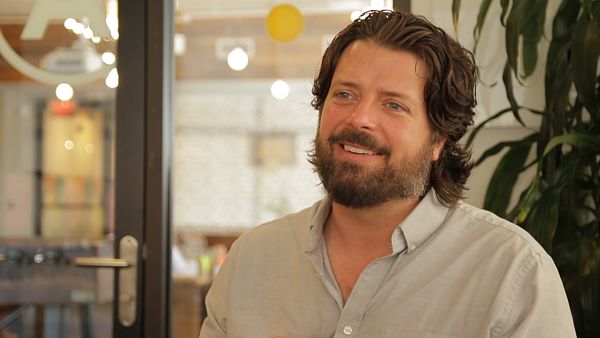
Fake news, whether truly phony or merely unpalatable, has become an inescapable trope for modern media consumers. But apart from its propagandist provenance, misinformation and disinformation in our media diets is a genuine threat. Sociologist Nick Adams, in this Social Science Bites podcast, offers hope that a tool he’s developed can improve the media literacy of the populace.
That tool, known as Public Editor, allows trained volunteers to do one of seven assessment tasks within 15 minutes of looking at passages from a news article. Several volunteers will answer a series of questions based on the passage that’s meant to elicit information about the passage’s logical accuracy and critical thinking, and a ‘credibility score’ to be posted on the article results.
Public Editor, Adams tells interview David Edmonds, will display “article labels that will show and point out for a news reader, as they are reading, inferential mistakes, argumentative fallacies, psychological biases.” And because this will all be done within 30 minutes of the article arriving at Public Editor – and hence before readers can allow their biases to cement around what they’ve read — “this is going to change how people read the news and raise their media literacy.”
While there will be naysayers, Adams defends Public Editor’s intent and structure. “This whole endeavor is about building legitimacy, building trust, through a social process. We’ve codified that social process, and substantiated it, in code, in software, in a way that’s totally transparent.”
Adams’ wider interests dovetail with Public Editor – his interest in social science technology and on social issues. He earned his Ph.D. in sociology from the University of California Berkeley, where he founded the Computational Text Analysis Working Group at the university’s D-Lab and the interdisciplinary Text Across Domains initiative at the Berkeley Institute for Data Science. He is currently the CEO of Thusly, Inc, which developed TagWorks, a web-based content analysis software for researchers.
“Right now,” he tells Edmonds, “we have more words to analyze than we’ve ever had in the history of history. That’s because we’re generating so many every single day but also because we’re digitizing ancient records going back millennia. As a social scientist,” he adds, “I’m really excited to get my hands on that data and get rich information out of it.”
Explaining that “rich data” can – but doesn’t have to be – “big data,” Adams drew an example from his own work.
“So I might be looking at something like trying to understand police and protester interactions by looking at the Occupy movement. And I can look at 8,000 news articles, which is not very much – it’s not even going to tax your laptop to process that amount of data. But when you start to put sociological concepts into the data as labels that you can count and then put into time series, multi-level models, you’re starting to talk about very rich data that afford you the ability to understand social processes like we couldn’t before.”
To download an MP3 of this podcast, right-click HERE and save.
***
For a complete listing of past Social Science Bites podcasts, click HERE. You can follow Bites on Twitter @socialscibites and David Edmonds @DavidEdmonds100.