Archived Webinar: A Scientific Approach to Social Science Communication
What are the challenges, processes and payoffs of connecting researchers with policymakers? Assuming that a scientist wants to link their research with public action – hardly an automatic reaction in itself – how exactly do you do that? How do you approach an elected official? Or someone in a government agency? What do you say? Is the process different for social scientists and natural scientists? What are the ethical considerations?
As part of a project sponsored by the National Academy of Sciences and the Rita Allen Foundation, four science communications experts tackled these and other questions by reviewing the literature – academic and practical – on interfacing with policymakers, interviewing politicians and bureaucrats, and surveying more than 600 scientist members of the American Association for the Advancement of Science. The results were summarized in a guide, Recommended Practices For Science Communication With Policymakers, published in print and online last year.
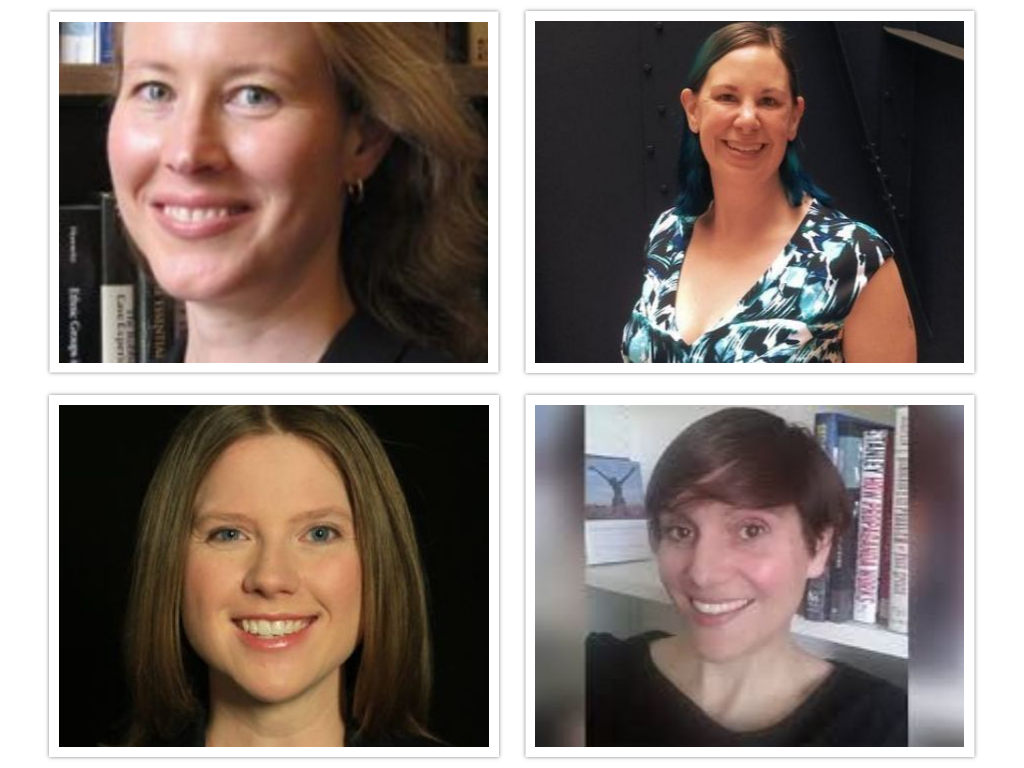
In the webinar archived below, “A Scientific Approach to Social Science Communication,” the team behind that guide — Elizabeth Suhay, Erin Nash, Emily Cloyd and Erin Heath – detailed their findings and answered the questions above.
Political scientist Elizabeth “Liz” Suhay is an associate professor in the School of Public Affairs at American University. Her research centers on “political behavior” within the American context.
Emily Cloyd is the director for the American Association for the Advancement of Science (AAAS) Center for Public Engagement with Science and Technology. She oversees all Center programming, including the AAAS Leshner Leadership Institute and the Communicating Science program.
Also at AAAS, Erin Heath is associate director of government relations. She co-chairs the Coalition for National Science Funding, the Engaging Scientists and Engineers in Policy Coalition, and is on the steering committee of the Golden Goose Award.
Erin Nash works at the interface of social philosophy & the philosophy of science. She‘s currently an honorary research fellow in the School of Humanities and Languages at the University of New South Wales looking mainly at issues to do with misinformation, and the ethics and politics of communication. Erin joins us from Australia – where it is very early in the day.
In the webinar, the following resources are mentioned or alluded to:
Evidence-Based Science Communication with Policymakers Project
Recommended Practices For Science Communication With Policymakers
The Misinformation Age: How False Beliefs Spread by Cailin O’Connor and James Owen Weatherall (https://yalebooks.yale.edu/book/9780300234015/misinformation-age)
The work of philosopher Kevin Elliott on the phenomenon of “backtracking” appears in his book A Tapestry of Values: An Introduction to Values in Science and in this article, “Nonepistemic Values and the Multiple Goals of Science” from Philosophy of Science
Philosopher Heather Douglas’ book Science, Policy, and the Value-Free Ideal
National Science Policy Network – their “mission is to catalyze the engagement of early career scientists and engineers in policy making by training the next generation of leaders, fostering community, and advocating for the role of science in policy.”
Engaging Scientists & Engineers in Policy Coalition – “an ad hoc alliance of organizations that have joined together to empower scientists and engineers to effectively engage in the policy making process at all levels of government (international, federal, state and local).”
The panelists also noted that many scholarly societies have policy-oriented newsletter for their members. AAAS. For example, has its Policy Alert and for social scientists in particular we recommend the work of the Consortium of Social Science Associations and their biweekly Washington Update newsletter available HERE.