 Announcements
 FABBS Welcomes Philip Rubin as New Board President
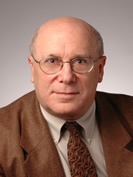
Cognitive scientist Philip E. Rubin, whose extensive resume includes leadership roles at the National Science Foundation and the Office of Science and Technology Policy, is the new president of the board of the Federation of Associations in Behavioral and Brain Sciences. The Washington, D.C.-based federation, known as FABBS, is a coalition of scientific societies and university departments that share a commitment to advancing the sciences of mind, brain, and behavior.
“Dr. Rubin brings extensive experience as a researcher and as a federal policymaker and administrator to this role at a time of tremendous interest and need for insights from FABBS scientists,” said Juliane Baron, FABBS’ executive director.
As president, Rubin follows Roxane Cohen Silver, who served as president of FABBS during 2020 and 2021, steering the organization through uncertain times amid a global pandemic. Silver, a psychologist and vice provost of academic planning and institutional research at the University of California Irvine, will continue to lend her expertise and guidance for two additional years in her role as past-president.
Rubin is the chief executive officer emeritus and a former senior scientist at Haskins Laboratories (a private research institute with the tagline “the science of the spoken and written word”), where he is currently a member of the board of directors. His research combines computational, engineering, linguistic, physiological, and psychological approaches to study, primarily, the biological bases of speech and language. Rubin is a professor adjunct in the Department of Surgery, Otolaryngology, at the Yale University School of Medicine, a research affiliate in the Department of Psychology at Yale University, a Fellow at Yale’s Trumbull College, and a trustee of the University of Connecticut.
At FABBS, he said, “I hope to raise awareness of the importance of the behavioral and brain sciences in confronting societal challenges and foster and advance efforts to increase inclusivity in our organization and the disciplines it represents.”
He received his undergraduate degree from Brandeis University and his Ph.D. in experimental psychology from the University of Connecticut. From 2000-2003, Rubin served as the director of the Division of Behavioral and Cognitive Sciences at the National Science Foundation. From 2012-2015, he worked in President Barack Obama’s Office of Science and Technology Policy, first as assistant director for social, behavioral, and economic sciences and later as principal assistant director for science. During that time, Rubin also led the White House neuroscience initiative, co-chaired the National Science and Technology Council Committee on Science, and served as a senior adviser to the Social, Behavioral, and Economic Sciences Directorate at the National Science Foundation.