

Could Distributed Peer Review Better Decide Grant Funding?
The landscape of academic grant funding is notoriously competitive and plagued by lengthy, bureaucratic processes, exacerbated by difficulties in finding willing reviewers. Distributed […]

The authors urge qualitative researchers to retain what makes qualitative research different and powerful and yes… weird: the researcher’s voice, multitudes of potential data sources, and meaningful contextualization.

Public interest attorney Bryan Stevenson, the founder and executive director of the Alabama-based Equal Justice Initiative, will receive the 2024 Daniel Patrick Moynihan Prize from the American Academy of Political and Social Science.

Drawing on a study of Crossref DOI data, Martin Eve finds evidence to suggest that the current standard of digital preservation could fall worryingly short of ensuring persistent accurate record of scholarly works.

Karynne Turner, Feray Adigüzel, and Jatinder S Sidhu reflect on their research article, “Chief executive officer narcissism, corporate inertia, and securities analysts’ stock […]

Recent survey data show declines in trust in science that mirror earlier trends for other institutions, including journalism and government. New research […]

Instead of adhering to a corporate model based on individual achievement, the authors argue that universities need to shift towards co-operative governance that fosters collaborative approaches to teaching and research

In this article, Will Harvey and Paul Spee reflect on the importance of collaboration between industry and universities. This topic was the catalyst for their research article, “Walking the tightrope of academic and practitioner expectations in field research,” found in Management Learning.
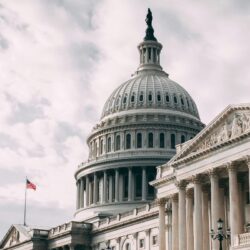
U.S. President Joseph Biden’s administration has laid down a marker buttressing the use of social and behavioral science in crafting policies for the federal government by releasing a 102-page Blueprint for the Use of Social and Behavioral Science to Advance Evidence-Based Policymaking.
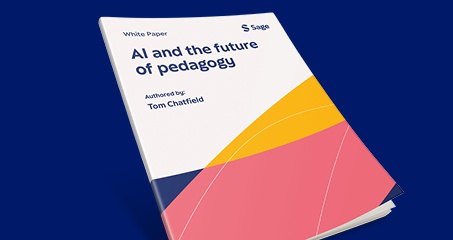
When people trust science, they can make better decisions, follow helpful rules and work together on big problems like health, climate change […] Do you know a social or behavioral science researcher whose work resonates across disciplines and which has made a significant impact in […] Please note: this contest has now closed. The winner will be contacted in due course. This November, Sage and Overton invite you to share the unexpected […] The latest generation of artificial intelligence models is sharper and smoother, producing polished text with fewer errors and hallucinations. As a philosophy […] In a new white paper by Tom Chatfield, the philosopher of tech and critical thinking outlines a practical roadmap for integrating artificial intelligence into […] Distance learning far precedes the digital age. Before online courses, people relied on print materials (and later radio and other technologies) to […]
EXPLORE
Impact

There Is a Cost to Being Honest About Science
READ MORE

Outstanding Social and Behavioral Scientists Sought for Sage-CASBS Award
READ MORE
Share Your Most Surprising Policy Citation for Chance to Win $500 [Closed]
READ MORE
Innovation

An AI Authorship Protocol Aims to Sharpen a Sometimes-Fuzzy Line
READ MORE

A Box Unlocked, Not A Box Ticked: Tom Chatfield on AI and Pedagogy
READ MORE

AI Gaming of Some Online Courses Threatens Their Credibility
READ MORE