What Is a University For, After Gaza?
What is a university for? Traditionally, education has long been seen as a foundation for ethical and intellectual life. Aristotle viewed learning as a path to reason and civic responsibility (Kraut, 2018), while Islamic philosophers like Abu Fasr Al-Farabi and Ibn Sina (Avicenna) understood ʿilm’ (knowledge) as a sacred and civic duty necessary for cultivating ethical societies (Özturan, 2019). In early 19th century Europe, Wilhelm von Humboldt imagined the modern research university as a community of self-governing scholars serving the public good (Baert & Shipman, 2005), and John Henry Newman envisioned it as a site of academic freedom dedicated to the pursuit of knowledge for its own sake (Heft, 2007). These share a commitment to academic freedom, independence, and ethical responsibility. Yet, as Michel Foucault (1980) reminds us, knowledge is always shaped by power, and, in the light of Gaza, we must reexamine whether universities remain true to their ideals, or if they must be fundamentally reimagined.

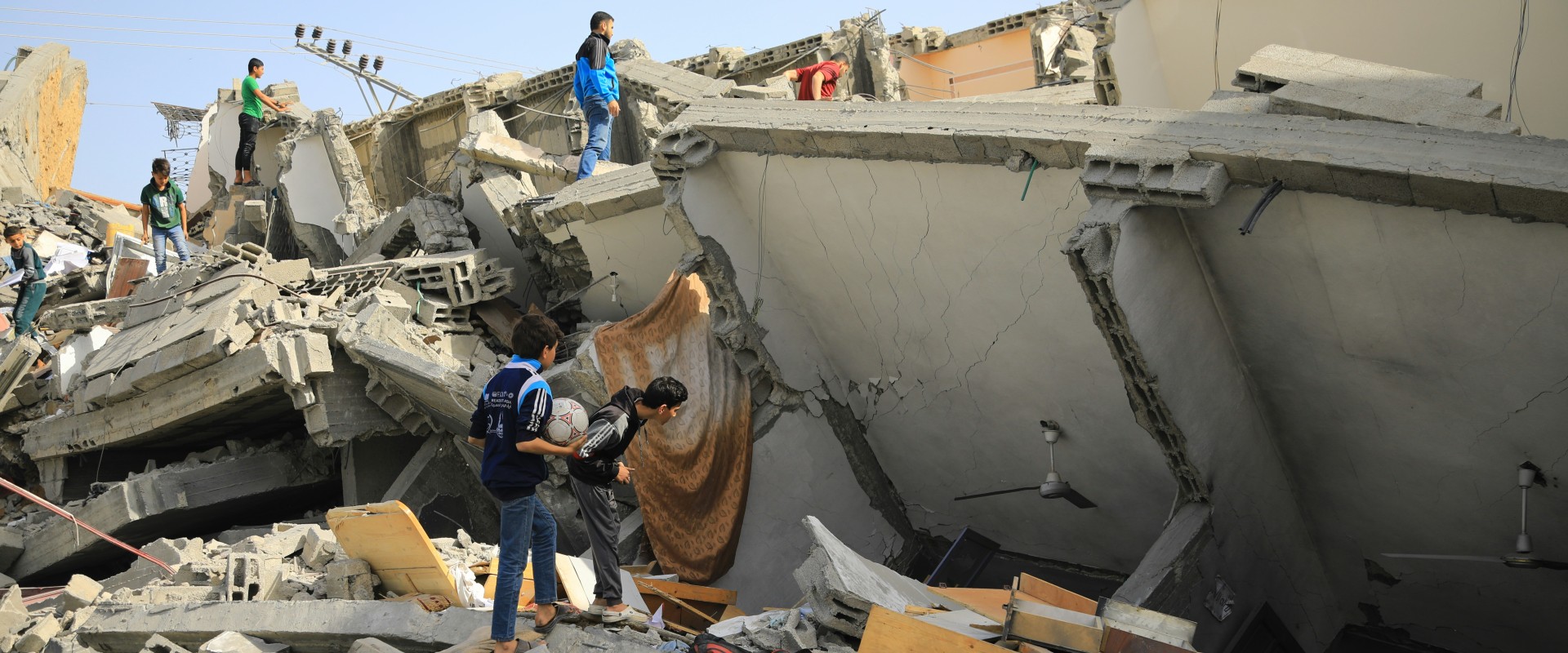
Since October 2023, all 12 major universities in Gaza have been destroyed by Israel’s ongoing military offensive – not accidentally, nor incidentally, but as a calculated attack on education. Libraries, lecture halls, and archives have been decimated. This, as Henry A. Giroux (2025) notes, is ‘scholasticide’: the deliberate erasure of memory and the destruction of a people’s capacity to teach, learn, and produce knowledge.
In response, many universities across Europe, the UK, and North America, have cited neutrality and security as a reason to suppress pro-Palestinian speech. In the UK, student encampments in Oxford, Bristol, and the London School of Economics have been dismantled and students sanctioned (Pollack, 2024; Bristol University, 2024; Boffey, 2024). In Europe, Sciences Po in Paris, the University of Amsterdam, and Utrecht University, amongst others, have faced criticism for administrative silence, despite previously expressing solidarity with other causes, such as Ukraine (Achi et al., 2024; Folia, 2024; Utrecht University, 2025). In the United States, universities such as Chicago, Harvard, and Columbia have also used neutrality and safety concerns to justify disciplinary measures and police intervention (Patel, 2025; Davis et al., 2024; Ford, 2024). Indeed, the University of Chicago has also cited the 1967 Kalven statement (University of Chicago, 1967) on institutional neutrality to defend its silence. However, such selective silence reflects the wider ‘exceptionalism’ of the Palestine issue (Ziahad, 2025), and when education is under attack, silence becomes complicity. If a university will not defend the principles of education, then what is it for?
Gaza has exposed a deep disjuncture between the university’s stated principles of autonomy, ethics and accountability, and the structural realities that undermine them. As Basma Hajir and Mezna Qato (2025) argue, the destruction of Gaza’s universities and the muted academic response reflect wider institutional entanglements in which research collaborations and funding networks compromise academic freedom.
In Europe, for example, national research councils are integrated into EU funding programmes like Horizon Europe, which routinely support projects involving Israeli institutions. As of 2025, Israeli organizations have taken part in over 747 Horizon Europe projects, receiving more than €831 million in funding (European Commission, 2025, April 2).
These collaborations span areas from climate science and AI to border control and surveillance technologies. Several Israeli defense affiliations, such as Israel Aerospace Industries, have benefited from EU Horizon funding, raising concerns about dual-use research in which technologies developed for civilian use are repurposed for military applications (European Parliament, 2025; Ziadah, 2025).
These concerns are further heightened by recent policy shifts. The European Commission’s White Paper for European Defence – Readiness 2030 proposes reallocating Horizon Europe funds toward dual-use and defense-oriented projects (European Commission & High Representative, 2025). This marks a break with the program’s civilian mandate. The League of European Research Universities (2025) has strongly opposed this move, arguing that research programs must preserve their civilian character to ensure academic integrity and public trust.
When universities fund, collaborate with, or remain silent about such ties, they contribute to what Hajir and Qato (2025) call “scholasticidal tendencies,” which includes not only the erosion of academic freedom, but the institutionalization of selective speech. Critical perspectives on Palestine are often silenced, and academic speech is tightly regulated. In this context, expressions of support are reframed as extremism, rather principled expressions of ethical engagement.
Over the past two years, student protests have been suppressed, encampments cleared, and scholars censured or dismissed for statements deemed “controversial” or “antisemitic” for simply naming Israeli apartheid (Deeb & Winegar, 2024). As Jairo I. Fúnez-Flores (2024) argues, Palestine is treated as an exception, and universities that typically pride themselves on freedom of thought and speech are drawing the line at Palestine, reinforcing Ziahad’s (2025) argument on exceptionalism and the selective application of academic freedom.
And yet, resistance continues. From student encampments to global faculty letters (Gaza academics and university administrators, 2024), we see renewed efforts to reclaim the university’s ethical core. These actions draw from earlier campaigns, such as the academic boycott of apartheid South Africa, and push universities to align practice with principle (Alqaisiya & Perugini, 2024). As Sunaina Maira (2018) notes, the academic boycott is not just a political stance, it is a call to rethink what knowledge is for, and whom it serves.
To reimagine the university after Gaza, three transformations are essential.
First, as Ziadah (2025) argues, we must scrutinize the structures that bind universities to unethical collaborations. The ongoing privatization and funding crisis in higher education has created conditions which have incentivized universities to pursue external revenue aligned with defense and security priorities. For example, according to Campaign Against Arms Trade (CAAT, 2024) several UK universities have collaborated with arms manufacturers, including BAE Systems, Rolls-Royce, Airbus, amongst others, in partnerships that span weapons engineering, surveillance systems and battlefield technologies. Rethinking these funding structures means insisting on transparency and alignment with values of social justice.
Second, the curriculum must be transformed, not by adding a course or two to the syllabus but making space for suppressed histories, decolonial frameworks, and justice-based epistemologies (Maira, 2018). This might involve, for example, incorporating Indigenous and Global South scholarship into core curricula, re-examining the selective application of international law in legal studies, or embedding anti-racist theory across disciplines such as history, sociology and literature. One such example the ‘Decolonising Philosophy Curriculum Toolkit’ (SOAS, University of London, 2024) was co-created by students and academic to support philosophy departments in broadening their canon and decentering Western-centric philosophical thinking. Such changes challenge dominant epistemologies about what counts as authoritative knowledge whose voices shape the canon. Meaningful transformation goes beyond representation; it actively challenges the knowledge structures that sustain silence and exclusion.
Third, reimagining the university means rethinking governance. Universities are largely hierarchical and technocratic, with little input from those most affected by their decisions. This is in disregard of the Haldane Principle which affirms that decisions about research and academic direction should be led by scholars and not political actors. But what if students, faculty, and communities had real influence over university policy?
There are indeed many examples of how students can meaningfully influence university governance. Historically, during the anti-apartheid movement, Black students in the US linked their own experiences of racial injustice to South Africa’s and led successful divestment campaigns (Hall, 2023). More recent examples highlight how students have played a decisive role in shaping university governance, often without formal representation. At Trinity College Dublin, sustained student occupation led the university to cut all ties with Israeli universities and companies headquartered in Israel (Byrne, 2025). Similar actions at the University of Copenhagen and King’s College London resulted in halts or reviews of investments in companies associated with human rights concerns (Carlsson, 2024; The Times, 2024). In some cases, student pressure has led to resignations of university presidents at Columbia University and the University of the Arts, London following backlash at their responses to pro-Palestinian protests (Nowell, 2024; The Art Newspaper, 2024). These cases reveal that even in the absence of formal governance power, student activism can bring about real accountability and policy change.
This brings us back to our central question, what is a university for? The destruction of Gaza’s universities and the repression of campus solidarity have exposed a deep disconnect between the values universities claim to support and the systems in which they are embedded. This question, rooted in historic and philosophical traditions of ethical and civic responsibility, and reflected in documents such as the Kalven Report, reminds us that neutrality must not serve as an excuse for moral abdication.
Nor should the principles of scholarly integrity, as outlined in the Haldane Principle, be overlooked by political and financial expedience. The case of Gaza and Palestine ‘exceptionalism’ have highlighted how academic freedoms have been suspended and solidarity has been criminalized. To remain spaces of critical thought and ethical accountability, universities must transform. This transformation is already underway in classroom, encampments, and collective action. The university, after Gaza, demands action, not in the future, but now.
References
Achi, C., Tessier, B., & Hummel, T. (2024, May 3). French police evacuate pro‑Palestinian students from Sciences Po after overnight sit‑in. Retrieved from https://www.reuters.com/world/europe/frances-sciences-po-university-closed-over-new-gaza-protests-2024-05-03/
Alqaisiya, W., & Perugini, N. (2024). The academic question of Palestine. Middle East Critique, 33(3), 299–311. Retrieved from https://doi.org/10.1080/19436149.2024.2384009
Baert, P., & Shipman, A. (2005). University under siege? Trust and accountability in the contemporary academy. European societies, 7(1), 157-185.
Boffey, D. (2024, October 20). UN special rapporteur challenges LSE over action against pro‑Palestine protesters. The Guardian. Retrieved from https://www.theguardian.com/education/2024/oct/20/un-special-rapporteur-lse-london-school-economics-pro-palestine-demonstration
Bristol University VC. (2024, July 1). Message from the vice‑chancellor. University of Bristol News. https://www.bristol.ac.uk/news/2024/july/vc-message-july-2024.html
Byrne, K. (2025, June 4). Trinity College Dublin board votes to cut ties with Israeli universities and companies. The Irish Times. Retrieved from https://www.irishtimes.com/ireland/education/2025/06/04/trinity-college-dublin-board-votes-to-cut-ties-with-israeli-universities-and-companies/ (irishtimes.com)
Campaign Against Arms Trade. (2024). Weaponising Universities: How UK higher education is strengthening the military-industrial‑academic complex. Campaign Against Arms Trade. https://caat.org.uk/app/uploads/2024/02/CAAT-Weaponising-Universities-WEB.pdf
Carlsson, I. (2024, May 28). Denmark university halts investment in companies in West Bank amid student protests. https://www.reuters.com/world/europe/denmark-university-halt-investment-companies-west-bank-amid-student-protests-2024-05-28/
Davis, E., Otterman, S., & Nir, S. (2024, Apr 30). Suspensions by Columbia begin for some students staying at encampment: [national desk]. New York Times Retrieved from https://www.proquest.com/newspapers/suspensions-columbia-begin-some-students-staying/docview/3048274575/se-2
Deeb, L., & Winegar, J. (2024). Resistance to repression and back again: The movement for Palestinian liberation in US academia. Middle East Critique, 33(3), 313–334. Retrieved from https://doi.org/10.1080/19436149.2024.2375669
European Commission & High Representative. (2025, March 19). White Paper for European Defence – Readiness 2030. Publications Office of the European Union. Retrieved from https://defence-industry-space.ec.europa.eu/eu-defence-industry/introducing-white-paper-european-defence-and-rearm-europe-plan-readiness-2030_en
European Commission. (2025, April 2). EU–Israel research and innovation cooperation. Research & Innovation – European Commission. Retrieved from https://research-and-innovation.ec.europa.eu/news/all-research-and-innovation-news/eu-israel-research-and-innovation-cooperation-2025-04-02_en
European Parliament. (2025). Parliamentary question: Participation of Israeli arms companies in Horizon Europe (E-000180/2025). Retrieved from https://www.europarl.europa.eu/doceo/document/E-10-2025-000180_EN.html#def4
Folia. (2024, May 13). The unbearable lightness of UvA’s neutrality. https://www.folia.nl/international/161102/the-unbearable-lightness-of-uvas-neutrality
Ford, A. (2024, May 29). The cynicism of institutional ‘neutrality’. The Chronicle of Higher Education. https://www.chronicle.com/article/the-cynicism-of-institutional-neutrality
Foucault, M. (1980). Power/Knowledge: Selected interviews and other writings, 1972–1977 (C. Gordon, Ed. & Trans.). New York, Pantheon Books.
Fúnez-Flores, J. I. (2024). The coloniality of academic freedom and the Palestine exception. Middle East Critique, 33(3), 465–485. Retrieved from https://doi.org/10.1080/19436149.2024.2375918
Gaza academics and university administrators. (2024, May 29). Open letter by Gaza academics and university administrators to the world. Al Jazeera. Retrieved from https://www.aljazeera.com/opinions/2024/5/29/open-letter-by-gaza-academics-and-university-administrators-to-the-world
Giroux, H. A. (2025). Scholasticide: Waging war on education from Gaza to the West. Journal of Holy Land and Palestine Studies, 24(1), 7–23. Retrieved from https://doi.org/10.3366/hlps.2025.0348
Hajir, B., & Qato, M. (2025). Academia in a time of genocide: Scholasticidal tendencies and continuities. Globalisation, Societies and Education. Retrieved from https://doi.org/10.1080/14767724.2024.2445855
Hall, A. J. (2023). Students are the spark: Anti-apartheid in the long 1980s. Journal of African American History, 108(3), 369–397. Retrieved from https://doi.org/10.1086/725828
Heft, J. L. (2007). Newman’s Vision of a University: Then and Now. Journal of Catholic Education, 10(3), 357-375.
Kraut, R. (2018). Aristotle’s ethics, In E. N Zalta (Ed.), The Stanford encyclopedia of philosophy. Retrieved from https://plato.stanford.edu/entries/aristotle-ethics/
League of European Research Universities. (2025, April 24). Dual-use and defence in Horizon Europe: This is not the way to go. Retrieved from https://www.leru.org/news/dual-use-and-defence-in-horizon-europe-this-is-not-the-way-to-go
Maira, S. (2018). Boycott!: The academy and justice for Palestine. University of California Press. Retrieved from https://doi.org/10.1525/9780520967854
Nowell, C. (2024, August 14). Columbia University president Minouche Shafik resigns amid Gaza protest backlash. https://www.theguardian.com/us-news/article/2024/aug/14/columbia-university-minouche-shafik-resigns
Özturan, H. (2019). The Practical Philosophy of Al-Farabi-and Avicenna: A Comparison. Nazariyat- Journal for the History of Islamic Philosophy and Sciences, 5(1).
Patel, V. (2025). More universities are choosing to stay neutral on the biggest issues. New York: New York Times Company. Retrieved from https://www.proquest.com/blogs-podcasts-websites/more-universities-are-choosing-stay-neutral-on/docview/3175800733/se-2
Pollock, Amy (23 May 2024). “Oxford University students arrested at pro-Palestinian sit-in”. Reuters. Retrieved from https://www.reuters.com/world/uk/oxford-university-students-arrested-pro-palestinian-sit-in-protesters-say-2024-05-23/
SOAS University of London. (2024). Decolonising philosophy curriculum toolkit [Educational toolkit]. Retrieved from https://www.soas.ac.uk/decolonising-philosophy-curriculum-toolkit
The Art Newspaper. (2024, June 20). James Purnell to step down as president and vice-chancellor of the University of the Arts London. Retrieved from https://www.theartnewspaper.com/2024/06/20/university-of-the-arts-london-president-james-purnell-resigns-amid-student-protests
The Times. (2024, July 31. King’s College London won’t invest in arms firms after Gaza protests. https://www.thetimes.co.uk/article/kings-college-london-wont-invest-in-arms-firms-after-gaza-protests-6xt037q6n
University of Chicago. (1967). Report on the university’s role in political and social action (The Kalven Report). Retrieved from https://provost.uchicago.edu/sites/default/files/documents/reports/KalvenRprt_0.pdf
Utrecht University. (2025, May 24). Gaza, police violence and the fight for the future. https://www.uu.nl/en/opinion/gaza-police-violence-and-the-fight-for-the-future
Ziadah, R. (2025). Genocide, neutrality and the university sector. The Sociological Review, 73(2), 241–248. Retrieved from https://doi.org/10.1177/00380261251321336