The Many Wins Represented by Claudia Goldin’s Nobel Prize
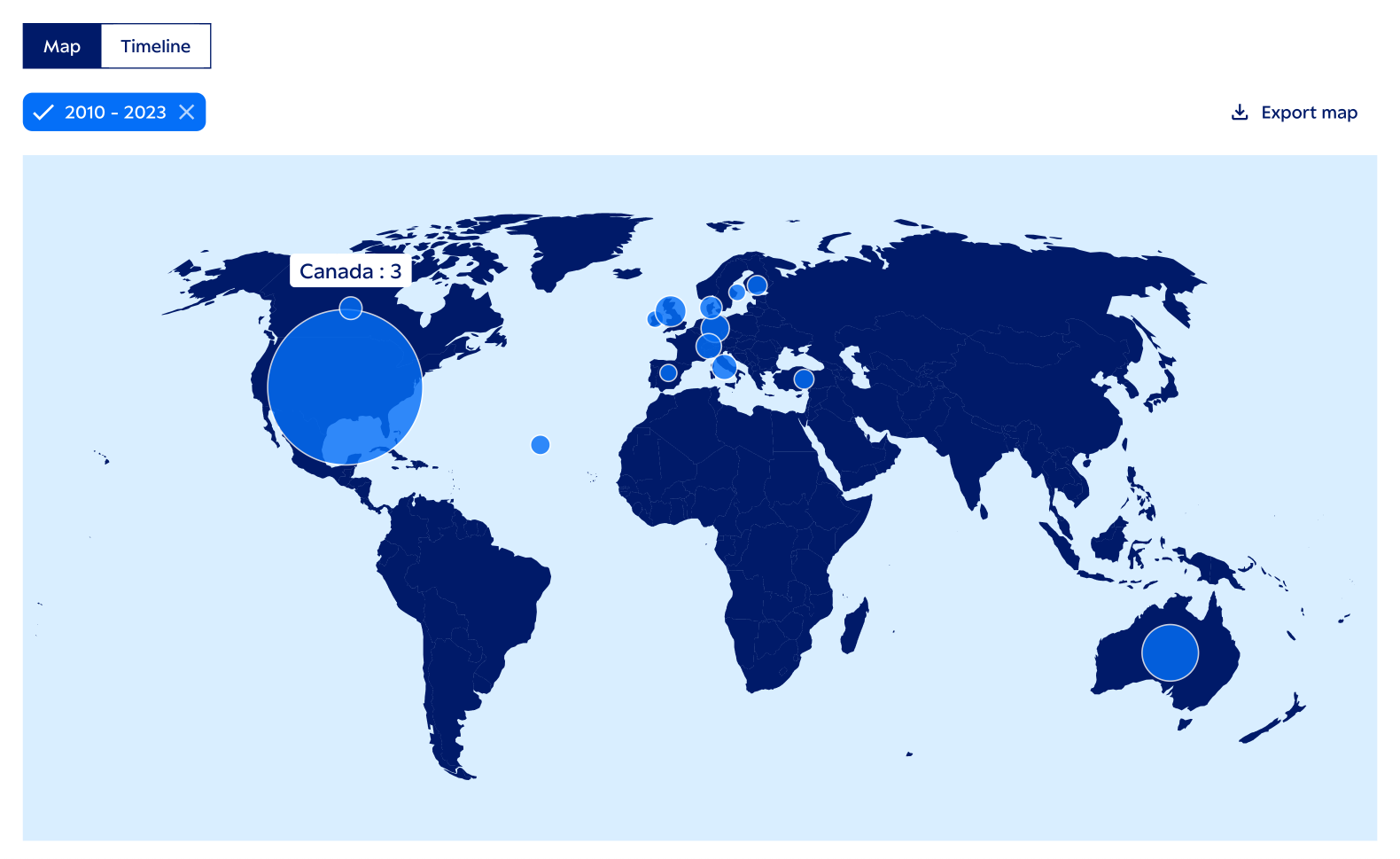
In an astonishing act of timing, Harvard University professor Claudia Goldin published a paper on Monday titled “Why Women Won.” It mapped milestone moments in women’s rights in the United States from 1905 to 2023.
A few hours later, she was awarded the 2023 Nobel Prize in economics “for having advanced our understanding of women’s labour market outcomes.”
Goldin became only the third woman to win the Nobel Memorial Prize in Economic Sciences, and the first to win it in her own right, not sharing it with a man.

For countless women in economics, and for advocates of gender equality more broadly, her recognition adds to the milestone moments she has documented in her own work.
Decades of research have seen Goldin methodically collate data and archival stories, detective style, to uncover explanations for the rise and fall (and rise again) of women’s paid employment over the centuries, including:
- the empowering effect of the contraceptive pill
- the removal of legal restrictions on the employment of married women
- the influx of women into higher education
- the shift towards a services economy.
Uncovering reasons for the gender gaps that remain, Goldin has scrutinized contemporary work culture to identify the unhealthy phenomenon of “greedy work” in which employers demand excessive hours and 24/7 availability.
This creates a gender divide by penalizing those workers – predominantly women – whose caregiving role collides with excessive employer expectations.
A practical takeaway from Goldin’s research is that gender gaps in economic outcomes can’t be merely attributed to women’s “choices” or “preferences.”
Her comprehensive account of women’s experiences shows these gender gaps arise from an interplay of wider factors, among them societal norms, technological breakthroughs, institutional structures, and policy settings that push or pull women’s workforce participation in different directions.
Why Goldin’s Nobel matters
These insights are critical for policymakers, as they point to the need to improve systems and cultures, rather than placing the onus on individual women to change their behavior.
This recognition is also a validation of Goldin’s style of research.
The economics Nobel prize is not usually awarded for generating new knowledge, but instead prioritizes new theoretical and conceptual methods.
Goldin contributes both new insights and innovative methods through her investigation style, where she combs through historical archives and pays attention to the personal stories of women in order to make sense of the data.
Lived experiences and personal stories are often squeezed out of science. Goldin’s work affirms that economics – as a social science – requires them.
It also matters to economics itself
Goldin’s research carries important implications for addressing gender equality within the economics profession.
Economics has a longstanding history as a male-dominated discipline.
Despite improvements in recent years, women are still underrepresented in economics and a growing body of evidence shows that gender bias persists.
The research questions that Goldin has dedicated her career to are topics that have long been sidelined in mainstream economics, labeled by many in the profession as “special interest” topics not to be taken seriously.
In my earlier review of Goldin’s book, Career and Family : Women’s Century-Long Journey Toward Equity, I reflect on the importance of Goldin’s pioneering role for gender equality researchers like myself:
“As an economist who also researches gender equality issues – and is similarly motivated by the simple quest to better understand the reasons why we see such stark gender disparities in our economy – I find myself often confronted by accusations that my research is subjectively motivated by an ideological agenda; accusations designed to denigrate its value and question my research integrity.
“I am aware that other researchers in the field of gender equality, particularly women, encounter these disparaging blights on their professionalism, too.
“The rich wealth of research and insights that Goldin has contributed to the economics profession throughout her career – arguably worthy of Nobel recognition – affirms that this stream of work is important.”
Goldin’s contribution extends beyond her academic papers.
In her role as president of the American Economic Association in 2013, Goldin put in place initiatives to more fully understand women’s low numbers in economics and to support more to join and stay in the field.
She did not merely research gender inequity from afar – she recognized where it prevailed within her own discipline and (as would be expected of an economist) took evidence-based action to address it.
While we have not yet achieved gender equity, awarding the Nobel to a female economist for dedicating her career to understanding gender inequity – and helping to solve it – counts as a win for women in economics.