


Could Distributed Peer Review Better Decide Grant Funding?
The landscape of academic grant funding is notoriously competitive and plagued by lengthy, bureaucratic processes, exacerbated by difficulties in finding willing reviewers. Distributed […]

A group of professional organizations, universities, businesses, and scientific societies are thanking Congress for this year’s 4 percent increase in funding for the National Science Foundation — and wondering if they might double that next year.
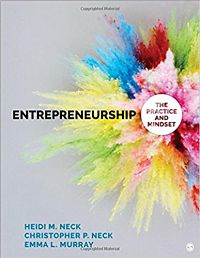
How do you teach someone to be entrepreneurial? That’s the challenge presented to Heidi Neck, the Jeffry A. Timmons Professor of Entrepreneurial Studies at Babson College and director of the Babson Entrepreneur Experience Lab, every day. We asked her some questions in the wake of her new textbook on those issues won an award.
UPDATED: Many academic groups that use U.S Census data for research fear the negative effects of including a question about citizenship on the 2020 count. “Adding a new citizenship question to the 2020 Census would destroy any chance for an accurate count, discard years of careful research, and increase costs significantly,” wrote The Leadership Conference, an umbrella group.
Months into the 2018 fiscal year, the U.S. Congress approved and the president today signed a $1.3 trillion spending plan for the existing fiscal year that increases National Science Foundation funding to $7.77 billion and does not cut social science research funding.
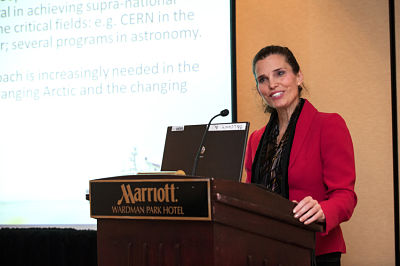
Canada’s Social Sciences and Humanities Research Council of Canada, or SSHRC, has announced the membership of its 18-member governing council.
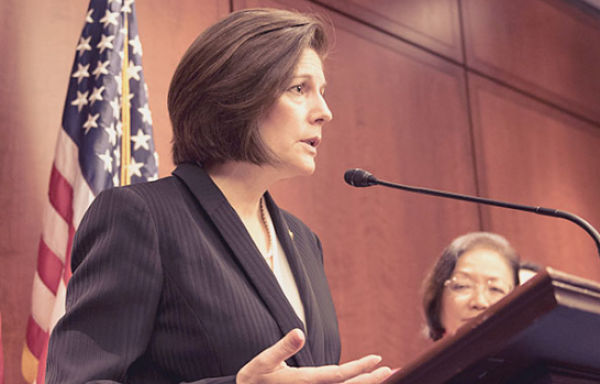
The focus was more on ‘competition’ than on ‘innovation’ Tuesday as the Senate Committee on Commerce, Science, and Transportation convened a hearing looking at the American Innovation and Competitiveness Act a year after its passage.
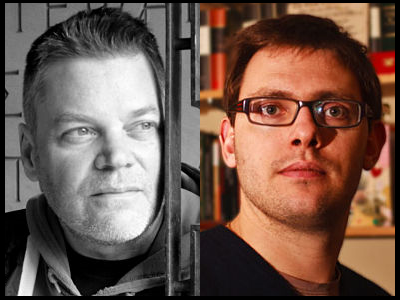
Tom Chatfield, author of the new SAGE Publishing book Critical Thinking, and Mark Kingwell, the University of Toronto, held a lively conversation on the import of technology on how we think and act ‘critically.’ Chatfield, described as a ‘tech philosopher,’ and Kingwell, a more traditional professor of philosophy, traded perspectives, insights into the digital, and purportedly post-truth, era in this one-hour webinar.

Since 2004, Renew Publishing Consultants has surveyed researchers, students, teachers, lecturers, professors, journalists, managers, clinicians, medics, librarians, government officials, and engineers, working across all sectors and in all regions to learn about the uptake of academic content.


Jürgen Habermas, a globally known social theorist whose explorations of democracy, validity and communication have gained new prominence in the current moment, […] People often see science as a world apart: cool, rational and untouched by persuasion or performance. In this view, scientists simply discover […] “Research impact” means different things to different people. Some refer broadly to how science changes behaviors, beliefs, or practices outside academic institutions. […] David Canter considers informal places where people socialize, suggesting they’re an arena ChatGPT and other LLMs can’no’t replicate. As someone who lives […] It’s become cliche since Clive Humbly coined it in 2006, but data is indeed the new oil. It’s a mantra repeated by […] In September 2025, The Guardian reported about a lawyer in Australia having faced sanctions due to false citations. These citations were not […]
EXPLORE
Impact

Jürgen Habermas, 1929-2026: Exponent of the Public Sphere
READ MORE

Scientists Should Keep in Mind It’s Called the ‘Marketplace of Ideas’ for a Reason
READ MORE

Survey Finds Social Scientists Feel Unsupported in Seeking Societal Impact
READ MORE
Innovation

Reaching Parts to Which AI Has No Access
READ MORE

Andrea Medina-Smith on Making Research Data More FAIR
READ MORE

A Status Check on Hallucinated Case Law Incidents
READ MORE