



Could Distributed Peer Review Better Decide Grant Funding?
The landscape of academic grant funding is notoriously competitive and plagued by lengthy, bureaucratic processes, exacerbated by difficulties in finding willing reviewers. Distributed […]


Margaret Levi, the director of the Center for Advanced Study in the Behavioral Sciences at Stanford University, today received one of the most prestigious awards in the social sciences, the Johan Skytte Prize in Political Science.

The two federal agencies that spend the most on making grants to social and behavioral science research in the United States, both have their budgets shaved by an eighth in the Fiscal Year 2020 budget proposal released by the Trump administration earlier this month. But the move is more symbolic than substantive.

Princeton economist Alan Krueger, who The New York Times described as “help[ing] lead economics toward a more scientific approach to research and policymaking” in his repeated stints in the public sector, has died at age 58.

The U.S. military’s innovation incubator, the Defense Advanced Research Projects Agency, has signed the Center for Open Science to create a research claims database as DARPA’s first step to assign a ‘credibility score’ to social and behavioral science research.
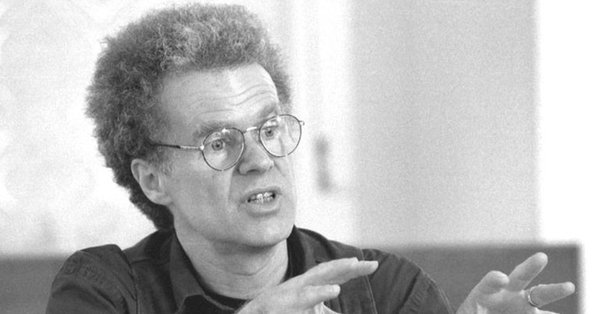
Sociologist Erik Olin Wright, who died last week at age 71, spent his career trying to imagine practical alternatives to capitalism.
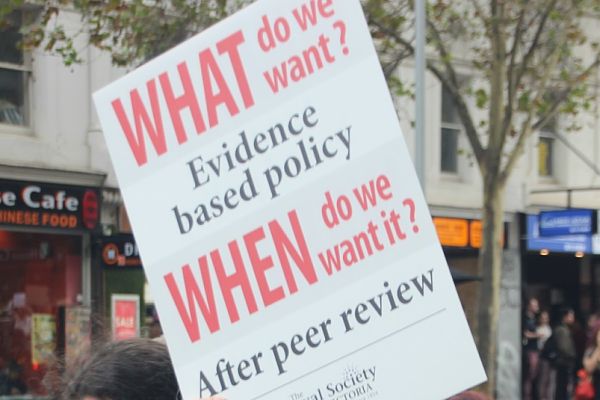
In what’s been billed as “the first step in a longer process of ensuring the government is fully invested in using science to improve the effectiveness of its operations,” on January 14 President Trump signed the Foundations for Evidence-Based Policymaking Act of 2018.

The U.S. National Institutes of Health’s Office of Behavioral and Social Sciences Research, which has a rather lengthy revised definition that it’s currently asking experts to assess.
Today Social Science Space completes a series drawn from five winners of Britain’s Economic and Social Science Research Council’s 2018 Impact Prize to learn how they built meaningfulness into their own research and how they measure impact more broadly. We end with Denise Baden of the University of Southampton, winner of the Outstanding Impact in Business and Enterprise prize.

The Royal Swedish Academy of Sciences has awarded this year’s Nobel Prize in Economic Sciences to the American economists Robert E. Hall […] Four Americans working in the social and behavioral sciences are among the 20 people named MacArthur Fellows this year. Recipients may be […] Euan Adie, the founder of Altmetric and later of Overton, discusses the reasons the led to Overton’s focus on showing researchers how […] The following is an adapted extract from The Cultural Industries, fifth edition, by David Hesmondhalgh. The increasing presence of information technology (IT) […] Developers of AI data centers have a public trust problem. According to multiple surveys, a majority of Americans say they would oppose […] I was adding some final flourishes on the topic of ‘iatrocracy’ to my forthcoming book with Natewindé Sawadogo – Sickness and Social […]
EXPLORE
Impact
Economic Peaks, Troughs and This Year’s Nobelists in Economics
READ MORE
Four From Social Science World Receive 2026 MacArthur Fellowships
READ MORE

Quick Insight: Euan Adie on Getting Academics Credit for Their Impact
READ MORE
Innovation

IT Giants and Their Operations: Should We Be Concerned?
READ MORE

What We Miss When We Study Public Trust with Surveys Alone
READ MORE

AI and ‘Iatrocracy’ – A Cautionary Tale
READ MORE