

Could Distributed Peer Review Better Decide Grant Funding?
The landscape of academic grant funding is notoriously competitive and plagued by lengthy, bureaucratic processes, exacerbated by difficulties in finding willing reviewers. Distributed […]

In these days of declining federal budgets for statistical agencies and for research, a place like the Ohio State University’s Center for Human Resources Research, has to explore all funding options to maintain its formidable work.

The Comprehensive Spending Review released today does protect the UK’s government-funded research budget as promised, but the research community sees lots of ways that the future on innovation could have been brighter and more robust.
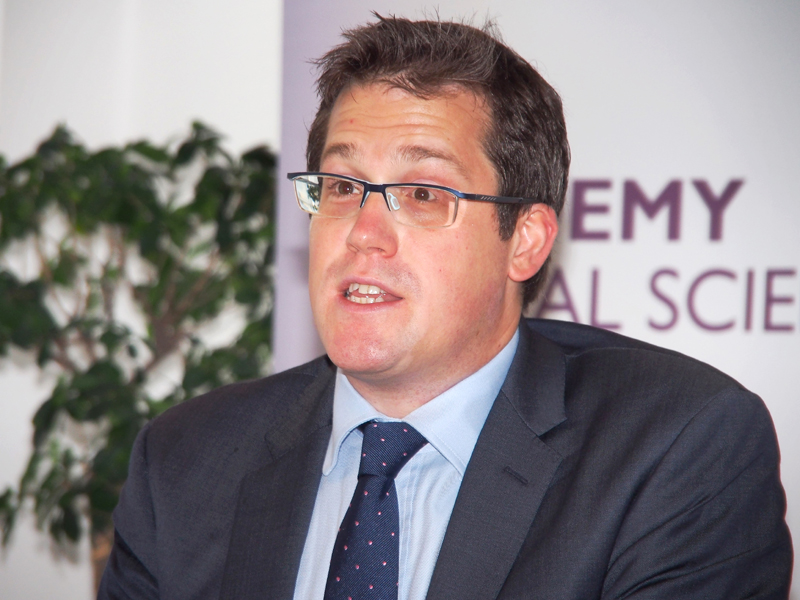
The Campaign for Social Science welcomes the relative protection given to the science budget in the spending review, says its chair, James Wilsdon, but it’s premature to see this as a good outcome for the long term health of the UK’s research base.

Academics do not simply teach and do research: they are teacher-researchers, notes Steve Fuller. In reviewing the UK spending review, he says, it is the value added to society by nurturing this complex role that should be at the forefront of the state’s thinking about the criteria used to fund universities.
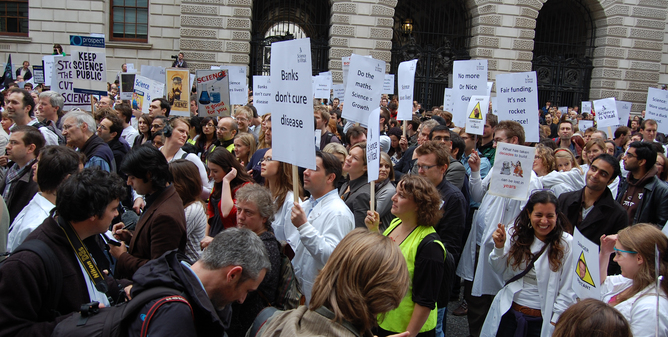
Scientists in the UK are facing great uncertainty ahead of the Conservative government’s comprehensive spending review on November 25. Not only is funding for UK research under threat, the government is believed to be planning on culling many of the agencies that fund research in an effort to make savings.
A new report sought by Britain’s government argues that quality research from the UK’s seven research councils should itself be “at the heart of government” — and to achieve that those councils should be run by a single organization that has much stronger input from government than at present..
Academia has long recognized that wicked problems require cross-disciplinary research approaches, yet Australia’s Science and Research Priorities enthrall mainly STEM researchers. This divide puts academia back into silos: those on the sunny side of funding decisions and those under a constant rain cloud.
In receiving the SAGE-CASBS Award, Ken Prewitt, a champion for scholarly knowledge, suggests there is no applied or basic science, only science in use and science soon to be used.


Jürgen Habermas, a globally known social theorist whose explorations of democracy, validity and communication have gained new prominence in the current moment, […] People often see science as a world apart: cool, rational and untouched by persuasion or performance. In this view, scientists simply discover […] “Research impact” means different things to different people. Some refer broadly to how science changes behaviors, beliefs, or practices outside academic institutions. […] David Canter considers informal places where people socialize, suggesting they’re an arena ChatGPT and other LLMs can’no’t replicate. As someone who lives […] It’s become cliche since Clive Humbly coined it in 2006, but data is indeed the new oil. It’s a mantra repeated by […] In September 2025, The Guardian reported about a lawyer in Australia having faced sanctions due to false citations. These citations were not […]
EXPLORE
Impact

Jürgen Habermas, 1929-2026: Exponent of the Public Sphere
READ MORE

Scientists Should Keep in Mind It’s Called the ‘Marketplace of Ideas’ for a Reason
READ MORE

Survey Finds Social Scientists Feel Unsupported in Seeking Societal Impact
READ MORE
Innovation

Reaching Parts to Which AI Has No Access
READ MORE

Andrea Medina-Smith on Making Research Data More FAIR
READ MORE

A Status Check on Hallucinated Case Law Incidents
READ MORE